Clematis leaves that won't unfurl may be caused by thrips damage
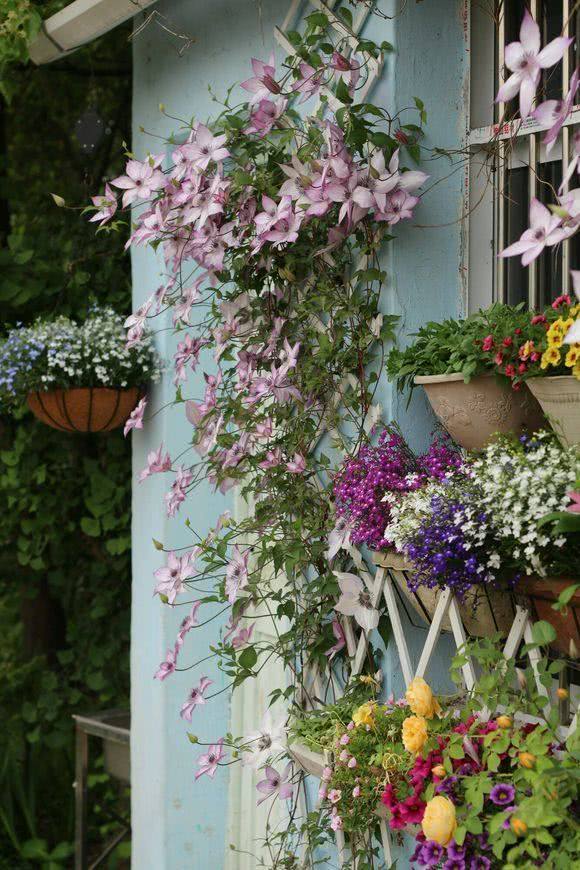
Have you fallen down the clematis rabbit hole? Clematis can bloom from early spring all the way to late autumn and is known as the queen of vines. But caring for her doesn't seem to be that easy. After many flower lovers start growing clematis, they worry about all kinds of illnesses she might get. As the queen of vines, we usually only see her noble and beautiful appearance, but any flower can get sick, and the noble queen is no exception.
Recently, the new leaves at the tips of my Pink Champagne just wouldn't unfurl no matter what, and after waiting a long time they still hadn't grown. The backs of the leaves looked as if they had been scorched and had curled up, and when I checked the other leaves I found dense little white spots on all of them. Whether clematis is sick can generally be seen through the leaves and stems. I had originally kept thinking it was just a deformity and ignored it, but in fact it was thrips (ji) causing the trouble. If you don't grow clematis, you really wouldn't know how to pronounce this character (facepalm). Thrips love nothing more than damaging plants' new leaves, tender shoots, flowers and fruit, and after being ravaged by thrips, the leaves, petioles and flower buds turn black and scorched. These tiny black insects reproduce very quickly and are extremely harmful to the growth of clematis, so once they break out you must spray promptly.
After asking around for help, I immediately bought imidacloprid and abamectin. I used imidacloprid first, which is a contact-kill type. When spraying, you also need to spray the undersides of the leaves and the surface of the soil layer. Applying the spray on a sunny morning or evening gives the best results, because thrips are afraid of light and generally prefer to hide in the soil layer or on parts of the plant near the ground to rest, only coming out to be active after evening, so the adults are not easy to find. After spraying once every 3 days, 2 or 3 times in total, all you can find is probably just the corpses of the thrips.
There is also another physical method for killing thrips, a wonder tool: blue and yellow sticky boards. As someone with trypophobia, I don't dare use them, and I don't know how effective they are. If you want to eradicate the problem completely, you still have to spray.
Clematis is very tough, and after recovering its health it grows very quickly. Even so, it is still very distressing to see the clematis that flower lovers adore suffer such a severe blow. So how should you prevent this? Just two points: strengthen routine management and water and fertilizer management.
In daily care, regularly check and remove dead branches and diseased leaves, don't let the stems touch the ground, and once you notice anything abnormal, take measures immediately. Water according to "dry then wet", meaning wait until the soil has dried out completely before watering, and when you water, you must water thoroughly. Clematis has fleshy roots and depends on being cultivated well, so the watering method must be done carefully. In the pots where I grow my clematis, I always keep a few small weeds; when the weeds look wilted, it's time to water. For beginners, liquid fertilizer and slow-release fertilizer are the first choice, applying light fertilizer frequently. If you use organic fertilizer, it must be fully decomposed, and be careful not to let it touch the roots.