Cultivation Techniques and Pest and Disease Control Methods for Hawthorn
Cultivation and Pest and Disease Control Techniques for Hawthorn
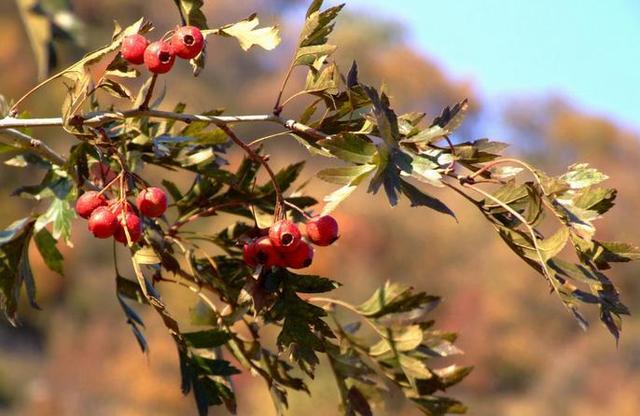
Hawthorn (Crataegus pinnatifida) belongs to the Rosaceae family and is a deciduous small tree. The fruit is sweet and sour, pleasant to eat, and can promote salivation and quench thirst, making it a high-quality fruit tree species. The fruit can also be used medicinally; its nature and flavor are sweet and sour, slightly warm, and it has the effects of stimulating appetite and aiding digestion, resolving food stagnation, promoting blood circulation and removing blood stasis, and astringing to stop diarrhea. It can dilate coronary arteries, relax blood vessels, increase blood flow, improve cardiac vitality, excite the central nervous system, and has effects such as lowering blood lipids, lowering blood pressure, strengthening the heart, and resisting arrhythmia. Hawthorn is also a greening tree species for courtyards, parks, and streets in northern regions, and is an economic tree species with great development potential. It is produced in Heilongjiang, Jilin, Liaoning, and other places. It grows on hillside forest edges or in shrub thickets. It is mostly distributed in areas at an altitude of 100-1500 m. It is also distributed in Korea and the Siberia region of the Soviet Union.
1 Cultivation
1.1 Site Selection
Selecting plots with good light conditions, fertile soil, and irrigation conditions is suitable, with flat and fertile land being optimal.
1.2 Land Preparation
Before planting, prepare the land by digging square planting pits 50 cm long, wide, and deep; for poor soil conditions, also dig strip trenches 60 cm deep and wide.
1.3 Planting Time and Spacing
In Heilongjiang Province, late April is the best planting period. A spacing of 3 m x 4 m, planting 60 trees per 667 sq m, is a relatively suitable planting density.
1.4 Planting
Plant at a spacing of 3 m x 4 m. Before planting, apply 5 kg of decomposed farmyard manure in each hole as base fertilizer. Before planting, also soak the seedlings for 20 h, dip them in a 0.5 mg/L aqueous solution of ABT No. 3 rooting powder, and then plant immediately. After planting, compact the soil, water thoroughly immediately, and thereafter regulate water according to weather conditions and soil moisture; water promptly in dry weather and drain promptly in the rainy season.
1.5 Field Management
1.5.1 Shaping. In the second year of cultivation, promptly determine the trunk height according to seedling height, generally at a height of 70 cm above the ground; retain 6-8 lateral buds, and remove buds below 30 cm from the ground. When the plant enters dormancy, carry out winter pruning, shaping and pruning according to the form with 3 main branches at the base; prune new shoots grown in the first year at 45-55 cm, and increase the retained pruning length year by year thereafter. Maintain a spacing of 75-95 cm between the first tier of main branches and the second tier of main branches; retain 2-3 lateral branches on the first tier of main branches; prune the extension shoot on the central leader leaving about 65 cm, and thereafter keep the annual pruning retention length at 50 cm as optimal. For each branch on the trunk, do not prune branches longer than 55 m and leave them to grow freely; shorten branches 30-50 cm, or alternatively carry out branch bending.
Combine winter pruning and summer pruning when pruning. During winter pruning, carry out medium-long pruning on the extension shoot of the central leader and the extension shoots of the 3 main branches at the base, and short pruning on the remaining branches. Thin out crossing branches, overlapping branches, competing branches, water sprouts, and parallel branches on the trunk to improve light conditions in the tree canopy. For fruiting branches growing on the central leader, carry out light pruning to weaken their growth vigor and promote flower bud differentiation. In summer, new buds easily sprout on the main branches; select and retain 1-2 flat or slanting buds and remove the rest; for vigorous new shoots, pinch the tips in early to mid-August to promote lignification of the new shoots and prevent freeze damage during overwintering.
1.5.2 Fertilizer and Water Management. After autumn harvest and before dormancy, apply 1 application of decomposed farmyard manure, fertilizing per tree at 5-10 kg per tree; if 0.3 kg of diammonium phosphate is additionally applied per tree, even better. Apply fertilizer by digging a ring-shaped trench around the tree. In autumn, according to the growth status of the tree vigor, expand the holes at the base of the tree outward and loosen the soil around them; expand holes and loosen soil once a year. Regulate water in real time according to weather and seedling conditions; water promptly in dry weather and drain promptly in the rainy season. Water once thoroughly in spring before the tree begins growth.
2 Pest and Disease Control
2.1 Diseases
2.1.1 Hawthorn flower rot. It mainly damages leaves, new shoots, and young fruit. When the disease occurs, leaves have brown dot-like or short line-like lesions, which gradually expand and turn reddish-brown; diseased leaves wither, causing rotting of the affected parts. Control methods: (1) In autumn when the plant enters dormancy, remove diseased branches and diseased plants and burn them in a centralized manner to reduce infection sources. (2) Carry out deep plowing in early spring. Bury pathogens on the ground deep underground. (3) In spring before the tree begins growth, spread lime powder on the ground under the tree canopy to prevent pathogen infection. (4) Once the disease occurs, promptly spray 25% triadimefon wettable powder at 1000 times dilution, or 70% thiophanate-methyl wettable powder at 900 times dilution. In severe cases, spray 2 times.
2.1.2 Hawthorn powdery mildew. It mainly damages the plant's leaves, new shoots, and fruit. When leaves are affected, the diseased parts have white powdery conidiophores and conidia; affected new shoots grow thin and weak. Internodes shorten, leaves become slender, curled, and twisted, and in severe cases dry up and die. Control methods: (1) During the plant's dormant period, remove diseased branches, diseased leaves, and diseased fruit and burn them in a centralized manner. (2) If infection is found, promptly spray 5-degree lime sulfur mixture, or 25% triadimefon at 1300 times dilution.
2.2 Insect Pests
2.2.1 Peach fruit moth. For peach fruit moth, prevention should be primary. Before the tree begins growth at the Spring Festival, promptly spray 150 times parathion emulsifiable concentrate to kill overwintering fruit moth larvae; in early July and early August, promptly spray 1500 times parathion emulsifiable concentrate for prevention.
2.2.2 Red spider mite. Red spider mite is a common pest, and once it occurs, it is very difficult to control. Therefore, prevention should be primary. Control methods: (1) In early spring before the tree begins growth, promptly scrape off old bark and cracked bark on the tree and burn them in a centralized manner to eliminate overwintering adults. (2) If pests are found, promptly spray 25% dicofol emulsifiable concentrate at 1000 times dilution or 70% propargite emulsifiable concentrate at 1500 times dilution; the number of applications is determined specifically according to the occurrence level and control effect.