Detailed Explanation of the High-Yield and High-Efficiency Cultivation Technical Regulations for Blackberry Lily (Belamcanda chinensis)
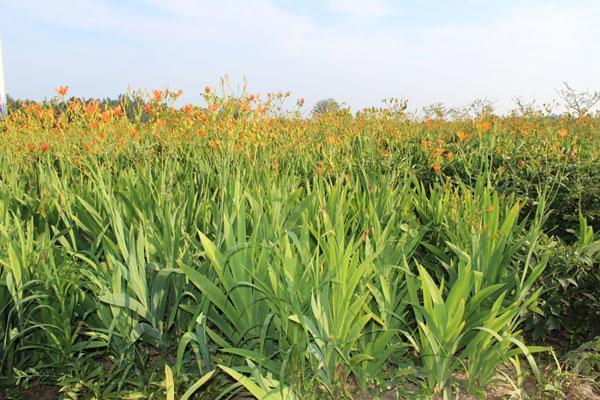
High-Yield and High-Efficiency Cultivation Technical Regulations for Blackberry Lily (Belamcanda chinensis)
1 Site Selection and Land Preparation
Blackberry lily is drought-tolerant, low-temperature-tolerant, susceptible to waterlogging, and prefers warmth. It is best planted in sandy loam soil with high, dry terrain, sunny exposure, convenient drainage and irrigation, and deep soil layers, with a pH value of 5.6-7.4 being suitable. Before planting, deep plow 20 cm, and during plowing apply 37,500 kg/hm2 of decomposed stable manure or compost, plus 750 kg/hm2 of decomposed cake fertilizer, and 1,500 kg/hm2 of phosphorus-potassium compound fertilizer. Deep plow about 30 cm to turn the base fertilizer into the soil, then level and make beds. Before sowing, shallow plow another 15 cm, level and harrow fine, then make raised beds 1.2 m wide, with furrow width of about 30 cm, and open drainage ditches around the perimeter.
2 Propagation Methods
Blackberry lily can be propagated by seeds and rhizomes, but seed propagation is mostly used in production.
2.1 Seed Propagation
2.1.1 Sowing and Seedling Cultivation The seed coat of blackberry lily has poor permeability, making it difficult to germinate, so seeds must be treated 10 d before sowing. Treatment method: soak in 0.5% solution of 50% carbendazim wettable powder for 24 h, then place the seeds in a bamboo basket, cover tightly with linen cloth, frequently sprinkle water to maintain moisture, and when 60% of the seeds show white sprouts, they can be taken out for sowing. Sow from late March to early April. On the prepared seedling bed surface, open shallow furrows about 2 cm deep along the bed at a row spacing of 15-20 cm, evenly scatter the germinated seeds into the furrows, cover with fine soil, press lightly, and water. After sowing, keep the bed surface moist; seedlings emerge in about 20 d. Seed requirement is about 150 kg/hm2.
2.1.2 Transplanting When seedlings grow 3-4 true leaves, they can be transplanted. Before transplanting, dig up the seedlings and grade them into 3 classes (large, medium, small) for separate planting. Transplanting is best done on a sunny evening or a cloudy day. On the prepared bed surface, transplant to the field at a row spacing of 30 cm x 25 cm. After planting, irrigate immediately; the survival rate can reach over 90%. One mu of seedlings can transplant 6-10 mu of field.
2.2 Rhizome Propagation
Select rhizomes from seedling plants grown for more than two years or from rhizome-propagated plants grown for more than one year that are robust, bright yellow in color, and free from pests and diseases as seed rhizomes. Transplanting is generally carried out in mid-to-late March in spring. First cut the healthy seed rhizomes into 3-4 cm small segments, each retaining 2-3 root buds, as planting material. After the cut surfaces of the planting material dry, soak the rhizomes in 50 mg/kg ABT rooting powder solution for 3 h before planting. Choose a sunny evening or cloudy day for planting. On the prepared bed surface, dig holes at a row spacing of 30 cm x 25 cm with a furrow depth of 10-15 cm, and plant 1 seedling per hole. Straighten and plant firmly, cover with soil 6-7 cm thick, press lightly, and water thoroughly to set the roots.
3 Field Management
3.1 Intertillage and Earthing Up
In the first year, when seedlings are 3-5 cm tall, carry out the first intertillage and weeding. Afterward, in May and June, combine intertillage with weeding respectively. After the canopy closes, stop loosening soil and weeding, and instead earth up around the base of plants; otherwise, plants are prone to lodging in the rainy season or breaking from the base of the petiole, affecting yield. After the plants turn yellow in autumn each year, earth up around the root zone for overwintering.
3.2 Topdressing
Blackberry lily is a fertilizer-loving crop, so topdressing is very important. If the base fertilizer is sufficient, little or no fertilizer may be applied in the first year. Starting from the second year, topdress 3 times per year, in March, June, and November respectively. First application: 450 kg/hm2 of ammonium bicarbonate or 225 kg/hm2 of urea; second application: 375 kg/hm2 of ammonium bicarbonate and 225 kg/hm2 of superphosphate; third application: 450 kg/hm2 of compound fertilizer. Increasing phosphorus fertilizer can promote root growth and increase yield.
3.3 Drainage and Irrigation
Although blackberry lily prefers dry conditions, seedlings have shallow roots, so during the seedling stage and after transplanting, the soil must be kept moist to ensure survival rate. When seedlings are about 10 cm tall, if there is no drought, irrigation may be omitted. Blackberry lily is susceptible to waterlogging; especially in the rainy July-August period, drainage must be timely to prevent root rot.
3.4 Flower Bud Removal
Seed-propagated blackberry lily blooms and fruits the following year, while rhizome-propagated plants bloom and fruit in the same year. The medicinal part of blackberry lily is the rhizome; except for plants retained for seed production, flower buds should be removed promptly so that nutrients concentrate on root growth to increase yield. It is best to cut off flower buds with scissors on a sunny morning; picking by hand is strictly prohibited.
4 Pest and Disease Control
Pest and disease control should adhere to the principle of "prevention first, integrated control," adopting a combination of agricultural, biological, and chemical control methods, doing well in pest and disease forecasting and pesticide efficacy trials to improve control effectiveness and minimize the damage caused by pests and diseases.
4.1 Agricultural Control
4.1.1 Clearing the Field When central diseased plants are found, they should be promptly pulled out and burned, and diseased plants and already withered residual leaves and stems should be collected promptly, burned or deeply buried, to eliminate sources of pests and diseases and reduce the accumulation and spread of pathogens.
4.1.2 Crop Rotation Continuous cropping and back-to-back cropping should be minimized as much as possible, with crop rotation for more than 3 years to destroy the living environment of pathogens.
4.1.3 Ridge Cultivation and Drainage/Irrigation Use ridge cultivation with a ridge height of 20-25 cm. Strictly prohibit flood irrigation during high-temperature periods and sudden heavy irrigation after prolonged drought; avoid water accumulation in the field. Light and frequent irrigation, shallow irrigation, and irrigation during low-temperature periods in the morning and evening are best; use large ditches and deep ditches for drainage to avoid water accumulation on the ridge surface.
4.1.4 Rational Fertilization Mainly use fully decomposed farmyard manure, with nitrogen and phosphorus fertilizers as base fertilizer. During the seedling stage, appropriately topdress with nitrogen fertilizer; during the adult plant stage, increase application of phosphorus and potassium fertilizers. Apply biogas slurry by irrigation to promote root growth of blackberry lily and enhance plant disease resistance.
4.2 Chemical Control
4.2.1 Rust Disease Generally occurs from early August to early September. Initial symptoms are slightly raised pustules on old leaves or tender stems; after rupturing, orange-yellow or rust-colored powder (rust summer spores) is released. Later, dark brown powdery material (rust winter spores) grows at the pustule sites. Diseased plant leaves dry up and fall off, and severely affected plants die. When disease occurs, spray new triazole fungicides, such as propiconazole emulsifiable concentrate at 4,000-5,000 times dilution or 12.5% diniconazole wettable powder at 3,000 times dilution, once every 7 d, for 2-3 consecutive applications. During the adult plant stage, use 50% fenaminosulf emulsifiable concentrate at 800 times dilution or 50% sulfur·thiophanate-methyl suspension concentrate at 500-700 times dilution, spraying once every 5-7 d, for 2-3 consecutive applications.
4.2.2 Leaf Spot Disease Generally occurs from July to September, damaging leaves. In the early stage, pale yellow spots appear on leaves; later the spots expand and merge with each other, forming large lesions, and the color gradually changes to dark brown. Leaves turn yellow and wither early. In the early stage of disease, spray with 50% compound thiophanate wettable powder at 800 times dilution or 50% mancozeb wettable powder at 800 times dilution, once every 7 d, for 2-3 consecutive applications. Alternatively, before sowing, soak seeds in 50% carbendazim wettable powder at 800 times dilution for 3 h before sowing, which can effectively suppress the occurrence of leaf spot disease.
4.2.3 Southern Blight Generally occurs from June to August. Roots turn brown and are covered with white mycelium on the surface. When humid, white mycelium can also be seen on the soil surface around the base of diseased plants, and milky white or light brown sclerotia can be seen within the mycelium. In the late stage of disease, stems and leaves gradually wither and die, and roots rot. Diseased plants should be promptly pulled out and burned in a centralized manner. In the early stage of disease, drench the diseased holes and healthy plants around diseased plants with 70% thiophanate-methyl wettable powder at 1,000 times dilution to control the spread of the disease.
4.2.4 Stem Borer The adult of the stem borer is called the annulate noctuid (Pseudeustrotia candidula), belonging to Lepidoptera, Noctuidae. In early May, larvae damage leaf sheaths and young stems, causing seedling breakage and dead hearts. As the larvae age, after July they move toward the roots and damage tubers, causing stem or root rot and affecting tuber quality. The larval stage is the best period for control. In early May, spray 90% trichlorfon crystal at 800 times dilution; in mid-July, spray 45% dimethoate emulsifiable concentrate at 800 times dilution.
4.2.5 Green Leafhopper Damage begins in early April. The best control period is the nymph hatching stage. In early April, when the first-generation nymphs have just hatched, spray 40% dimethoate emulsifiable concentrate at 1,000 times dilution, 90% trichlorfon at 1,000 times dilution, or 50% fenitrothion emulsifiable concentrate at 1,000 times dilution for control.
4.2.6 White Grubs and Mole Crickets White grubs and mole crickets bite and feed on rhizomes. Control methods: drench holes with 90% trichlorfon crystal at 1,000 times dilution or hang black light lamps to trap and kill adults.
5 Harvesting and Processing
Direct-seeded plants are harvested after 2-3 years, while rhizome-propagated plants can be harvested after 2 years. Dig up rhizomes after plants wither in autumn or before sprouting in spring. After digging, cut off stems and leaves, wash off soil, sun-dry, rub off fibrous roots, and sun-dry again until completely dry. Alternatively, sun-dry the rhizomes until half-dry, place them in an iron wire sieve and hang it up, burn off the fibrous hairs with fire, then sun-dry again until completely dry to obtain the commercial product. Quality is considered best when rhizomes are thick and robust, solid and firm in texture, and yellow in cross-section.