How to shape a wintersweet bonsai? Follow these 4 principles when pruning
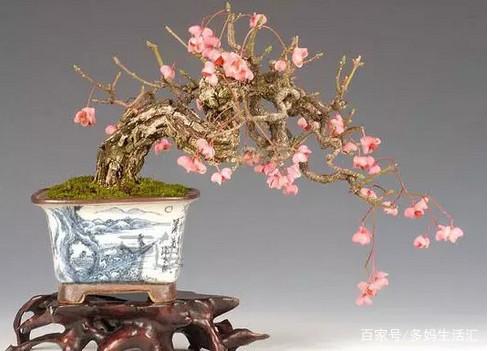
Remember that poem? A few branches of plum by the wall, blooming alone in the cold. From afar you know it is not snow, for a subtle fragrance drifts near. It speaks of the noble character of wintersweet. Wintersweet is a very easy flower to grow, but if you want to make it into a bonsai, you must master its shaping methods. Today, the editor will share with you the shaping of wintersweet bonsai.
There are many shaping methods for wintersweet bonsai. For example, in Sichuan-style bonsai, the wintersweet bonsai they make is mostly shaped in the "rolling dragon style," which looks like dragons flying and phoenixes dancing. If you want to maintain the tree shape, you need to wait until new branches grow before shaping. If it is a stump landscape, you need to cut off the straight branches, and only shape again after new buds appear.
The most common shape for wintersweet bonsai is the "natural style." Its characteristics are a prominent trunk and relatively clear layers. Straight-growing branches are usually shaped into fences and similar forms. For water and fertilizer requirements, stick to the principle of frequent light applications and watering only after the soil has dried out. Bonsai shaping mainly depends on pruning, and shaping should follow the four principles below.
1. The theme should be clear and the concept distinct. Choose suitable raw materials according to the bonsai theme.
2. Pruning should have a clear purpose. Decisively remove branches and excess branches. In the first year, prune to plan for cultivating branches and strengthening the root system (strong roots, strong branches). In the second year, prune again after the new branches have grown for a long time.
3. Wintersweet is a bonsai plant grown for both flowers and foliage. What matters is having many branches and many flowers, so do not prune heavily.
4. The roots should coil and the claws should be exposed. Root treatment methods are mainly divided into two types. The first is manual digging, which is fast but easily damages the roots. The second is washing with water. This method requires repeated washing, is less likely to damage the roots, but is slow.
Wintersweet likes to sprout, and excess roots and buds can be removed in all four seasons of the year. After the Spring Festival, once the two leaves in the wintersweet foliage are opposite each other, leaf picking begins along with shaping. After the leaves sprout, the leaves can be picked, generally 2 to 4 times.
1. Knife cutting and branch bending. According to the habit of rapid healing, brittle wounds that are easy to fold and unfold can be designed during the growing season, but it is best when the buds have just sprouted and the leaves have not yet spread. When the knife is cut, the vertical axis of the branch is 45 degrees, and the depth can reach 2/3 of the diameter. Generally speaking, depending on the size of the support angle, a small angle or a large angle, the branch can be broken as needed for the shape. After folding, it can be fixed with wire. The cut can be wrapped with plastic tape. After the cut heals, it can be removed.
2. Wiring. When carried out during the growing season, a knife can be used to cut the branches. After wiring, the effect is gradually achieved.
3. Pruning. Generally at the end of the flowering period, combine pruning with shaping. Branches incompatible with the main branch are cut off, 0.5-1 cm before the leaf axil at a 45-degree slant. Special attention should be paid to the sprouting of leaf buds.
4. Pinching. This is an important shaping method. Generally, once there are 2 to 3 pairs of leaves, pinching can be done, 2 to 4 times a year, so that the main branches quickly take shape.
There are 4 methods for the trunk:
(1) Upward-reaching branch style, also called antler type. The main branches and small branches mainly grow upward and downward, from fewer to more, forming a more natural shape, mainly through pruning and pinching.
(2) Horizontal branching. The main branches and branches grow horizontally, and the branches can be slightly upward. They are formed through wiring, pruning and pinching.
(3) Vertical branches. The main branches, branches and small branches all point downward. They are mainly formed by wiring and knife cutting.
(4) Coiled style. The main branches are bent more strongly, and the branches can be curved. It can be rolled and folded, and can also be trimmed and shaped. It gives people a feeling of beauty and elegance.
To maintain the artistry of a bonsai, pruning is indispensable. So, to make the wintersweet bonsai at home more beautiful, everyone can try these methods. I hope they are useful to you.