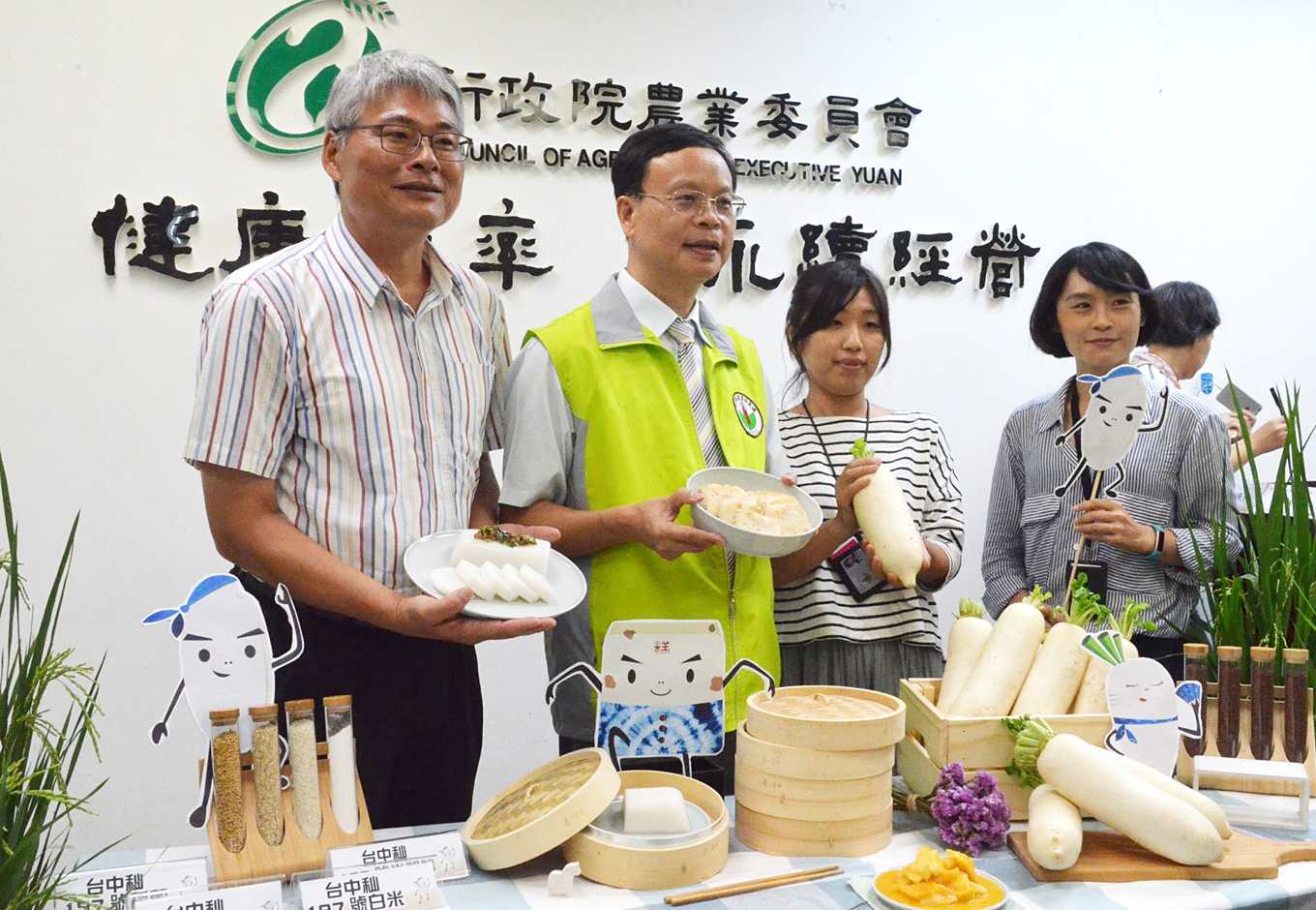
Promotion of the New Summer Heat-Tolerant Taichung No. 2 Radish and Taichung Sen 197 Tsailai Rice Varieties
Text / Lin Pei-chun, Upstream and Downstream reporter
After 30 years, a new Tsailai rice variety has finally been bred: "Taichung Sen 197"! The Taichung District Agricultural Research and Extension Station yesterday (the 24th) announced the new Tsailai rice variety, which has good disease resistance and can be made into pure rice vermicelli and other products after a shortened storage period, with excellent results. The station also announced the new radish variety "Taichung No. 2," which is suitable for summer planting, has good heat tolerance and a low disease rate, and is suited to being grown on the plains of central and southern Taiwan. It can fill the gap in Taiwan's radish production from April to October each year and is expected to reduce dependence on Chinese radishes in summer.
New Tsailai rice variety - Taichung Sen 197, can shorten the storage period
To revive rice-eating culture, the Taichung District Agricultural Research and Extension Station has bred a new Tsailai rice variety - "Taichung Sen 197." Station director Lin Hsueh-shih said this is the first new Tsailai rice variety bred in Taiwan after a gap of 30 years. "Taichung Sen 197" has good environmental tolerance, can resist rice blast as well as pests such as bacterial leaf blight, planthoppers and white-backed planthoppers, and the rice plants are not prone to lodging, so yield and quality are less affected.
In addition, "Taichung Sen 197" has a high head rice rate and good quality, making it especially suitable for processing into pure rice products such as pure rice vermicelli. Lin Hsueh-shih further said that rice grains generally need to be stored for more than a year until the components in the grains age before they are easy to shape and suitable for processing into foods such as bowl cakes, but "Taichung Sen 197" has a storage time at least 3 months shorter than ordinary rice varieties, making it convenient for operators to carry out processing procedures in a shorter time.