The specific relationship between bronchiectasis and immunodeficiency
Immunodeficiency disease is a big topic; it can cause dozens or even hundreds of diseases, and bronchiectasis is only a very small branch among them. Among the immunodeficiencies that can cause bronchiectasis, the direct one is a deficiency of one or more immunoglobulins, and the indirect ones also include phagocytic function defects, cellular immune deficiency, humoral immune deficiency, ciliary motility function defects, adhesion molecule defects, and so on.
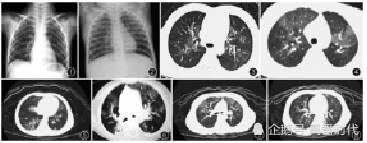
Chest X-ray of bronchitis
Deficiency of multiple or a single immunoglobulin can likewise trigger a lack of one or more IgG subclasses, usually accompanied by recurrent respiratory tract infections, and can cause bronchiectasis. IgA deficiency is not often accompanied by bronchiectasis, but it can coexist with IgG2 subclass deficiency, causing recurrent purulent lung infections and bronchiectasis.
Among the indirect causes of bronchiectasis-related immunodeficiency, the most closely related are cellular immune deficiency and ciliary motility function defects. Cellular immune deficiency also occurs as primary and secondary forms; specifically, it manifests as weak inherent resistance, susceptibility to recurrent infections, or progression to severe disease after infection. These infections include respiratory system diseases such as bronchiectasis, and in primary cellular immune deficiency, infections are mostly seen in infancy and other childhood stages; with repeated recurrent infections, medical attention should be sought to confirm whether it is cellular immune deficiency. With this defect, various live vaccines must not be administered.
Cellular immune deficiency
What people often call ciliary dyskinesia or immotile cilia syndrome is in fact ciliary motility function defect. This is an autosomal recessive inheritance, and it manifests as abnormal ciliary function caused by various hereditary primary ciliary structural defects; the common one is abnormal respiratory ciliary function, causing recurrent respiratory tract infections. Primary ciliary dyskinesia includes several types such as immotile cilia syndrome, Kartagener syndrome, ciliary dyskinesia, and primary ciliary disorientation.
If you have any questions or need help, please call 01062170649 13269852331