Must-read for succulent beginners: 37 practical tips summarized by an 8-year veteran
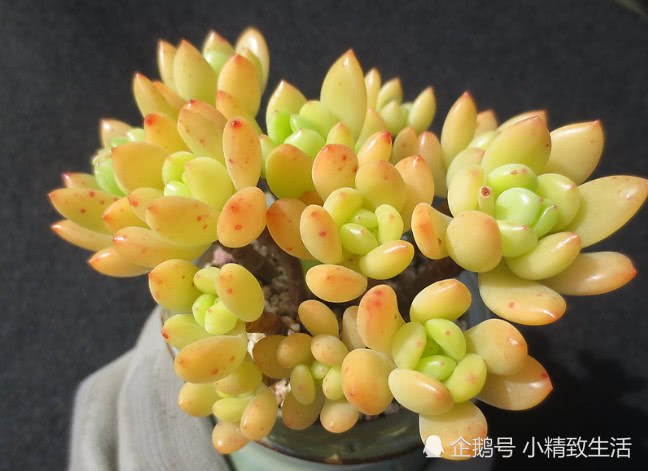
Below is the most down-to-earth experience summarized by a master who has grown succulents for 8 years. It is very suitable for beginner friends who have just fallen into the pit. Xiao Jingzhi Life has organized it as follows:
1. Buying succulents
1. When you are just starting out, try to choose common varieties, which are cheap, easy to grow, and also good for practice. As long as the goods match the names, that is enough.
2. Succulents with particularly good condition, mutated ones (variegated, cristate, monstrose, etc.), or especially expensive ones are indeed very beautiful. But if you are a beginner, they may only look good for a period of time right after you buy them.
3. For example: slowly growing common varieties into good condition is like an ugly duckling turning into a white swan, while expensive ones slowly losing their condition is like a phoenix falling into a chicken coop. Which would you rather choose?
4. Succulents bought online are relatively cheap, but the chance of receiving something different from what was pictured is relatively high, and after shipping, the process of drying the roots and getting them established after arrival is rather long; local physical stores or greenhouses let you choose the succulents you like, and because they are in the same city, the climate, temperature, and other general environment are almost the same, and most local physical stores also do not require you to pot them yourself after going home (unless you insist on repotting), but the price is relatively a bit more expensive.
2. Choosing flower pots
5. Overall, succulent pots can be "everything can be a pot": empty wine bottles, milk cartons, broken bowls and old pans, unused cups... as long as you have a heart good at discovering and a pair of hands that love to tinker.
6. Porcelain pots are beautiful, brightly colored, come in many shapes, and are smooth and crystalline because of the glaze; precisely because of the glaze, their breathability and drainage are relatively poor. When using porcelain pots, you need to pay special attention to ventilation and water control.
7. Red clay pots have a simple, rustic shape, relatively good breathability and drainage, and the potting soil dries out relatively quickly. Succulents in red clay pots grow relatively slowly, but are relatively easy to color up.
8. Plastic pots, mainly referring to small black square pots, are cheap, and the design of the bottom of the pot is very reasonable, but the breathability and drainage of the sides are very poor, and black absorbs heat, so in summer you need to take shade measures for the pots; you can try light-colored plastic square pots.
9. If the flower pot is too large, the potting soil can easily stay wet for a long time, especially in summer, when it is prone to black rot and root rot. Generally, the diameter of the pot being 2-3 cm larger than the diameter of the succulent is enough.
10. The drainage hole at the bottom of the pot is very important, but not having one is not impossible. Pots without drainage holes require special attention: use coarse particles as a base layer at the bottom of the pot, and strictly control water. Beginner succulent growers: if you have not even done this step well, it would be strange if your succulents could survive!
3. Soil mixing
11. Experienced veterans all have their own exclusive soil mixing methods. Here is a general soil mixing method that beginners can use right away and can refer to and improve: peat soil 5 + coarse sand 5; if conditions allow, peat soil 3 + coal cinder 1 + sawdust 1 + coarse sand 5. Coal cinder can be crushed and sifted before use. Teach you how to use local materials and the most economical way to mix ideal potting soil for succulents
12. Put large pieces of coal cinder at the bottom of the flower pot.
13. For a more advanced version, coconut soil can increase breathability, and vermiculite can increase water retention. The two added together can also complement each other, but both are relatively easy to powderize, so coconut soil can be added at most 1/4, and vermiculite at most 1/10.
4. Potting
14. Root trimming. Remove all dead roots, rotten roots, bad roots, and fine fibrous roots, and wash with carbendazim solution.
15. Root drying. After washing, leave them in a cool, ventilated place until all wounds shrink and dry out.
16. Root induction. Depending on the situation, you can use the root induction step to make the subsequent establishment period of the succulent easier. The method is to use a disposable paper cup filled half with water, seal the cup opening with plastic wrap, poke a hole in the middle of the plastic wrap, place the succulent on the plastic wrap with the roots extending through the hole into the cup without touching the water, and put it in a cool, ventilated place to wait for rooting. Beginner flower growing: 1 disposable cup + 1 piece of plastic wrap, so your succulents can get established without stress
17. Wet soil dry planting, moist soil dry planting, dry soil dry planting. Choose according to different varieties and the specific condition of the succulent.
18. Bottom layer. Put mesh at the very bottom (available on Taobao), place large particles on top of it, and place potting soil on top of that.
19. After filling one layer of potting soil, you can add some base fertilizer; plant ash or bone meal is fine, just a thin small layer.
20. Continue adding soil. Estimate according to the length of the succulent, stop when it is almost at the root area, then shape a conical mound of soil in the middle of the pot, spread the succulent's root system evenly over the mound, continue adding soil until the potting soil completely covers the succulent's roots, continue filling up to the required height, and then gently press firm. Beginner flower growing: 6 pictures teach you the correct potting methods for 4 types of succulent root systems bought online
21. Top dressing. Use whatever medium you think is beautiful as top dressing. Top dressing can prevent the potting soil from being washed uneven by watering, and can also prevent small flying insects.
5. Establishment
22. The establishment period varies depending on factors such as the succulent variety and the surrounding environment. Generally speaking, it is about one week.
23. The environment for the succulent establishment period is ventilation + scattered light.
24. Establishment is actually the process of the succulent adapting to a new environment and growing new roots. The specific process shows as leaves becoming soft, wrinkled, or even shriveled and withered from bottom to top, then stretching out and becoming plump again from top to bottom.
25. During the establishment period, when the leaves are soft, wrinkled, and shriveled, many beginner friends think it is lack of water, so they desperately water, resulting in tragedy. In fact, this is a normal phenomenon, so absolutely do not water.
26. After new roots sprout and the leaves stretch out and become plump again, it means the establishment period is over. At this time, you can gradually increase light until normal care. Do not immediately expose them to full sun; there must be a gradual adaptation process.
27. Succulents rooted by the root induction method are relatively easier during the establishment period.
6. Care
28. There is too much experience about succulent care, but the three most important points are: light, water control, and ventilation. No matter what environment or climate, these three factors must be considered.
29. Sunlight is a double-edged sword. Without light, they will absolutely become leggy, while summer exposure can cause sunburn and death.
30. The eight-character motto for watering: do not water if not dry, water thoroughly when watering. There is a method for judging watering time that is common everywhere: see whether the succulent leaves are shriveled and wilted, and pinch the succulent leaves to see whether they have become soft. If they have become soft and wilted, you can water with confidence. Is there a succulent watering method applicable nationwide? Watering this way suits most areas
31. Outdoor flower racks have the best level of ventilation, balconies with open windows have an excellent level of ventilation, and high-rise bay windows have a good level of ventilation. On hot, stuffy, damp weather, add an electric fan for your succulents as early as possible.
32. Fertilizing is generally best in autumn; a few granules of controlled-release fertilizer from a regular manufacturer are enough.
33. For pests, when there are few, use a toothpick or tweezers; when there are many, use Huahuashen. Do your succulents have this kind of small insect? Teach you a few tricks to kill them all! Even if they do not have them, take a look to prevent them
34. Black rot and rot from waterlogging, once they occur, are basically unsolvable. The best result is still having time to behead or leave a few leaves that still have growth points. The key lies in prevention. Control water, ventilate, shade, and cool down. For succulents getting through summer, have you done these preparatory tasks well?
7. Propagation
35. For leaf propagation, try to choose spring and autumn. Also, when pulling leaves, remember: a little pulling is pleasant, heavy pulling harms the body, and forceful pulling turns to dust. She accidentally knocked off a few succulent leaves, and in the end they actually became
36. Unless disease makes beheading necessary, otherwise avoid summer. Otherwise you will regret it. Beginner flower growing: 5 pieces of advice about beheading succulents from a flower friend who has grown succulents for 6 years
8. Summary
37. An old saying: no zuo no die.
Organized and published by Xiao Jingzhi Life, hope it is helpful to everyone.