The king of lychees: one fruit is worth one liang of gold; it was once a tribute to the imperial court and very few people have ever tasted it
When it comes to lychees, everyone has eaten them; they have been a beloved fruit from ancient times to the present. An ancient poem goes: "A rider gallops through the red dust as the consort smiles, no one knows it is the lychees arriving," linking lychees with the emperors and consorts of ancient times and making the lychee's reputation even more resounding. Today there are many lychee varieties; "Feizixiao" is one of the tasty varieties, along with Guiwei, Nuomici, Bingli and others. But what we are talking about today is not these lychees, but the one called the "king of lychees," "Gualv." Have you heard of it?
Gualv is the most precious lychee in Zengcheng, Guangdong. In the Qing Dynasty it was a tribute presented to the imperial court, and its price was extremely high. A Qing Dynasty poet once described Gualv lychees like this: "Lychees grow everywhere in the southern region, but Zengcheng Gualv is as precious as pearls. Even with gold ready, it is not easy to buy, and by May it has still not reached the plate or bowl." Gualv lychees have always been said to be worth one liang of gold per fruit; even with money, one may not be able to buy them, because they grow only in Zengcheng and their yield is very low, so they are in a situation of having a price but no market. On the oldest Gualv lychee tree in Zengcheng, the annual yield is only about 100 fruits, and in low-yield years it produced only just over 60.
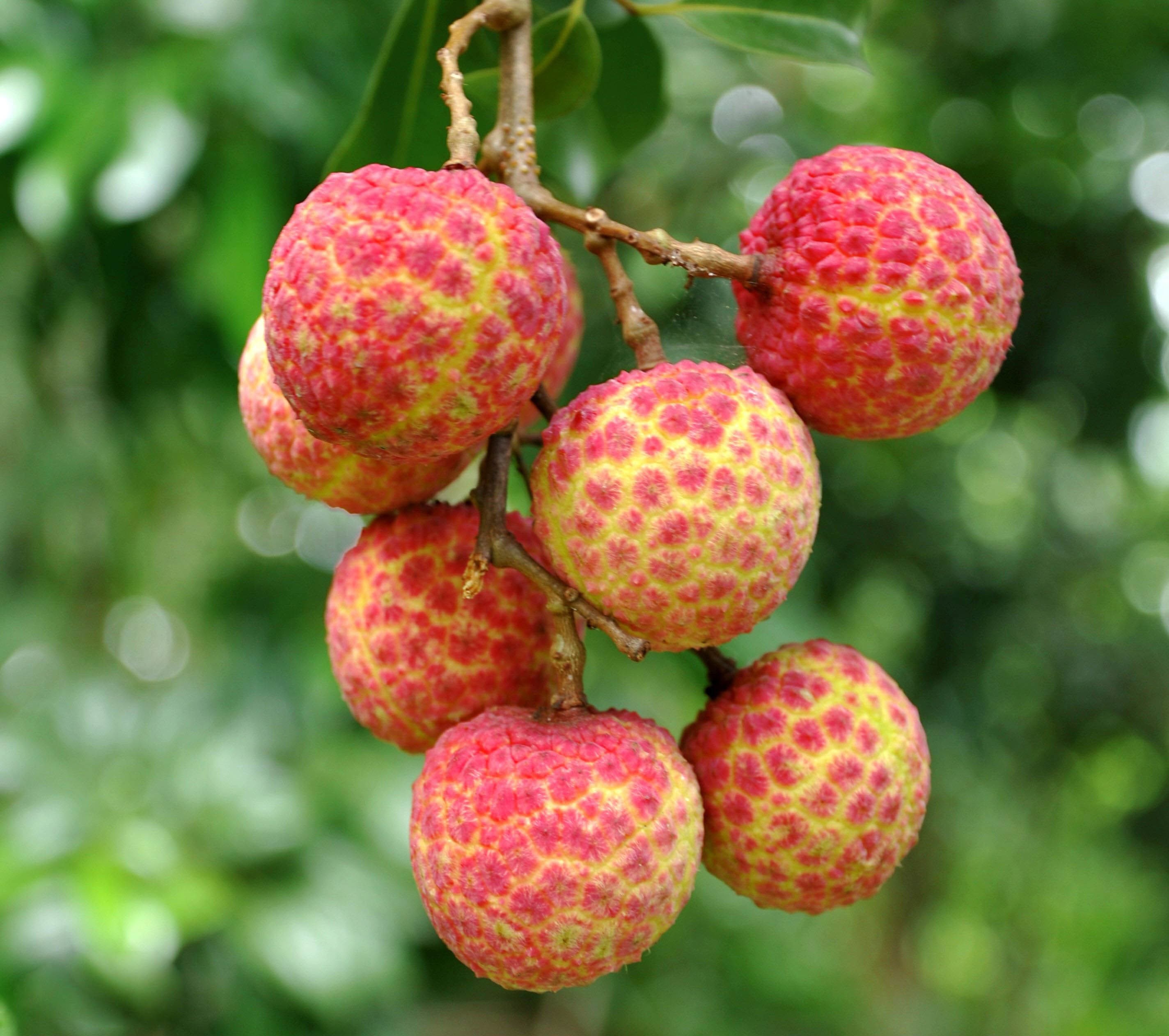
The reason Gualv lychees are so expensive is, apart from being relatively rare, mainly their excellent taste. Gualv gets its name because its fruit body has a green streak, with the shell four parts green and six parts red. The fruit is flat and round, not especially large, but of superb quality. The book Guangdong Xinyu describes Gualv like this: "Gualv is crisp and refreshing like a pear, with no visible juice; remove the shell and keep it in your bosom, and for three days it does not change." Its texture is crisp and refreshing, with no viscous juice, and after removing the shell it can remain unchanged for 3 days, something unmatched among lychees; therefore Gualv is called the "king of lychees."
In Zengcheng, Guangdong, there is a 400-year-old ancient Gualv lychee tree. The lychees it bears are basically all auctioned, and the auction proceeds are used to maintain the tree's growth. According to records, the Gualv produced by this tree has an average auction price of around 50,000 yuan, and the most expensive single Gualv lychee once sold at auction for a "sky-high" price of 550,000 yuan, making it arguably the most expensive fruit in the world. Today this ancient tree has become a cultural symbol of Zengcheng, attracting numerous tourists to visit every year.
Although the lychees on the ancient tree cannot be eaten, there are many introduced and propagated Gualv trees in Zengcheng; they are a famous local specialty, and the price is also quite high. Gualv lychees are basically sold one by one; 50 yuan can buy 2 to have a taste, and this is still the local price. If you are away from the area, it is very hard to see any trace of Gualv, so very few people have eaten this "king of lychees." Has anyone here eaten it?