The farmland weed that people say can't be killed by the sun, now 10 yuan per jin and a rare wild vegetable
Friendly reminder
Hemu Report aims to share and popularize information about various plants and their uses, for reference only. If medicinal use is needed, it is recommended to consult a professional physician to avoid problems!
Most friends living in rural areas have their own vegetable gardens. They generally turn their own backyards into vegetable gardens and then plant all kinds of vegetables. That is exactly what the author's home is like. In the backyard, many seasonal vegetables are grown, such as green peppers, tomatoes, sweet potatoes, Rorippa indica, and so on. For farmer friends who have tended vegetable gardens, one of the most infuriating things is the various weeds that grow in the vegetable garden. These weeds often grow together with the vegetables, are hard to remove, and pesticides cannot be sprayed for fear of damaging the vegetables too, so the only option is to pull the weeds out by hand.
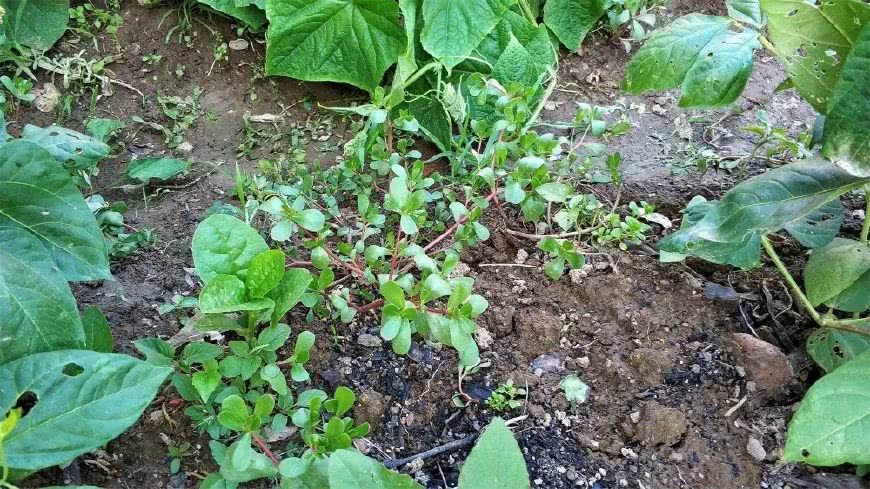
In the afternoon, the author was pulling weeds in the family vegetable garden. Although most of the weeds were pulled out and thrown away, some weeds had to be kept, and among them was "sun-can't-kill." Many friends must be very curious about what kind of wild grass "sun-can't-kill" is. The author thinks friends who have lived in rural areas should know that it is purslane. The reason purslane is called sun-can't-kill is that its vitality is extremely tenacious. In particular, purslane likes high temperatures, tolerates drought, and is heliotropic. Under normal circumstances, no matter how it is sun-dried, it can stubbornly survive, hence the name.
In fact, in the past, purslane was not very popular. Instead, it annoyed many farmer friends. As for the reason, the author thinks only farmer friends who have planted fields can understand it, because purslane is a notorious major harmful weed.
The place purslane likes to grow most is vegetable gardens and farmland. It prefers fertile soil, tolerates drought and also tolerates waterlogging, and has strong vitality. It survives more easily than most crops and vegetables. Especially when drought or waterlogging occurs, crops and vegetables all die, but purslane will not die. One can imagine how strong its vitality is.
Because of this, it often steals nutrients from crops and vegetables, causing poor growth of crops and vegetables and thus reduced yields. So in the past, farmer friends really disliked it. Whenever they saw purslane, they would pull it out roots and all.
But nowadays, purslane can be said to be loved not only by farmer friends, but also by friends in the city. In rural areas it is still easy to say, since it can be picked at any time, but in the city, purslane has transformed and become a rare wild vegetable costing 10 yuan per jin.
Although purslane was once very "hateful," it must be said that its nutritional value is very good, and it tastes slightly sour with a very good mouthfeel. According to records, purslane is rich in nutrients such as dihydroxyethylamine, malic acid, glucose, calcium, phosphorus, iron, vitamin E, carotene, vitamin B, and vitamin C. Whether eaten raw in a cold salad or stir-fried, the flavor is excellent. Eating it regularly can also lower blood cholesterol concentration and improve the elasticity of blood vessel walls, which is very beneficial for preventing and treating cardiovascular diseases.
Besides being edible, purslane also has relatively high medicinal value. According to "Chinese Materia Medica," the whole plant of purslane can be used as medicine. It has the effects of clearing heat and draining dampness, detoxifying and reducing swelling, reducing inflammation, quenching thirst, and promoting urination. The seeds of purslane also have the effect of improving eyesight and can be used to treat various conditions such as heat dysentery with pus and blood, heat strangury, leukorrhea, carbuncles, swellings, malignant sores, and erysipelas. It can be said that purslane is a good wild grass that serves as both medicine and food. Precisely because of this, purslane is so popular today, having changed from a harmful weed that everyone removes on sight into a rare wild vegetable costing 10 yuan per jin.
Dear friends, summer is almost here. Are you preparing to go to the vegetable garden to pull some purslane to eat?
Text/Hemu Report, Images/Hemu Report
If you like Hemu's articles, you are welcome to follow