How to remove dust from succulents? This little trick makes succulents more radiant
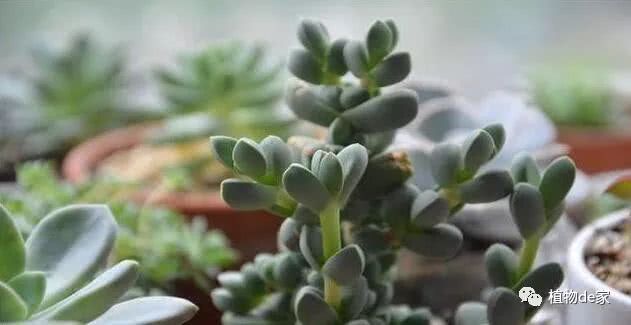
A thin layer of dust on succulents is a problem that troubles many succulent enthusiasts. Succulents grown on a balcony or rooftop will, after a short time, be found covered in a fine layer of dust, and blowing on them with an air blower sends dust flying everywhere. Dust on succulents, first, seriously ruins their appearance! The succulents all become unattractive, and second, it also affects the photosynthesis of the leaves. When succulent leaves are covered in dust for a long time, it is like putting a light-blocking shade over the plant.
So how should this problem be solved? The answer is to give the succulent a full-body shower of water. This is the most efficient and effective way to remove dust from succulents. Do you envy those expert growers who show off their outdoor-grown succulents with perfect form? Actually, rain washing away dust deserves some of the credit, more or less. But spraying water to remove dust also requires attention; if not controlled well, it can instead damage your beloved succulents. First, pay attention to the strength of the water stream. If too strong, it may wash the potting soil out of the pot; if too weak, it may only wet the surface, causing previously scattered dust to gather in a few spots and look even worse.
So if you want to remove dust, make up your mind and do not just wet the surface; at least let the water flow over the leaves and then into the soil. Second, pay attention to the timing of spraying. Spraying water is equivalent to a thorough watering, so do not join in on cloudy or rainy days, as it easily causes leggy growth. In the hot summer and cold winter, also restrain your hands. Even watering can cause damage, let alone a full-body shower.
In addition, spraying in the evening is better. Usually the wind at night will dry it off, and it will not cause the soil to stay stuffy and wet, which can lead to black rot in succulents. After spraying, be sure to blow away any accumulated water in the leaf centers. You can use an air blower; of course, blowing with your mouth is also acceptable, though it takes much more effort... If the climate is unsuitable or strong sun is about to come out, do not rush to spray water, so as to avoid sunburn on the leaves where there is water.
Sometimes, not dealing with it actually will not cause problems, for example, if the natural wind overnight can dry it off. Sometimes you should not spray water, such as with some more delicate varieties, varieties that have farina and easily lose it, and succulents with scale insect pests. For succulents with scale insects, because of the damage caused by their piercing and sucking, wounds are prone to infection when they meet water, and water that touches the honeydew secreted by scale insects does not dry easily. Of course, at this time, pest control is the first priority.
This method also requires choosing a suitable tool, such as a high-pressure spray bottle, or a hose nozzle that can be connected to a faucet and allows adjustment of the water spray strength. This way, the efficiency of dust removal can be greatly improved.