How do you grow jasmine? This detailed method makes the flowers bloom bigger
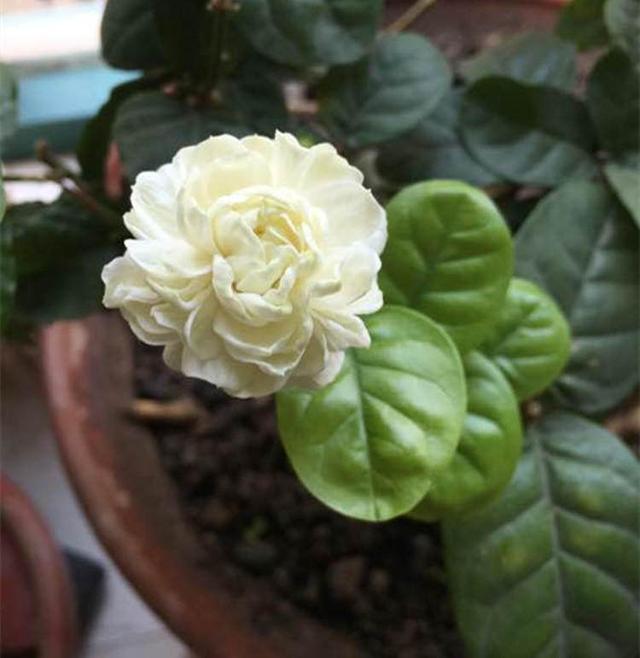
Jasmine is a flower that everyone must have a pot of in summer. Because its flowers are both white and fragrant, it really brings a cool feeling to the heat of summer. But caring for jasmine is not so easy; it requires care and also a detailed care method, so that jasmine blooms even more.
1. Jasmine soil mix
Jasmine is a flower that likes fertilizer and prefers acidic soil. It requires loose soil with good drainage. Heavy clay soil drains poorly and easily causes root rot. A pH of 6.0-7.0 is most suitable. The best soil for potting is one that has been specially blended. The mixing ratio of the blended soil: 4 parts fertile garden soil (sandy loam), 4 parts compost (manure and fallen leaves), 2 parts river sand and a small amount of plant ash, mixed thoroughly.
2. Care of cuttings
For seedlings that have rooted from cuttings, because the planting density at cutting time was high, the new roots are often intertwined with each other. In order not to damage the new roots, when separating the seedlings, you can put the seedlings together with the soil into a basin of water, use water to wash apart the root soil, and then carefully sort out the roots of each seedling. Do not wash off too much soil; as long as the seedlings can be separated, it is enough. Let the roots keep as much soil as possible.
After the seedlings are separated, do not rush to pot them. Spread the seedlings out in the sunlight for a short while. When the new roots turn slightly red, then pot them. This can avoid root rot after potting. Within 1 week after potting, they should be placed in a shady place, and at the same time spray water on the leaves 2-3 times a day. Once they have recovered from transplanting, put them in the sunlight for routine care.
3. Care after moving outdoors
Potted jasmine all overwinters indoors. When spring returns to the earth, the jasmine must be moved out from indoors. For the season to move them out, when the temperature stabilizes above 15°C, flower lovers in North China are advised to do it after Grain Rain. If moved out too early, they often suffer freezing at night, causing leaf drop, and in serious cases even death.
After the jasmine is moved outdoors, first cut off the thin, weak, overly dense, and dead or diseased branches. Then, according to the plant's growth condition: for strong-growing ones, cut off the new shoots that grew in autumn; for weak-growing ones or those cultivated for many years, cut off the branches that sprouted in summer. Generally, no pruning is done in cultivation.
Next is removing old leaves to promote early and uniform sprouting. There are two ways to remove leaves: one is to pick the old leaves from the base upward to the pruning cut, leaving 1-2 pairs of leaves; the other is to alternately remove one leaf per node. If you do not require overly concentrated blooming, you can just remove some of the old leaves at the base to improve ventilation and light penetration within the plant clump.
3. Fertilizing care
Keeping the potting soil sufficiently fertile is an important condition for jasmine to be robust and bear many flowers. When fertilizer is sufficient, each inflorescence can often maintain 3 groups of 3 small flowers; when fertilizer is insufficient, there are only 3-5 small flowers on 1 inflorescence. A general-purpose organic nutrient solution for flowers is best as the fertilizer. Topdressing begins when spring buds sprout and shoots grow. The fertilizer concentration should be light (fertilizer 1: water 500); strong fertilizer affects new root growth and causes the plant clump to remain weak for a long time. Apply light fertilizer once a week.
When the new branches are forming buds (when the new branches have grown 2-3 pairs of leaves), control water and fertilizer, and you may also appropriately stop watering and fertilizing. When some (about half) of the new shoots show slight wilting, then water with 800 times diluted organic light fertilizer water. This serves to control branch elongation so that nutrients are diverted to the flower buds, and the lower root system, due to lack of water, makes the new roots "age" and mature.
4. Watering care
For watering jasmine, at the beginning, because the temperature is low and the plant's transpiration is small, water once every 1-2 days according to the weather conditions; or adopt an alternating method of watering the whole pot with a large amount of water and watering half the pot with a small amount of water. This can avoid excessive water content in the potting soil, which causes root rot and yellow leaves. As the plant gradually grows more vigorously and the temperature rises, increase from watering once a day to watering once each morning and evening. In the hot summer and when the weather is dry, spray water on the leaves 1-2 times a day.
5. Care for yellow leaves
Potted jasmine often develops yellow leaves. Causes of yellow leaves: yellow leaves in early spring are related to poor overwintering management; yellow leaves in summer are mostly due to excessive watering, the potting soil being too moist, the root system being damaged by suffocation, or insufficient fertilizer in the potting soil failing to meet the nutrient needs of jasmine growth, or increased soil alkalinity.
When yellow leaves appear, promptly treat according to the cause to turn the situation around. If it is due to too much water and not too serious, you can move the pot to a ventilated, shady place, raise the bottom of the pot with an upside-down empty pot, stop watering, and let the water in the potting soil gradually decrease so the roots can resume growth; if serious, you can use the method of changing the soil.
If the cause of yellow leaves is insufficient fertilizer, you can apply thin fertilizer frequently, topdressing once every 1-2 days. When the potting soil becomes more alkaline and yellow leaves appear, you can add black alum (ferrous sulfate) to the organic nutrient solution when topdressing and pour it on. Generally, after watering 3-4 times, the leaves can turn from yellow to green.