How to source materials for a Vitex negundo bonsai? These points you need to master
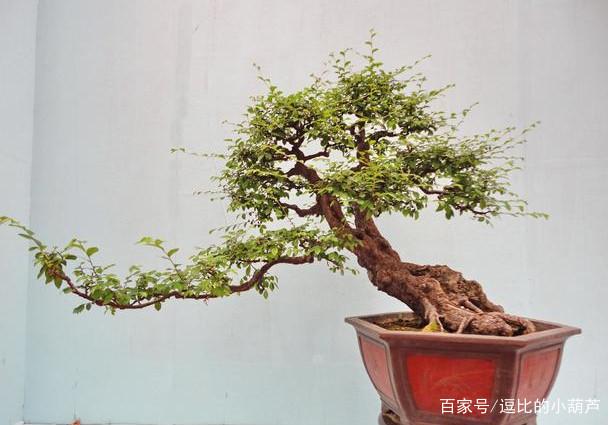
Hello everyone, I'm Little Gourd, and welcome to read my article. Vitex negundo is widely distributed in our country and is also a relatively common tree species. Sourcing material for Vitex negundo is relatively easy, and its form is simple and ancient, making it a commonly used material for making bonsai. Today Little Gourd will talk about sourcing material for Vitex negundo bonsai.
Vitex negundo bonsai can be transplanted year-round, with the highest survival rate in winter and spring. The wood is hard and dense, loses water slowly after being collected, and is easy to keep alive. Before cutting, cut off the long branches and remove the twigs, doing this before potting. When pruning, its potential should be fully brought out, examine carefully, retain fibrous roots and capillary roots as much as possible, and pay attention to making smooth cuts. First grow it in a pot or in the ground to ensure survival.
For spring digging, good stumps can be planted directly in cultivation soil. In cases where the digging time has been too long and the roots are too long, severely water-deficient stumps can be soaked in clean water for a period of time, then planted in plain sandy soil without too many nutrients. Planting should be deep, keeping the stump as little exposed as possible to reduce losses and improve the survival rate.
After planting, water thoroughly. A transparent plastic bag keeps in moisture. It is kept out of direct sunlight for a period of time, then moved from the wind to a sheltered place. From then on, when the soil is dry, water should be replenished in time. When it is hot, the plastic bag can be opened a little at one corner, allowing ventilated seedlings to help the stump adapt to the outside world. Once the plant is stable, the plastic bag is removed completely.
Artificial propagation: Vitex negundo can be propagated by sowing, division and layering, but because of artificial breeding, the roots and stems are not thick, the leaves are sparse, and the form is not good, so it is generally not suitable for bonsai landscape use. At present, bonsai material is selected from old roots excavated in the wild.
Wild digging in the mountains: the growth of Vitex negundo is mainly concentrated along the edges of low hills and gullies. It can be pruned freely into old twisted forms, rich with many years of wild charm. In spring, dig during the 2nd to 3rd month of spring, protect the root system, cut off long main roots, and prune branches according to shaping needs. Prune the stump and promptly carry out "embryo raising." Attention should be paid to maintenance and management. The trunk is covered with moss, watered daily during dry periods, and the soil kept moist. The roots recover growth, and the branches and leaves flourish after 1 to 2 years.
Dig and excavate wild old stumps, which are easy to keep alive and vigorous, and can be cultivated into shape quickly. The method is: first dig Vitex negundo stumps in spring, prune first, keep the main branches, cut off all the rest, plant directly in a pot for cultivation, shade, spray water, and manage moisture.
After budding, reduce spraying and provide shade at noon. When the new branches are half-lignified, carry out heavy pruning, cutting the branches down to 1 to 4 cm long, which is the first branch of the stump. After heavy pruning, growth resumes. In mid-to-late June it will be replaced with the soil of a display pot. Every 2 to 3 days, pinch once a week, once a week, use thin coarse cake to promote the sprouting of new branches and leaves. Through repeated pinching, the branches become dense and the leaves become smaller.
If you want to care well for a Vitex negundo bonsai, the first step of sourcing material is very important. Did you know?