Keep one of these at home to kill bacteria and eliminate bad breath; brewing it as tea in summer also helps clear away summer heat
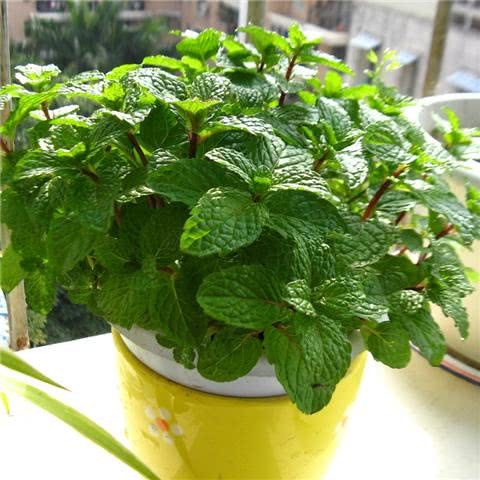
Agastache rugosa (Patchouli) and mint are easily confused; they look quite similar and both give off a refreshing fragrance.
Mint
Mint needs plenty of sunlight, so if you grow mint, you must put it in a sunny spot. Growing mint requires fertile, loose soil. If the pot is too small, or there is too little soil, the nutrients cannot keep up and it will grow very slowly.
Mint benefits:
Mint leaves taste cool and refreshing; they can be used as a seasoning, a spice, and can also be brewed as tea.
For brewing tea, flower shops sell dried mint leaves. They are actually made by picking fresh mint leaves and drying them in the sun. Mint steeped in water not only has a cooling effect, but also promotes digestion.
It can relieve insect bites. It has an itch-relieving effect; if you are bitten by mosquitoes or other insects, you can crush mint leaves and rub them on, and you will feel a bit more comfortable
Agastache rugosa (Patchouli)
Agastache rugosa prefers a growing environment with higher temperatures, plenty of sunlight and abundant rain. It is not strict about soil, and it is suitable to choose a deep, loose, breathable sandy loam.
Agastache rugosa benefits:
Used for summer heatstroke, with symptoms such as dizziness, chest tightness, nausea, a sticky feeling in the mouth and no desire to eat; it can be used together with Eupatorium fortunei and mint.
Agastache rugosa has a bactericidal function; holding one leaf in the mouth can eliminate bad breath, prevent infectious diseases, and it can also be used as a preservative.
In summer, steep it in boiling water as a substitute for tea, and it can serve as a refreshing summer drink.