How can carnations (Dianthus caryophyllus) truly become fragrant
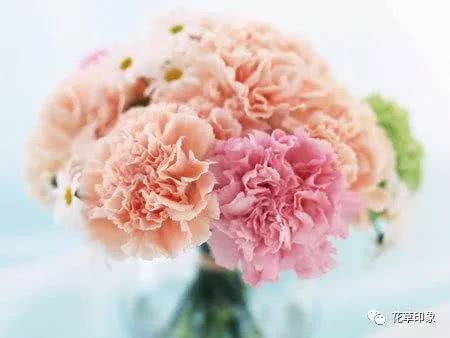
Carnation - the national flower of Turkey, is a transliterated name for Dianthus caryophyllus, a perennial herbaceous plant with grayish-green stems, verdant leaves, and flowers with a faint delicate fragrance. Carnations bloom from May to July, and in greenhouses they can bloom in all four seasons. And in Europe, carnations were once used to treat fever, and during the Elizabethan era they were also used as a spice additive for wine and ale, to replace the more expensive clove. Morocco, Monaco, the Czech Republic, Honduras, Turkey, Spain and many other countries use the carnation as their national flower.
Carnation --- the origin of the name
The fame of Dianthus caryophyllus owes much to the first Mother's Day stamp issued by the United States in May 1934. The stamp design was a world-famous painting, depicting a mother gazing at carnations placed in a vase. The circulation of the stamp linked the carnation with Mother's Day. Thus Westerners conventionally designated the carnation as the flower of Mother's Day. On Mother's Day, those whose mothers are still living wear red carnations and make them into bouquets to give to their mothers. Those whose mothers have passed away wear white carnations to show their mourning. There is no one in the world without a mother, so the carnation became a flower that no one could dislike. Because of Mother's Day, the carnation took on a layer of maternal love, becoming an indispensable gift for mothers. With the deepening of reform and opening up and cultural exchanges between China and other countries, Mother's Day gradually spread to China, and the carnation truly became "fragrant," with ordinary people slowly accepting the pleasant foreign name - carnation.
Pinching
Pinching means removing the topmost bud of the carnation. During the growth of carnations, pinching should be done 1 to 2 times to promote branching. When the seedlings grow 8 to 9 pairs of leaves, carry out the first pinching, keeping 4 to 6 pairs of leaves and removing all the ones above. When the side branches grow more than 4 pairs of leaves, carry out the second pinching. Keep 3 or 4 pairs of leaves on each side branch. Finally, make the whole plant have about 10 side branches. In addition, promptly remove the side buds and flower buds on each side branch, keeping only one flower bud at the top of each branch. After pinching, the plant has a graceful shape and blooms abundantly.
The Carnation Revolution
The Carnation Revolution was a military coup that took place in Lisbon, the capital of Portugal, on April 25, 1974. After World War II, many European countries voluntarily or forcibly gave up their colonies. Portugal's far-right Salazar regime, however, refused to give up its colonies, and so it still maintained a vast colonial empire. Portugal tried to resist the wave of decolonization launched by its colonies, and thus the Portuguese Colonial War (1961 - 1974) broke out. The long war and enormous military spending caused the Salazar regime to lose the support of many Portuguese people, especially mid- and lower-ranking officers. During the coup, soldiers held carnations instead of rifles, and the Carnation Revolution got its name from this. This revolution overthrew the longest-lasting dictatorship in 20th-century Western Europe (42 years), and afterward triggered a two-year period of chaos known as the "transitional period," with frequent changes of government, 15 prime ministers replaced within 10 years.
Carnation flower tea
Carnation has the effects of beautifying the face, calming the nerves and quenching thirst, clearing the heart and brightening the eyes, reducing inflammation and relieving irritability, promoting fluid production and moistening the throat, and strengthening the stomach and relieving indigestion. It has a clear effect on treating headaches and toothaches. It contains various trace elements needed by the human body, can accelerate blood circulation, promote metabolism, and has the effects of clearing the heart and removing dryness, detoxifying and beautifying the face, and regulating the endocrine system. It also has the effects of strengthening the kidneys and replenishing essence, and treating consumptive disease, cough, and diabetes. It clears the liver and cools the blood, whitens the skin, and removes spots and wrinkles. It can improve blood circulation, enhance the body's metabolism, and has effects such as clearing the heart and removing dryness, detoxifying and beautifying the face, delaying aging, regulating the female endocrine system, tonifying the kidneys and boosting vitality, strengthening the stomach and stimulating appetite, and regulating blood lipids for weight loss. When brewing carnation, it is suitable to pair with: forget-me-not, violet, rose queen, and wintersweet.
The flower of mothers
The carnation has a plain and elegant appearance, a fresh floral fragrance, and a long blooming period, and whether standing alone or made into a bouquet with other flowers, carnations are very eye-catching, so carnations have always been a hot-selling flower on the floral market. Carnations are often given to mothers, representing passion, charm, the love that makes one tender, true feelings, mother I love you, warm blessings, loving you, warmth, kindness, selfless maternal love, tolerance, the flower of mothers, deep family affection, longing for family, and more.
LOVE. Soilless Farm
Soilless FarmShengguojiu Mall
Discover the beauty of growing flowers