How to Grow Bamboo Root Ginger? Key Points of Pollution-Free Cultivation Techniques in Kaijiang County
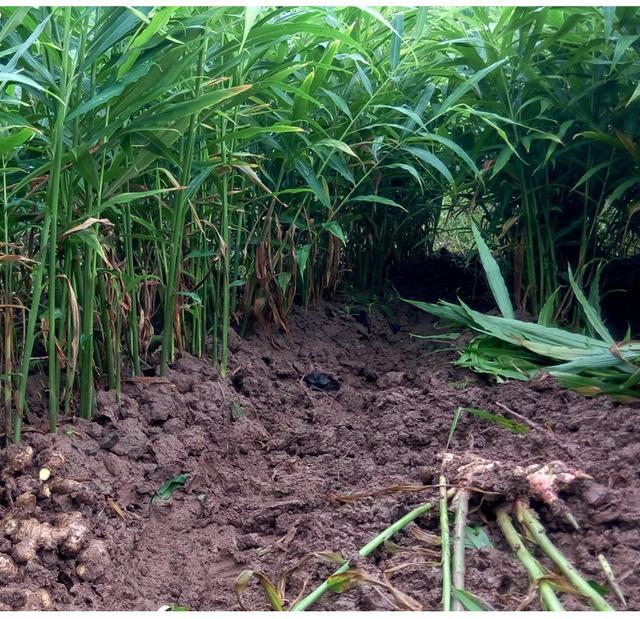
Key Points of Pollution-Free Bamboo Root Ginger Cultivation Techniques in Kaijiang County
Kaijiang County has a long history of bamboo root ginger cultivation. It is an agricultural product with highly distinctive local characteristics, famous for being crisp, tender and juicy, low in fiber and rich in ginger aroma, and its price is far higher than that of other bamboo root ginger varieties. At present, the county's bamboo root ginger planting area is 400 hm2, with an average yield of 45 t/hm2 and an average output value of more than 230,000 yuan/hm2, concentrated in townships such as Changling Town, Bamiao Town and Guangfu Town of Kaijiang County. Bamboo root ginger is mainly planted in pits. Because the planting soil has a deep cultivated layer, good soil quality, and water, heat and air conditions that are highly suitable for the growth of bamboo root ginger, it is deeply favored by the market and is also one of the important sources of income for local farmers. Now, based on the cultivation practice experience in Kaijiang County, the key points of pollution-free bamboo root ginger cultivation techniques in Kaijiang County are introduced as follows.
1 Production Area Environmental Conditions
For pollution-free bamboo root ginger cultivation, a site with no nearby pollution sources, a relatively good ecological environment, and no harmful substances in soil, water or air should be selected. The ginger field should be a plot with deep soil layers, convenient drainage and irrigation, no waterlogging, and a paddy-upland rotation of more than 2 a. The soil of the plot should be loose and fertile loam or sandy loam, rich in organic matter, not heavy and clayey, well aerated, and slightly acidic [Jishan Huayao].
2 Land Preparation
Prepare the land before the arrival of frost, with a ploughing depth of more than 30 cm. After the beginning of spring the following year, carry out a second deep ploughing, and apply base fertilizer together with the ploughing. The base fertilizer is mainly organic fertilizer, supplemented by high-potassium compound fertilizer, with a dosage of 36,000 kg/hm2 of organic fertilizer and 300 kg/hm2 of compound fertilizer [2].
3 Ginger Seed Selection and Treatment
3.1 Ginger Seed Selection Select local excellent ginger seeds with strong stress resistance, high quality, high yield and good marketability. The seed ginger requires ginger blocks that are plump, full, robust, with bright skin, fresh flesh, not shriveled, not rotten, not frozen, hard in texture, and free from pests, diseases and mechanical damage [3].
3.2 Ginger Seed Treatment
Before sowing, the ginger seeds need to be treated. First, break apart the ginger seeds and sun-dry them. 7 d before sowing, choose a sunny day, wash the ginger seeds with clean water, then break them into small seed blocks weighing 70 g. Each seed block should have 1 to 2 plump buds. Dip the cut surface of the seed ginger blocks in fresh plant ash, then spread them flat on clean ground outdoors or on a straw mat and dry them in the sun for 1 to 2 d. Sun-drying the seeds can raise the temperature of the ginger blocks, break dormancy, promote sprouting, reduce the moisture in the ginger blocks, and prevent rotting. Second, disinfect the ginger seeds. After the ginger seeds have been sun-dried for 1 to 2 d, they can be disinfected. For the disinfectant, you can choose 600-fold carbendazim for soaking the seeds for 15 min, or 0.5% potassium permanganate solution for soaking the seeds for 30 min, or 1:1:120 Bordeaux mixture for soaking the seeds for 20 min. Third, sprout promotion. According to the actual condition of the ginger seeds, check whether sprout promotion is needed. If the ginger seeds have already sprouted and the sprouts are more than 1 cm long, they need to be sown as soon as possible without sprout promotion; otherwise, sprout promotion is necessary. There are two methods of sprout promotion, namely the outdoor hotbed sprout promotion method using fermenting material and the indoor constant-temperature sprout promotion method. The outdoor hotbed sprout promotion method using fermenting material refers to stacking the disinfected ginger seeds one by one and row by row on a hotbed of fermenting material. The stacking thickness is determined by the depth of the hotbed, generally not more than 35 cm, and a layer of rice straw is covered over the ginger seeds, then covered with plastic film to keep warm and moist, and it takes 10 to 15 d. The indoor constant-temperature sprout promotion method refers to putting the disinfected ginger seeds into bamboo baskets or plastic baskets (which must be ventilated and air-permeable on all four sides and at the bottom), and placing them in a constant-temperature room maintained at 22 to 25 °C, and it takes 20 to 25 d [1,4].
4 Sowing
For field planting of bamboo root ginger, choose a sunny day around Qingming for sowing. Bamboo root ginger cultivation is mainly based on the pit planting method. Generally, the pit depth is required to reach 30 cm, the ginger pit diameter is 20 cm, the center-to-center distance between pits is 33 to 36 cm, and the density is maintained at 90,000 plants/hm2.
5 Field Management
5.1 Apply Sufficient Base Fertilizer and Topdress Multiple Times
Bamboo root ginger is extremely tolerant of fertilizer. In addition to applying sufficient base fertilizer, it should also be topdressed multiple times, with light applications applied many times, to avoid fertilizer damage causing "numbing-foot ginger." The fertilization principle is to apply a light seedling-promoting fertilizer, a heavy branching fertilizer, and a supplementary autumn fertilizer. Topdressing is often carried out together with intertillage, weeding and earthing up.
The first topdressing is the strong seedling fertilizer, applied when the seedlings have all emerged and the seedling height is 25 to 35 cm, to promote early growth and rapid development, by watering with 25,000 kg/hm2 of 5% to 10% decomposed farmyard manure liquid, or watering with 22,500 kg/hm2 of 0.5% to 1% dilute urea fertilizer liquid. The second topdressing is the heavy fertilizer, the major fertilizer, applied when the seedlings have 3 to 4 branches, applying 10,000 kg/hm2 of decomposed farmyard manure liquid, or applying 200 to 300 kg/hm2 of compound fertilizer. If there is a lot of rain at the time of fertilization, it can be applied at a distance of 10 to 12 cm from the plants. The third topdressing is the turning-point fertilizer, applied immediately after the weather turns cool in early autumn and the shade shed or shading material in the ginger field is removed, to promote branching and swelling of the bamboo root ginger, applying 300 to 350 kg/hm2 of urea, 300 to 350 kg/hm2 of potassium sulfate, 150 to 210 kg/hm2 of superphosphate, or 250 kg/hm2 of compound fertilizer. The fourth topdressing is the swelling fertilizer, applied during the vigorous rhizome growth period in late September, to promote rapid swelling of the ginger blocks and prevent premature senescence, applying 350 kg/hm2 of compound fertilizer [4].
5.2 Intertillage and Earthing Up
Because bamboo root ginger has the habit of growing upward, the more branches there are, the higher the position of the rhizome in the soil. Ginger block swelling requires dark, lightless conditions, so during the growth period of bamboo root ginger, intertillage and earthing up should be carried out multiple times together with weeding and topdressing. Stalks or rice straw can also be used to cover the bed surface, first to replace intertillage and earthing up, and second to prevent rain erosion [1].
5.3 Water Management
During the growth period of bamboo root ginger, water management goes from little to more and then to little again. Water less before branching. If there is a long drought without rain, water moderately to promote branching and swelling. After branching and before the ginger blocks swell, as well as 30 d before harvest, watering should be reduced according to weather conditions. If the rainy season arrives, clean the ditches and drain water in time to lower the groundwater level, so that the roots are not waterlogged and thus spared from rotting.
5.4 Shading
Bamboo root ginger is a shade-loving plant and is not tolerant of strong light or high temperatures. Under strong light, the leaves tend to wither. Therefore, after summer begins, a shade shed should be built in the ginger field or shading material should be inserted, or intercropping or relay intercropping with tall crops such as corn should be used for shading, which is beneficial to the growth of bamboo root ginger plants. After autumn begins, when light intensity weakens, the shading material should be removed in time, and after the corn is harvested, the stalks should be pulled out in time, so as to enhance photosynthesis and the accumulation of assimilated nutrients and increase yield.
6 Pests and Diseases and Their Control
The main diseases include soft rot and leaf spot; the main pests include ginger stem borer, black cutworm, ginger maggot and mole cricket. The main control methods include agricultural control, biological control, physical control and chemical control.
6.1 Agricultural Control
Reasonable crop rotation, treatment of seed ginger, increased application of organic fertilizer, deep ploughing and sun-drying of the field, intertillage and weeding, and cleaning of the field.
6.2 Biological Control
Create environmental conditions that protect natural enemies and are conducive to their survival, choose pesticides with low lethality to natural enemies, and apply biological agents such as avermectin, BT emulsion and agricultural streptomycin to control pests and diseases.
6.3 Physical Control
Use insect-killing lamps to kill insects, use silver-gray plastic film to repel aphids, and promote the use of colored boards to trap insects.
6.4 Chemical Control
Use low-toxicity, low-residue pesticides, pay attention to alternating use and rational mixed use of pesticides, and strictly implement pesticide application dosages and safety intervals.
7 Harvesting and Storage
7.1 Harvesting
The harvesting time is determined according to market demand and product maturity. Fresh-eating young ginger is best harvested when the third tillering has leveled off; old ginger or seed ginger should be harvested when the rhizome is fully swollen and mature [5].
7.2 Storage
The dug ginger should not be exposed to the sun. After air-drying for 2 to 3 d, it can be put into the cellar, with new and old ginger blocks stored separately. During storage, the temperature in the cellar should be maintained at 13 to 15 °C, not lower than 12 °C. In this way, the skin color of the ginger blocks is good and the storage time is long [5].