What are the common ornamental tree species in the genus Michelia?
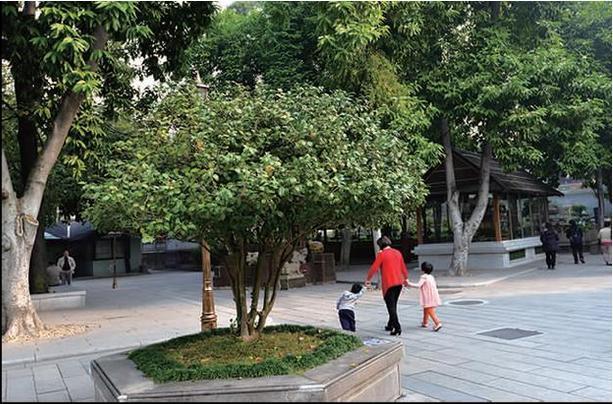
What are the common ornamental tree species in the genus Michelia?
Michelia is a relatively large genus in the family Magnoliaceae, with about 70 species in the entire genus, mainly distributed in tropical and subtropical regions of Asia, with a few species extending to temperate regions of Asia. About 40 species are distributed in China, mainly produced from southwestern to eastern China.
Plants of the genus Michelia are evergreen shrubs or trees. The leaves are simple and alternate, with stipules when young, but the stipules usually fall off very early and leave annular stipular scars, so on the branches you can see rings of marks near each leaf stalk. The flowers of Michelia are relatively large, with 6 to many tepals, usually without a significant distinction between calyx and corolla, and both stamens and pistils are numerous. The fruit is an aggregate of follicles, which splits open after maturity. If viewed casually during the flowering period, Michelia may be confused with plants of the same family in the genera Magnolia and Manglietia, but they are easy to distinguish by the position where the flowers are borne: the flowers of Magnolia and Manglietia are borne at the tips of long branches, and the branches below the flowers bear leaves; the flowers of Michelia are borne on specialized short axillary branchlets, and these small branches do not bear additional leaves. In addition, in some plant classification systems, both Michelia and Manglietia are merged into Magnolia; this article does not adopt that treatment for the time being.
As members of the family Magnoliaceae, many species of Michelia have relatively large and fragrant flowers, and some also have graceful tree forms, making them excellent ornamental trees. This article introduces the following ten ornamental tree species of Michelia for readers who are interested and need to learn about them.
1. Banana shrub (Michelia figo)
Banana shrub can also be shortened to hanxiao. The Chinese name of this shrub has no prefix at all, and it is the "type species" of the genus Michelia, although most species in Michelia are actually trees. People hearing this name for the first time may think of phrases like "smiling in the nine springs" or "smiling half-step frenzy," but of course banana shrub has nothing to do with these; its name comes from its flowers. When the banana shrub blooms, it often does not open its tepals completely, but instead begins to release fragrance after opening only to a certain extent, and because of this it is called "hanxiao" (smiling).
The flowering period of banana shrub is in early spring, and in warm regions it advances to late winter. The flower has 6 tepals, white or with some purple streaks, and has a fragrance resembling a mixture of banana and apple. When it first opens, the fragrance is very strong and intoxicating, and the floral scent weakens as the flower remains open. Banana shrub is often cultivated as a flowering shrub, and is sometimes pruned into various shapes, but it should not be over-pruned, otherwise flowering will be affected. When not in bloom, banana shrub can sometimes be confused with landscape shrubs that are similarly pruned, such as golden ficus and small-leaf ficus; their leaf shapes are similar and both have annular stipular scars, but the young branches of banana shrub have rust-colored hairs and the plant does not contain milky sap, which can be used to distinguish them.
Banana shrub planted as a specimen for park landscaping
2. White champaca (Michelia × alba)
White champaca is also called Burmese grapeflower, and in some places it is also called "yulan" or "white yulan," but note that it is different from those magnolias in the genus Magnolia that have very large flowers. The flowers of white champaca are small and delicate, with 10 pure white and narrow tepals, and the fragrance is strong and fresh. Because the leaves are much larger than the flowers, the white champaca flowers hide among the huge leaf clusters, so often only the fragrance is smelled and the flowers are not seen.
White champaca used as a street tree
White champaca is probably the most widely cultivated species in Michelia. In the north, it can often only be kept indoors as a potted plant, but in the warm regions of South China, white champaca can grow into a large tree 20 m tall, can be planted as a street tree, and its flowering period can last the entire summer. Sometimes you can also see people picking the flowers of white champaca, tying them into bundles, and selling them in markets. If you steep a few flowers in a small teacup at home, they can make a room fragrant for a day. White champaca is mainly propagated by layering or grafting, because it can hardly set fruit and has no seeds. Research has found that it is actually a hybrid descendant of champaca (Michelia champaca) and Michelia montana, which is also the reason its Latin scientific name includes an "×" symbol in the middle to indicate a hybrid.
The aggregate follicles of champaca
Champaca used for landscaping on campus lawns
3. Champaca (Michelia champaca)
Champaca is a tree species very similar to white champaca, and indeed they are related. As mentioned earlier, champaca is actually one of the parents of white champaca. The tree form and leaf shape of champaca are almost the same as those of white champaca, and it is very difficult to distinguish them when there are no flowers or fruits; if observed carefully, it can be found that the undersides of the leaves of champaca have soft hairs, and the leaf stalks also have some, while the leaf undersides and leaf stalks of white champaca are hairless, which is the only way to distinguish champaca. However, once the early summer flowering season arrives, the golden flowers of champaca are very easy to identify, and the fragrance is in no way inferior to that of white champaca. After flowering, champaca can usually set fruit, and the fruit is an aggregate of follicles hanging in strings on the tree.
The landscape application value of champaca is generally the same as that of white champaca. Relatively speaking, China and Southeast Asia prefer white champaca, while Indians prefer champaca. The famous Indian literary figure Tagore's work "The Champa Flower" describes the champaca flower. It should be noted that there is also a herbaceous plant in the orchid family also called huanglan, with the Latin scientific name Cephalantheropsis obcordata, which is not related to the champaca discussed here.
Michelia maudiae used for landscaping beside buildings
4. Michelia maudiae (Michelia maudiae)
From the name, Michelia maudiae sounds like a reclusive master; while the name "Madam Mo's banana shrub" adds a touch of nobility to it. Indeed, Michelia maudiae is a native tree species in South China, and you may encounter it while strolling in mountain forests; and in terms of nobility, among the tree species of Michelia, judging by flower size, whiteness of petals, abundance of flowers, and other aspects, the ornamental value of Michelia maudiae ranks among the top. Its flowering period is February to March, the length of a single flower can reach 8 cm, and the tepals are as white as jade, each up to 4 cm wide, while the tepals of other Michelia species often do not exceed 2 cm in width, and the entire flower may be less than one third the size of Michelia maudiae. Yet Michelia maudiae can bloom all over the whole plant with such large flowers, appearing from a distance like a tree of carved railings and jade steps.
The leaves of Michelia maudiae are also very recognizable. Its leaf surface is dark green or grayish green, and the underside of the leaves is densely covered with white powder, so it can be easily identified even without flowers.
5. Michelia macclurei (Michelia macclurei)
Michelia macclurei, like Michelia maudiae, is a Michelia tree species relatively easy to encounter in the wild. Being given the name "drunken fragrance" naturally is not without reason. Every year from February to April is the flowering period of Michelia macclurei. Its floral fragrance is rich and mellow; simply take one petal and place it beside your nose, and you can feel the fragrance spreading in waves.
Michelia macclurei used as a street tree
The leaves of Michelia macclurei are also very easy to identify: the leaf surface has short gray hairs, while the midrib on the underside of the leaf, like the leaf stalk and leaf buds, is covered with rust-colored soft hairs. Besides being cultivated as a landscape tree, Michelia macclurei can also be used as a timber tree species. Its wood is attractive, durable, and easy to process, so it is also seen in forest land. There is a species in Michelia, Michelia foveolata, that resembles Michelia macclurei somewhat; the difference is that the underside of the leaf is densely covered with reddish-brown tomentum, but Michelia foveolata is still not widely planted at present, so this article will not introduce it in detail for the time being.
6. Michelia chapensis (Michelia chapensis)
Michelia chapensis is named after Lechang City in Guangdong Province, which is where it was first discovered, while in fact it is distributed in many mountainous areas of South China. It is also a tree, up to 30 m tall. Because of its straight trunk and conical tower-shaped crown, Michelia chapensis has long moved out of the mountainous areas of its place of origin and into cities large and small. From East China to South China, Michelia chapensis has good ornamental effects whether planted singly, in rows, or in groups.
Michelia chapensis used as a street tree
The flowering period of Michelia chapensis is March to April, with 6 pale yellow tepals, and the form is roughly similar to that of banana shrub. When not in flower, Michelia chapensis can be identified by leaf shape: its leaves are elliptical, and the apex often has a small protruding short tip. Then, based on the characteristic that the branches of Michelia have annular stipular scars, it can still be recognized if observed carefully.
7. Michelia shiluensis (Michelia shiluensis)
Michelia shiluensis planted as a specimen for park landscaping
Michelia shiluensis is native to Hainan Island in China, and Shilu is a place name in Changjiang County, Hainan Province. In the vast tropical rainforests of Hainan Island, Michelia shiluensis grows into an evergreen large tree. It can also reach 20 m tall, with dark green, elliptical leaves of relatively hard texture. Compared with the rather unremarkable leaves, the flowers of Michelia shiluensis are somewhat more interesting. Its flowers open only a little, with 9 curved tepals enclosing to form a small ball, and then letting the pistil extend out from the middle of the ball. Overall, Michelia shiluensis still has a certain landscape application value, especially in April to May during its flowering period when its ornamental value is even better. Besides Hainan, it is currently also cultivated in some places in Guangdong, and further development is still awaited.
8. Purple-flowered banana shrub (Michelia crassipes)
The Michelia species introduced above all have white or pale yellow flowers, and many plants in Michelia have such light-colored flowers. Purple-flowered banana shrub, however, stands out here as unusual. Its flowers are about the same size as those of banana shrub, with 6 tepals, and the color is purplish red to deep purple. Although the color is very different, the fragrance is not reduced at all, and the expected fragrance is still there, smelling somewhat like wine or apples. The olfactory experience brought by the floral fragrance and the visual impact of purple make purple-flowered banana shrub a rare ornamental plant.
The flowering period of purple-flowered banana shrub is March to June, and the plant form is a small tree or shrub. In landscapes it can be pruned into certain shapes, and both specimen planting and group planting have good effects, and it is relatively more cold-resistant than banana shrub.
The flowers of purple-flowered banana shrub are purple and strongly fragrant
The leaves of purple-flowered banana shrub
9. Tsoongiodendron odorum (Michelia odora)
Tsoongiodendron odorum was named to commemorate the contribution made by the famous Chinese botanist Mr. Tsoong Kuan-kwang in the study of Magnoliaceae. In 1963, it was published by another Chinese botanist, Mr. Chen Huanyong, and at that time it was established as a separate genus, Tsoongiodendron. Please note that the "Tsoong" in the genus name here is the "Tsoong" of Mr. Tsoong Kuan-kwang. However, in later research, Tsoongiodendron odorum was considered to be a member of Michelia, and in the latest English edition of Flora of China, the genus Tsoongiodendron no longer exists.
The tepals of Tsoongiodendron odorum number 9 and are pale red
The leaves of Tsoongiodendron odorum
The flowering period of Tsoongiodendron odorum is February to March, and the flower has 9 tepals, pale red. The tepals are in three whorls; the outermost whorl is spreading, while the inner whorls are nearly upright. The flowers arranged one by one on the branches look like small red teacups with saucers. The flowers of Tsoongiodendron odorum are extremely fragrant, smelling like sweet wine, and the tree form is graceful, making it very suitable for cultivation in scenic areas or courtyards. It can mostly be planted in areas south of the Yangtze River basin.
10. Michelia guangdongensis (Michelia guangdongensis)
If you open the Chinese edition of Flora of China, you will not find Michelia guangdongensis. But please rest assured, it is indeed not something we made up; the reason you cannot find it is that it had not yet been discovered when the flora was completed. Michelia guangdongensis was not officially published until 2004, and the earliest discovery site was Yingde City in Guangdong.
The underside of the leaves of Michelia guangdongensis is densely covered with dark red tomentum
Michelia guangdongensis is a shrub, and its most special feature is its leaves. The upper surface of its leaves is green, while the underside is completely different, being dark red, because the underside of the leaves is densely covered with dark red tomentum. The contrast caused by the different colors on the two sides of the leaf can produce a very strong visual effect. If it is cultivated in a high place or on a slope, visitors can look from below upward, and the effect will be even more obvious. This point may be comparable to plants such as red-back Excoecaria that have already been cultivated on a large scale, but the ornamental value of Michelia guangdongensis is not limited to leaf color. Its flowering period is in May, and naturally it also has floral fragrance, which red-back Excoecaria cannot match.
The introduction to the common ornamental tree species of Michelia ends here for now. In fact, the tree species of Michelia with ornamental value are far more than these. As mentioned above, there are also Michelia foveolata, Michelia yunnanensis, Michelia balansae, Michelia skinneriana, and so on, all of which are very beautiful trees, and they need more attention. It is hoped that through this article, more plants of Michelia can receive reasonable development and application.