Key Technical Points for Plastic Film Mulch Cultivation of Green Garlic Sprouts
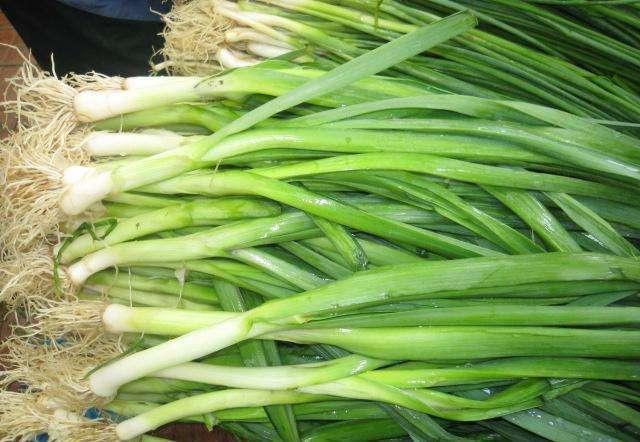
Plastic Film Mulch Cultivation Technology for Green Garlic Sprouts
Green garlic sprouts are crisp and tender, tasty, can also be used as a seasoning, and have high nutritional value. They are also a major variety of pungent vegetables and are deeply favored by the public. However, the production of green garlic sprouts is often overlooked by people, frequently causing autumn and winter green garlic sprout prices to rise, and sometimes demand exceeds supply. In autumn and winter, the outside temperature is generally low, the production period for green garlic sprouts is long, and costs are relatively high. However, if attention is paid to variety selection and some advanced production techniques are used, the production cycle can be shortened, the price around Spring Festival can be quite considerable, and relatively high economic benefits can be obtained. The plastic film mulch cultivation technology for green garlic sprouts in Xinchang County is introduced as follows:
1 Plot Selection
Garlic avoids continuous cropping and should not be planted after crops of the Liliaceae family. It is advisable to choose a plot with flat terrain, good water retention, convenient irrigation and drainage, and loose, fertile soil, preferably with grain crops or non-allium vegetables as the previous crop.
2 Variety Selection
In order to achieve early maturity and high yield of garlic sprouts, it is advisable to select early-maturing varieties with strong disease resistance and stress resistance, a short growth period, wide and tender leaves, and high quality and yield, such as Ershuizao, Shanghai Chongming garlic, high-quality white garlic Zhongnong No. 1, Zhongnong No. 3, etc.
3 Land Preparation and Fertilization
Because green garlic sprouts have a short growth period and grow rapidly, sufficient base fertilizer should be applied. 7 days before sowing, apply 1500 kg of decomposed farmyard manure per 667 sq m, or 1000 kg of commercial organic fertilizer, 20 kg of urea, 30 kg of phosphate fertilizer, 15 kg of potassium fertilizer, or 50 kg of high-quality three-element compound fertilizer, and turn and prepare the soil. Then rake it fine and level it, and cultivate on raised beds, which is both simple and easy to manage. The bed width is 100-120 cm and the height is 20 cm.
4 Sowing
4.1 Seed Treatment Select garlic bulbs with varietal characteristics, plump and round, uniform cloves, no disease spots, and no damage as seed garlic, with a seeding rate of 200-230 kg per 667 sq m. Before sowing, first soak the garlic cloves in clean water for 12 h, remove them, soak the seeds in 200-fold dilution of 50% carbendazim wettable powder for 30 min, then soak the seeds in 0.3% potassium dihydrogen phosphate for 4-6 h, remove and drain. When sowing, dip the garlic cloves in 800-fold dilution of 50% phoxim emulsifiable concentrate before sowing. After the above treatment, the dormancy of seed garlic can be broken, the germination rate and stress resistance of garlic cloves can be significantly improved, pathogens on seed garlic can be effectively killed, and uniform and strong seedlings can be promoted, thereby improving the disease resistance and stress resistance of garlic sprouts.
4.2 Timely Sowing For autumn sowing, according to the climate characteristics and cultivation habits of the Xinchang area, in order to bring the product to market earlier, sowing can be carried out successively from mid-to-late September to early October. Water 2 days before sowing to keep the soil moist. Before sowing, cover with 1.4 m wide silver-black dual-color plastic film, punch holes at a plant spacing of 3-5 cm and row spacing of 8-10 cm, insert the garlic cloves into the soil, sow 1 garlic clove per hole, with a depth such that the terminal bud just emerges from the ground.
5 Field Management
Adhere to the principle of giving priority to base fertilizer and supplementing with topdressing; giving priority to organic fertilizer and supplementing with chemical fertilizer, maintaining the characteristic flavor of green garlic sprouts as green, crisp, tender, and pungent.
5.1 Timely Watering Water timely according to soil moisture and plant growth. During the germination stage, keep the soil moist to promote garlic seed germination. After emergence, water once as needed to promote seedling growth. When the seedlings grow to 7-10 cm, water again, and afterward water 1-2 times according to soil moisture.
5.2 Topdressing After the garlic seedlings all emerge, carry out the first topdressing, preferably with quick-acting fertilizer and mainly nitrogen fertilizer. This can be combined with watering, applying 7-10 kg of ammonium sulfate or 5-7 kg of urea per 667 sq m. When the seedlings are 7-10 cm high, carry out the second topdressing, combining with watering and applying 10 kg of ammonium sulfate or 7-10 kg of urea per 667 sq m. When the seedlings are 14-16 cm high, carry out the third topdressing, combining with watering and applying 7-10 kg of urea or 10 kg of ammonium sulfate per 667 sq m. In the late growth stage of garlic sprouts, spray the leaves with 0.3% potassium dihydrogen phosphate aqueous solution or foliar fertilizer every 10 days to prevent premature aging of the plants. Stop fertilizing about 15 days before harvest.
5.3 Timely Construction of Small Tunnels During autumn and winter production of green garlic sprouts, the temperature continues to drop. In the late growth stage, small arched tunnels should be built in a timely manner as needed and covered with plastic film to raise the temperature, ensure normal growth of garlic sprouts, and ensure the product reaches the market.
6 Pest and Disease Control
According to the principle of prevention first and integrated control, give priority to agricultural control and physical control, use chemical control reasonably, prohibit the use of highly toxic and high-residue pesticides expressly prohibited by the state, and ensure pollution-free standards.
6.1 Agricultural Control Improve resistance by selecting disease-resistant varieties or virus-free seed garlic and sunning the seeds for 2-3 days before sowing; implement rotation with grain crops or non-allium crops, deep plow and sun the soil, sow at the appropriate time, and plant at a reasonable density. Apply more decomposed organic fertilizer, strengthen cultivation management, and clear weeds and diseased plant residues around the field to reduce the number of pest and disease sources.
6.2 Physical Control Set up 1 frequency-vibration insect-killing lamp every 2-3 ha, hang 30-40 yellow boards per 667 sq m, set 1 set of sex pheromone per 667 sq m, or use methods such as sugar-vinegar liquid to trap and kill fly pests.
6.3 Chemical Control of Insect Pests The main insect pests include root maggots, leafminers, onion thrips, aphids, etc. At the 3-4 leaf stage of garlic, apply 10-15 mL per 667 sq m of 1.8% abamectin emulsifiable concentrate, 1.8% avermectin emulsifiable concentrate, or pyrethroid pesticides, or 1% clothianidin granules for control; during the peak damage period of root maggots, root drenching can be used for control with 5-6 kg of 80000 IU/mL Bacillus thuringiensis wettable powder, 1200-fold dilution of 1.5% natural pyrethrin aqueous emulsion, 1000-fold dilution of 1.8% abamectin emulsifiable concentrate, 1000-fold dilution of 80% trichlorfon soluble powder, or 800-fold dilution of 50% phoxim emulsifiable concentrate.
6.5 Chemical Control of Diseases The main diseases include leaf blight, purple blotch, rust, and viral disease, etc. In the early stage of leaf blight, use 600-fold dilution of 75% chlorothalonil wettable powder, 1200-fold dilution of 2.5% fludioxonil suspension concentrate, or 1500-fold dilution of 41.5% prochloraz emulsifiable concentrate for control, spraying once every 7-10 days for 2-3 consecutive treatments; in the early stage of purple blotch, use 1000-fold dilution of 70% mancozeb + 2000-fold dilution of 15% azocyclotin, 2000-fold dilution of 20% triadimefon emulsifiable concentrate, 300-500-fold dilution of 14% copper ammonia complex aqueous solution, or 1000-fold dilution of 10% difenoconazole water-dispersible granules for spray control, and note to alternate medications; in the early stage of rust, use 2000-fold dilution of 30% difenoconazole·propiconazole emulsifiable concentrate, 2200-fold dilution of 12.5% diniconazole wettable powder, or 3000-fold dilution of 25% propiconazole emulsifiable concentrate for spray control; in the early stage of viral disease, spray with 1000-fold dilution of 1.5% plant virus inhibitor, 500-fold dilution of 20% virus A, or 800-fold dilution of 31% moroxydine·ribavirin soluble powder + 500-fold dilution of Huishenglu, spraying once every 5-7 days for 2-3 consecutive sprays.
7 Timely Harvest
Under suitable temperature and sufficient fertilizer and water conditions, garlic can generally be harvested as fresh tender green garlic sprouts for market about 70 days after sowing. When the garlic sprouts grow to a height above 30-50 cm, they can be selectively harvested in batches at the right time according to market conditions, or the entire field can be harvested once and sold by grade. The yield per 667 sq m can reach 2000-2500 kg. To extend the supply period and increase yield and income, selective harvesting in batches should be done by harvesting every other plant. During harvest, remove fibrous roots and old leaves, wash off soil and debris, and then bring to market.