Why do some succulents grow leggy in summer while others go dormant?
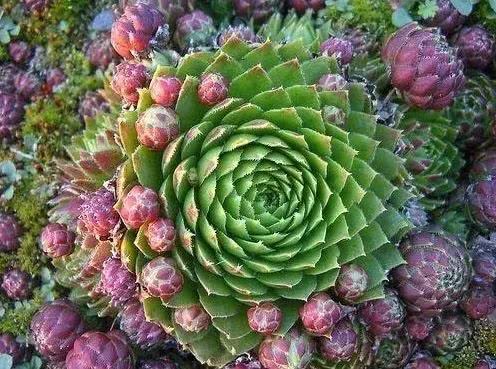
After summer arrives, succulents growing leggy and going dormant become topics that flower enthusiasts often discuss. They are all succulents, all in the same environment, so why do some go dormant while others grow leggy?
Dormancy and leggy growth are two different concepts. Dormancy is a phenomenon of resisting high temperatures, slowing down growth, and reducing demand for water and light; while leggy growth is a stress response adopted to compete for more sunlight, causing stems and leaves to grow wildly.
After understanding these two concepts, and then tracing back to the places of origin of succulents, it is not difficult to understand why these two situations occur in different succulents.
The hometown of Echeveria and cacti is Mexico. Summers in Mexico are cooler than in our country, but in June and July, the highest average temperature can also reach 33°C, and the extreme maximum temperature is also very hot. That is to say, most succulents of the Crassulaceae family, such as most Echeveria, Pachyphytum, and Graptopetalum, appear very active toward summer high temperatures. If water is sufficient, they will have no obstacle at all in rooting and establishing.
But the hometowns of Aizoaceae, Adromischus, and Cotyledon are South Africa, whose summer and winter patterns are exactly opposite to ours. The temperatures in South Africa are highest from December to January, but the average maximum temperature can only reach about 26°C. This means that these succulent varieties living in South Africa essentially lack the tempering of high temperatures and extreme heat. From the perspective of heat tolerance, they are far less heat-tolerant than these varieties native to Mexico.
Finally, let's talk about the Canary Islands. The characteristic of the Canary Islands is that once summer arrives, not a single drop of rain falls, forcing Aeonium and Greenovia to preserve their strength through dormancy. In South Africa, although summer is slightly hotter, there is still continuous precipitation. But the summer on the Canary Islands is too arid. This gives Aeonium and Greenovia a more firmly established dormancy habit.
A very classic case is that Mexican Dioscorea elephantipes, which is also a close relative, grows vigorously in summer, while South African Dioscorea elephantipes goes dormant in summer. This is the difference brought about by the climate environment of their places of origin.