What kind of plant is the Brassavola orchid? Its fragrance is incredible
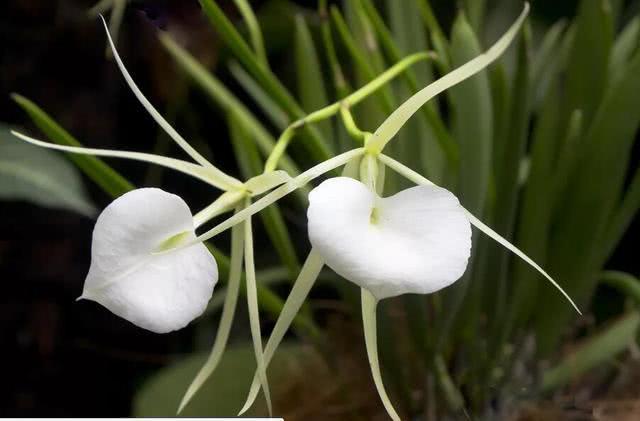
Scientific name: Brassavola
Chinese name: Brassavola
Place of origin: from South America.
The Brassavola orchid has an incredible fragrance. Perhaps even more puzzling is that these pure white, ghostly flowers only release their strong fragrance at night. Brassavola orchids bloom frequently, with multiple blooms each year. In some cases, they seem to bloom all year round, and their flowers vary in size (they are relatively small compared with the more showy Cattleya and Phalaenopsis), but they win by sheer numbers.
Branch
The Brassavola orchid belongs to the subtribe Laeliinae. There are about 17 species of Brassavola; they are native to the American tropics. The standard and most common Brassavola is Brassavola nodosa, which can be grown in baskets or in containers filled with orchid mix.
The Brassavola orchid has long, thin, tubular leaves, up to a foot long, which sometimes appear spread out or flattened. Brassavola orchids and their hybrids have much smaller pseudobulbs than other epiphytic orchids, so the leaves often appear to arise directly from the rhizome without thick pseudobulbs. A typical Brassavola orchid has an enlarged, scoop-shaped lip, with petals and sepals reduced to spear-shaped petals. Brassavola orchids are white to attract moth pollinators, but the plant has been widely hybridized to create flowers in many colors.
Light
Even in direct sunlight, the light for Brassavola orchids can be quite intense and bright. Healthy Brassavola orchids have mottled leaves with reddish traces on the leaves. Dark green leaves usually indicate that the plant is not getting enough light, so the plant should be moved to a brighter position.
Water
The tubular leaves on Brassavola orchids are designed to reduce water evaporation, making them more drought-tolerant than many other orchids. Therefore, the plant needs less humidity and less water than many other epiphytic orchids. During the growth cycle, it can be watered once a week, while potted Brassavola orchids should be watered thoroughly once a week. Drooping or wrinkled leaves indicate water stress, and the plant should be watered as soon as possible.
Fertilizer
Brassavola orchids produce several new red leaves over the course of a year, and healthy plants are actively growing all year round. Therefore, the plant should be fed all year with a weak fertilizer solution (1/4 strength weekly). Many growers use nylon hosiery and controlled-release granules to make "fertilizer balls," then attach the balls to the plant, thereby providing a small amount of fertilizer each time the plant is watered. The nylon fertilizer balls will last for several months.
Temperature
Brassavola prefers intermediate temperatures and will bloom better in warm conditions.
The fragrance released by Brassavola on summer nights is so wonderful.
Blooming
Brassavola orchids are moth-pollinated, so the flowers on Brassavola are pale, which can attract pollinators. Brassavola orchids bloom all year round, with multiple flowers and flower spikes with each flush. Clusters of spherical flowers are often seen throughout the year.
Brassavola is fairly easy to cultivate and can adapt to the basic conditions for epiphytic orchids. Humidity is ideally maintained at 75-80%, sunlight can be relatively more abundant, and the temperature must be above 10 degrees. It is suitable for beginners. The graceful B. cucullata plant has a drooping habit, needle-like leaves, large single flowers, a long blooming period, and fragrance.
Recommended growing medium: sphagnum moss or bark