How to Grow and Care for Lipstick Plant: Methods and Precautions
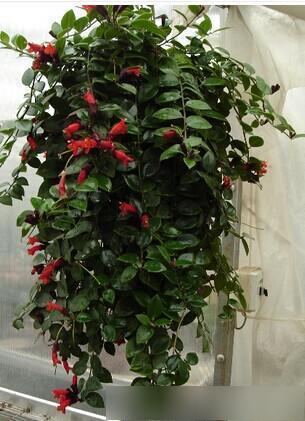
I. Introduction to the Lipstick Plant
The lipstick plant, also known as flower vine grass or lipstick flower, is a perennial evergreen trailing herbaceous flowering plant in the family Gesneriaceae, genus Aeschynanthus. The stems grow about 20 cm long, are angular, and when extended become semi-procumbent, lying flat, and much branched. The leaves are ovate, opposite, and slightly fleshy. The inflorescences are mostly axillary or terminal, and their shape closely resembles a lipstick; the calyx is tubular, much like the tubular casing of a lipstick, which is why it is called the "lipstick plant." Its deep green leaves paired with the bright red, unusual corolla make it much loved, and it is an excellent choice among trailing flowering plants for the home.
II. Types of Lipstick Plant
1. Aeschynanthus lobbianus: also called large red Aeschynanthus or Lobbs' Aeschynanthus. It is a perennial vine. The plant is trailing, with drooping branches and green stems. The leaves are opposite, long-ovate, entire, deep green on the upper surface and light green beneath. The inflorescences are mostly axillary or terminal; the calyx is tubular, dark purple and covered with downy hairs; the corolla is tubular, red to red-orange, and extends from the calyx. The flowering period is mainly in summer. Aeschynanthus lobbianus is native to the tropical regions from Indonesia to eastern India, and has been introduced and cultivated in China.
2. Aeschynanthus 'Zebra': the leaves are ovate, thick, opposite, jade green, with regular dark red zebra stripes on the upper surface and purple markings on the underside. The flowers are small and pale yellow-green.
3. Aeschynanthus micranthus: the leaves are jade green and glossy, and the flowers are deep red and tubular.
4. Aeschynanthus speciosus: also called Aeschynanthus pulcher, it is a perennial epiphytic evergreen herbaceous plant with prostrate, drooping branches and fleshy opposite leaves that are ovate-lanceolate with pointed tips and short petioles. The umbel inflorescences are borne at the stem tips or in the leaf axils; the small flowers are tubular, curved, and orange-yellow, with a green base on the corolla, and the stigma and anthers often extend beyond the corolla. The flowering period is July to September. It is native to Java and other parts of Southeast Asia, and is cultivated in Taiwan, China, and Guangdong.
III. Environmental Requirements for Growing Lipstick Plant
1. Soil
The best potting soil for lipstick plant is a loose, fertile sandy loam with good drainage. A slightly acidic potting soil is preferable; you can use a potting mix made from peat soil, sand and vermiculite, with an appropriate amount of superphosphate added.
2. Light
It prefers a semi-shaded environment. Apart from the strong midday sun in midsummer, which should be properly shaded, it should be given ample light at other times, especially in winter. If the location is too bright or too dim, the leaves will easily turn pale green or yellow-green.
3. Temperature
The lipstick plant should be placed in a cool, ventilated spot, and the environmental humidity should be kept up. It dislikes prolonged high temperature and high humidity; poor drainage and ventilation will cause rot. The lipstick plant is not cold-hardy and needs to be brought indoors to overwinter.
IV. How to Water the Lipstick Plant
The potting soil should be kept moist most of the time, but never allow water to accumulate in the pot, which could cause root rot. From March to September, during the peak growth period, the plant needs more water, so water and mist frequently to increase humidity; in autumn, as the weather gradually turns cooler, gradually reduce watering and fertilizing. In winter, the potting soil should be kept slightly dry.
V. How to Fertilize the Lipstick Plant
Use mainly phosphorus and potassium fertilizers, especially potassium fertilizer. You can apply 10 g of quick-acting Lihang water-soluble fertilizer per plant; a small amount can be added at each watering. Be careful not to fertilize too much at one time, to avoid burning the roots.
VI. How to Propagate the Lipstick Plant
Propagation can be done by cuttings. Spring and autumn are the suitable periods. Select healthy, plump stems, cut them into sections of 7-10 cm each, and insert them into loose sandy soil, or a potting mix made of 50% fine tree-fern fiber, 20% perlite and 30% coarse sand. Keep the humidity appropriate and provide about 50-60% sunlight; roots should form in about 30-40 days. Once the root system is growing vigorously, transplant into pots or a flower bed.
VII. How to Prune the Lipstick Plant
During vigorous growth, pinch back appropriately to encourage branching. After the winter flowering period, promptly cut off the spent stems that have bloomed; this saves nutrients and encourages new shoots, so the plant produces more buds and flowers.
VIII. Repotting and Soil Replacement for the Lipstick Plant
In terms of care, to keep the stems and leaves lush, the soil should be changed and the plant repotted once a year. If the pot is fairly deep and the base fertilizer is sufficient, repotting every two years is fine. When repotting, knock the plant out of the pot, cut off dead and rotten roots and excess roots, and promptly apply tree-care liquid to the pruning wounds to prevent virus infection and protect the wounds. Then replace with fresh potting soil rich in humus, and apply livestock hoof and horn pieces or decomposed cake fertilizer as a base fertilizer. After planting, place in a semi-shaded, warm spot to recover. Once the plant has resumed healthy growth, hang the pot under an eave or in a suitable indoor spot, and make sure there is ventilation.
IX. Causes of Yellowing Leaves in Lipstick Plant and How to Remedy Them
1. Temperature too low
The lipstick plant is a tropical plant that likes warmth and fears cold. If the room temperature is too low, it will grow poorly and its leaves will turn yellow.
Remedy: If you notice the leaves turning yellow, promptly raise the room temperature and take cold-protection measures. You can cover the plant with plastic film and uncover it regularly for ventilation. Once the temperature returns to a suitable level, remove the film.
2. Watering too often
If you water again before the potting soil has dried, the soil stays wet without drying out, which can also cause root rot, yellowing leaves and even leaf and flower drop.
Remedy: Stop watering immediately, open up the potting soil to let air in, cut off the rotten roots, and spray with carbendazim. Follow the principle of "water when dry, stop when wet" and never water too frequently.
3. Lack of light
Although the lipstick plant is a semi-shade-loving plant, if it is placed for a long time in a spot that is too bright or too dim, the leaves will easily turn pale green or yellow-green, lose their vitality, lose their ornamental value, and may even wither and die.
Remedy: Find some spare time each day to place the plant in the sun for a few hours, but do not expose it to too much direct sun.
4. Air too dry
Direct sunlight and dry air are the most likely to cause the leaves to scorch and turn yellow.
Remedy: Place it in a cool, ventilated spot or a semi-shaded environment, keep the air humidity up, and mist the leaves regularly. It dislikes prolonged high temperature and high humidity; poor drainage and ventilation will cause root rot.
5. Improper fertilizing
Over-fertilizing causes yellow leaves. When fertilization exceeds the plant's needs, the leaves first become glossy and uneven, then the roots rot and the leaves turn yellow.
Remedy: Stop fertilizing, water generously with clean water, or repot, clean the roots and replace with fresh soil.
X. Pest and Disease Control for the Lipstick Plant
The lipstick plant rarely suffers from pests and diseases. In summer, when the weather is hot and humid, it is prone to anthracnose, which mainly damages the leaves but can also damage the stems. It often produces small spots on the leaves that gradually expand into yellow-brown round spots; in severe cases, more than half the leaf withers and turns black, and lesions can also appear on the stems. At the first sign of the disease, use a 500-fold dilution of 50% carbendazim or a 500-fold dilution of 65% zineb for control, while keeping the growing area well ventilated, reducing air humidity and cutting back on nitrogen fertilizer. Sometimes the terminal buds of the lipstick plant die for no apparent reason; this is caused by a lack of calcium fertilizer. In that case, apply an appropriate amount of calcium fertilizer and the terminal bud death will disappear.
XI. Where to Place the Lipstick Plant
The lipstick plant should be placed in a cool, ventilated spot, and the environmental humidity should be kept up. It dislikes prolonged high temperature and high humidity; poor drainage and ventilation will cause rot. The lipstick plant is not cold-hardy and needs to be brought indoors to overwinter.