Introduction to the flower color gradient characteristics of the Mediterranean squill
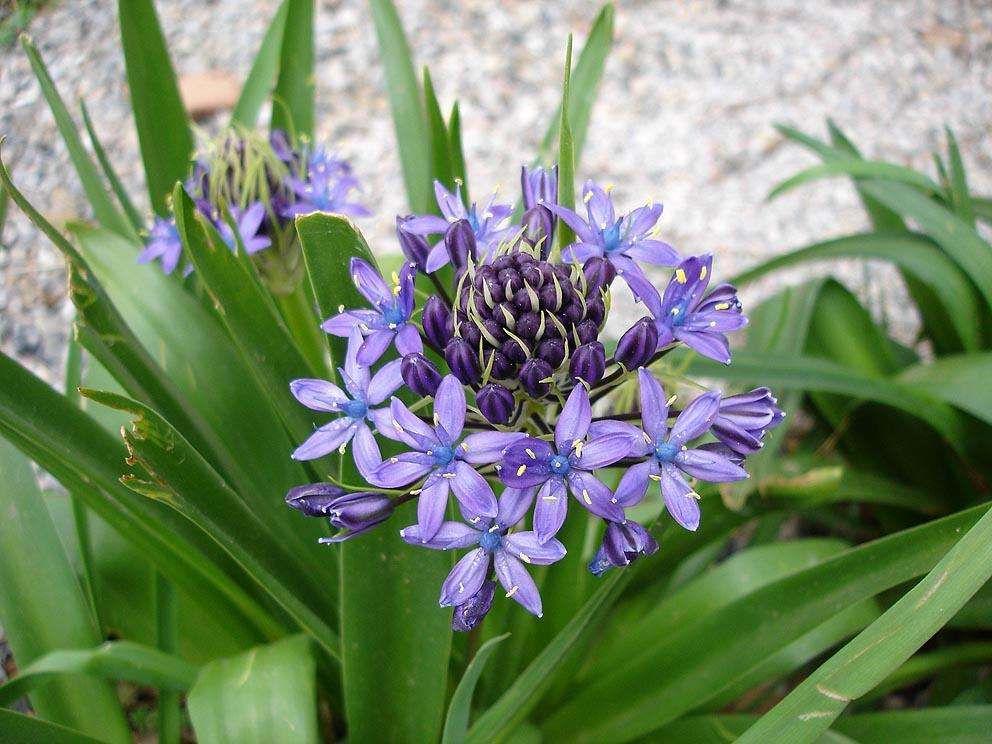
Mediterranean squill, also known as sea onion and Mediterranean bluebell. Native to the semi-mountainous regions of Portugal, Spain, and Italy along the Mediterranean coast.
Morphological characteristics:
Perennial herbaceous plant, with an underground stem that is a tunicate bulb. The bulb is 6-8 cm in diameter, white, covered on the outside with a brown tunic. Leaves are linear, 20-60 cm long and 1-4 cm wide, growing from the bulb; during one spring season, each bulb can produce about 5-15 leaves. The inflorescence is a raceme, the flower stem is 15-40 cm long, and each flower stem bears 40-100 flowers. The flowers are blue, 1-2 cm in diameter, with six tepals.
Mediterranean squill
Distribution range:
The Iberian Peninsula, Italy, and northwestern Africa.
Main value:
Portuguese squill blooms in spring and is usually cultivated as an ornamental flower for spring. Some varieties with different flower colors can be bought on the market, with colors ranging from white to light blue, dark blue, or purple.
Mediterranean squill
History of discovery:
Also known as Mediterranean bluebell, earth golden ball, wild hyacinth, and Portuguese squill, it is a plant in the genus Scilla of the family Hyacinthaceae, native to the Iberian Peninsula, Italy, and northwestern Africa in the western Mediterranean region. Some people, based on the scientific name peruviana (of Peru), translate the name of this species as Peruvian squill, but Peru is not the place of origin of this species. The Peru mentioned here has nothing to do with the South American country Peru; rather, it refers to a ship named Peru (Peru). When Linnaeus described the characteristics of this species in 1753, the specimen he used was transported from Spain by this ship.
Mediterranean squill