Liatris is a standout supporting player in floral arrangements
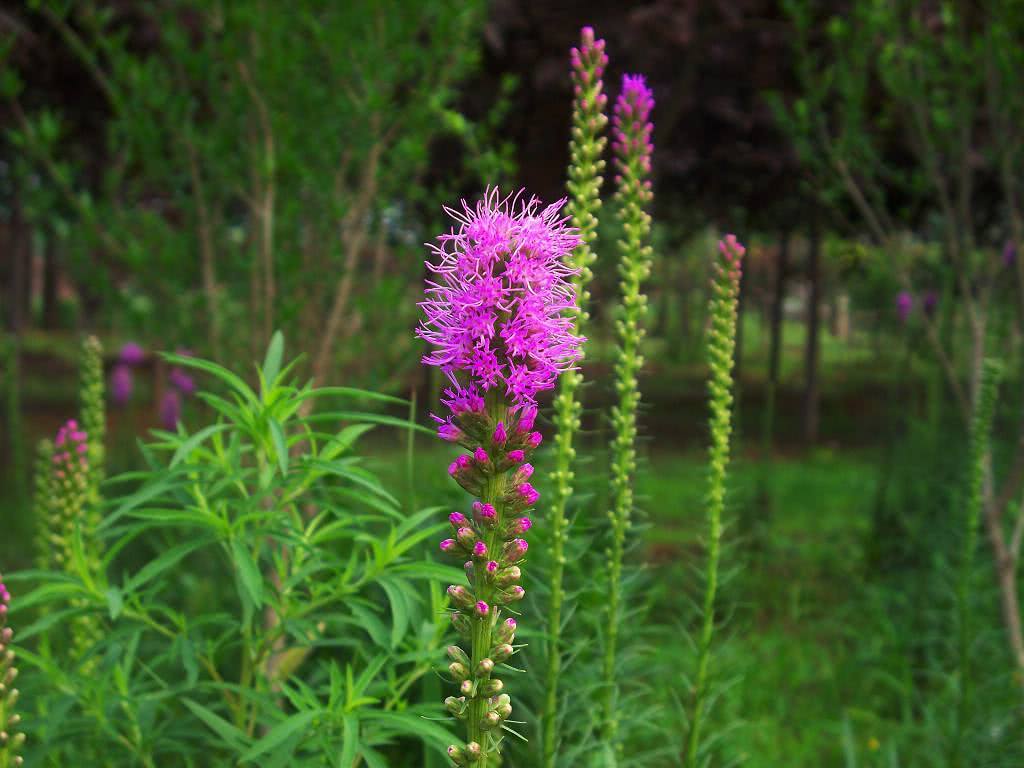
Liatris: A perennial herbaceous plant. The base of the stem is swollen and flattened into a bulbous shape. The flowers are reddish-purple. The flowering period is summer and autumn. Because numerous small flower heads gather into dense, long spikes, with the florets opening successively from top to bottom, resembling the rattling tail of a rattlesnake, it is named for its whip-like shape. It is a perennial root plant. Liatris has a long flowering period, with its natural bloom time in midsummer. The flower stems stand upright, and the flower colors are fresh and lovely. It not only possesses the beauty of a natural cut flower material, but also carries a beautiful floral meaning.
Liatris
Liatris is cold-tolerant, heat-tolerant, sun-loving or slightly shade-tolerant, and tolerant of waterlogging during the growing season. It has relatively undemanding habitat requirements and can be grown in both northern and southern regions. In late summer and early autumn, its brilliant colors are tranquil and pleasant, giving a sense of serenity and comfort. It is suitable as a flowerbed, flower border, and courtyard plant, and is an excellent new material for landscaping. It is native to the eastern United States, and is cultivated in many parts of China.
Liatris
Morphological characteristics:
Liatris is a perennial herbaceous flowering plant. The base of the stem is swollen and flattened into a bulbous shape. The aboveground stem is upright, and the plant form is cone-shaped. The basal leaves are linear, up to 30 cm long. The flower heads are arranged in dense spikes, 60 cm long. Because numerous small flower heads gather into long spike inflorescences, it is named for its whip-like shape. The base of the stem is swollen and flattened into a bulbous shape. The aboveground stem is upright, and the plant form is cone-shaped. Liatris has underground tubers. The flower scape is 70-120 cm long, and the inflorescence portion accounts for about 1/2 of the entire scape length. The florets open successively from top to bottom. The flower colors come in two types: light purple and pure white. The leaves are linear or lanceolate, gradually becoming smaller from top to bottom. The lower leaves are about 17 cm long and about 1 cm wide, flat or curled. The upper leaves are about 5 cm long and about 4 mm wide, flat, extending obliquely upward. The flowering period is July-August.
Liatris
Landscape applications:
Liatris has upright and leafy scapes. The leaves are linear and basal, with a deep green color. The flower heads are arranged in dense spikes. Each inflorescence is composed of about 300 tubular florets. The flowers are purple, with a determinate inflorescence. The flowering period falls in the flower-scarce season of late summer and early autumn, lasting about 40 days. Liatris has an elegant posture, with its horsetail-like determinate spike inflorescences standing upright, quite distinctive. It is suitable for flower borders or banded planting along roadsides, and natural clump planting in courtyards. Because of its long flowering period and extremely high ornamental value, it is not only a treasured landscaping tree species, but also an important cut flower material. Applied in the flower borders of courtyards and villas, it is tall, straight, and elegant, full of wild charm. It can serve as background material or be planted in clumps as an accent among rocks and at forest edges. It can also be viewed as a cut flower, making it a standout supporting player.