How to prevent black rot in succulents? It's also very easy to avoid rotten leaves and get a full, bursting pot
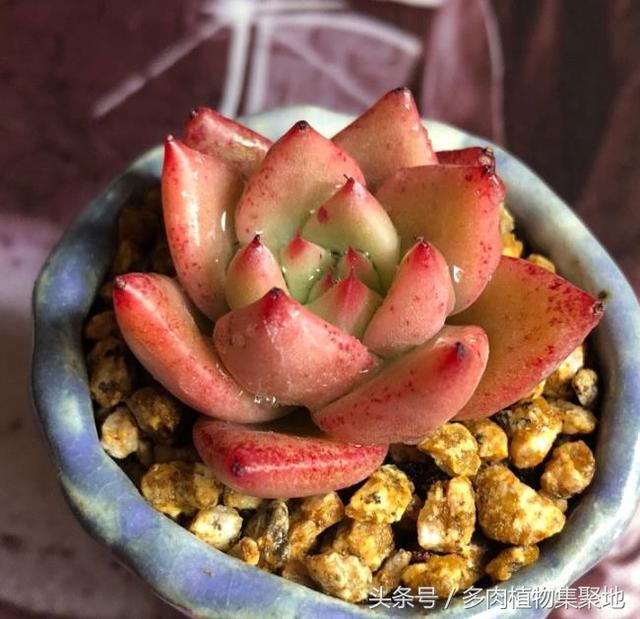
During the care of succulents, all kinds of things often happen, and we need to deal with them in time during the care process. If you find that the leaves become transparent and black when watering, it means the succulent has developed waterlogged rot and black rot. If this situation is dealt with in time, it can be saved; if it is not solved within a day or two, the succulent will die, and the speed is very fast.
When encountering a succulent with waterlogged rot and black rot, we need to behead it, cut off all the diseased parts, and leave only the clean and safe part of the succulent. Apply some carbendazim to the wound. As long as the succulent does not continue to turn black afterward, it means the succulent is safe. Place it indoors in a well-ventilated place for care. If the black rot is very serious, it also needs to be repotted to prevent the soil from containing black rot pathogens and causing the succulent to develop black rot again.
Black rot in succulents is a fungal parasitic infection caused by fungi. This type of fungus belongs to the genus Fusarium. Fusarium is a very peculiar fungal organism. Normally it lives a saprophytic life in the soil, and its life form is like that of ordinary bacteria. However, once it infects a plant body, it immediately switches to a parasitic life. Therefore, general parasitic fungi will soon die after the host dies, and only Fusarium will stubbornly enter the soil and continue to survive.
When beheading a succulent, we sometimes find that the cross-section of the fleshy stem is not completely clean, and sometimes we see some small brown dots. These small brown dots are traces left by lignin. These traces tell us that not long ago, this was very likely the battlefield where the succulent fought Fusarium to the death.
When encountering a suspected case of black rot, such as leaf drop or leaves becoming waterlogged for no reason, if the potting soil is completely dry, you can continue to observe. If the potting soil is moist, you should decisively dig out the succulent so as to cut off the water conduction from the roots and limit the spread of black rot. Although when you first start growing succulents, the losses will be relatively severe, after we gain a lot of experience, the losses will gradually become smaller, and sometimes there can even be zero losses. At the beginning, the most important thing is still to accumulate experience.
When beheading for black rot, you must cut to a position where the stem has not been infected, otherwise it will continue to spread upward. After beheading, apply some carbendazim to the cut. If you do not have it, you can apply cigarette ash, let it dry for two days, and then take cuttings. When the signs of black rot have already appeared, do not rashly water with a carbendazim solution in an attempt to cure the black rot. At this time, water absorption can only lead to the rapid spread of the infection and will have no other effect. Carbendazim root drenching is generally used to treat fungal infections on leaf surfaces, and after black rot has already occurred, the curative effect is not good.
This is a gathering place for succulent lovers, sharing succulent care tips. You are welcome to follow and exchange ideas.