What to do if your amaryllis (Hippeastrum) only grows leaves and won't bloom? Two cuts and the flowers grow bigger than your palm
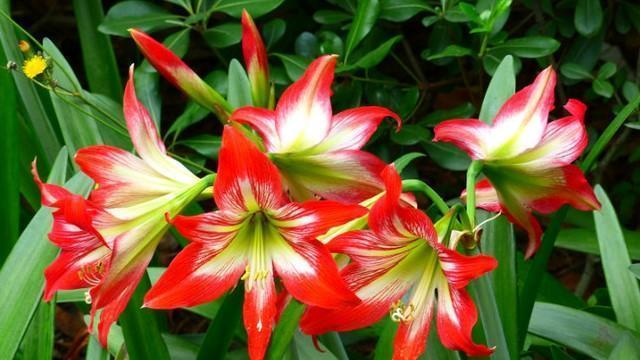
There are many reasons why amaryllis won't bloom. If it's because the plant is growing too densely, you need to prune it at the right time; if it's because it isn't getting enough sunlight, move it to a sunny spot; if the temperature isn't suitable, make sure the indoor temperature is right; if the soil you're using is wrong, replace the soil.
1. Prune in time
1. Cause: When an amaryllis grows too lushly, the whole plant's demand for nutrients becomes much greater than before. If you keep supplying nutrients the same way as before, the nutrients won't be enough, and it will be very hard for the flowers to open.
2. Solution: At this point you need to prune so the plant has enough nutrients to bloom.
2. Increase light
1. Cause: Amaryllis is a sun-loving plant. Insufficient sunlight cannot meet its growth needs, so the plant won't bloom either.
2. Solution: Increase the plant's light exposure so it can grow normally. This is especially true in autumn and winter, when the days get shorter, so you need to pay even more attention to ensuring the plant gets enough sunlight hours.
3. Ensure the right temperature
1. Cause: Temperatures that are too low affect the plant's growth and can prevent it from blooming.
2. Solution: As winter approaches, keep the plant warm in time, or move it to a warm place as early as possible, to make sure it doesn't get frostbitten.
4. Replace the soil in time
1. Cause: Old soil doesn't contain enough nutrients to meet the amaryllis's growth needs, which prevents it from blooming normally.
2. Solution: Replace the old soil in time; replacing the soil about once a year is enough.