The main reason roses do not bloom is improper fertilizing
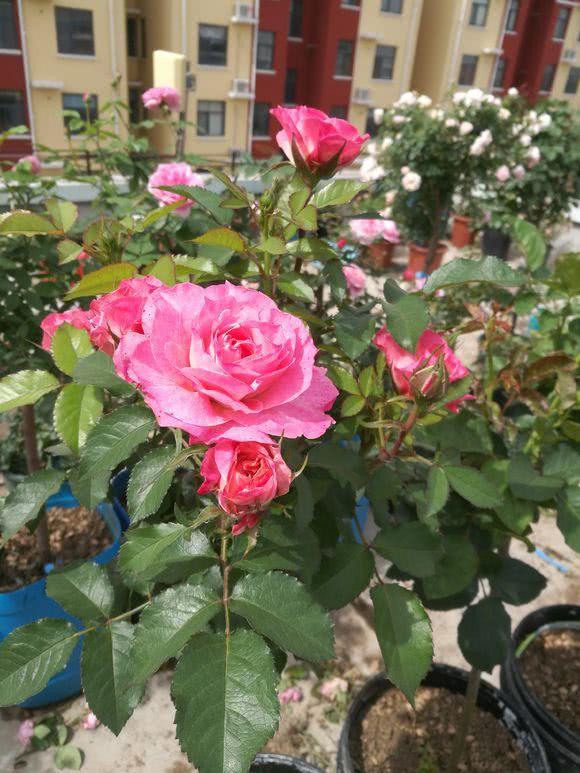
In the same environment, the roses in the neighbor's yard are lush with flowers and leaves, the plants are strong, and the blooms cover the whole wall, while your roses stay small and do not bloom. What exactly is going on? Whether roses bloom or not, and whether they grow well or poorly, besides the environment and pruning, it comes down to fertilizing. Let's see what good "dishes" other people's roses have been fed?
What fertilizer to apply?
Huahua suggests that when fertilizing roses, never use chemical fertilizers. Short-term growth will certainly be fast, but over the long term, the lifespan of the rose plant will be shortened, just like a child who has taken hormones; over the long term this is certainly bad for the body. Huahua will introduce methods for homemade fertilizer at home and for using ready-made organic fertilizer.
Fishy water
Families who like to eat fish can ferment the water left from washing fish together with fish scales, or bury some fish intestines along the edge of the rose pot soil, and after letting them slowly ferment, they will release nutrients.
Top dressing
For roses to bloom and grow, top dressing is a must. You can use ready-made organic fertilizer, diluted 500 times, or put fruit peels, eggshells or green vegetable leaves in a sealed container to ferment for about one month, then dilute with water 50 times before use, to promote rapid plant growth, more blooms and vigorous flowering. However, for gardening friends who find it troublesome, it is still recommended to just use ready-made ecologically safe organic fertilizer.
Potassium dihydrogen phosphate
For gardening friends who usually like to make their own fertilizer, when the roses are about to bloom, it is best to use potassium dihydrogen phosphate to force flowering. It can be diluted with water 1000 times and poured into the soil, once every half a month, for 2 consecutive times.
Foliar feeding
In summer, or in winter, using foliar fertilizer on roses works better than root drenching. You can buy special foliar fertilizer, or use organic nutrient solution, dissolved in water, diluted 1000 times, and sprayed onto the leaves, which helps the leaves absorb it and promotes flowering, because in summer and winter the rose roots absorb more slowly.
Use of base fertilizer
Generally, base fertilizer is applied to roses in December in winter, which allows the roses to store energy and prepare for the next year's blooming. Humus-rich and loose loess can be used for cultivation, and it is best to mix in 1/4 rice hull ash or a small amount of broad bean shells, bean cake or chicken and pigeon manure, etc., so that the roses can continuously absorb various nutrients such as nitrogen, phosphorus and potassium from the soil.
If an old potted rose needs repotting, base fertilizer can also be applied as above; if not repotting, you can scrape open 2-3 cm of the soil surface and work in some fresh fish intestines or chicken and pigeon manure, bean cake crumbs, etc. as base fertilizer. This is best done in January-February when the roses are dormant. In this way, the fertilizer will gradually ferment into fertilizer liquid and seep into the roots with rain or watering, achieving a better effect.