There is only 1 reason to grow roses well, but 4 reasons they die
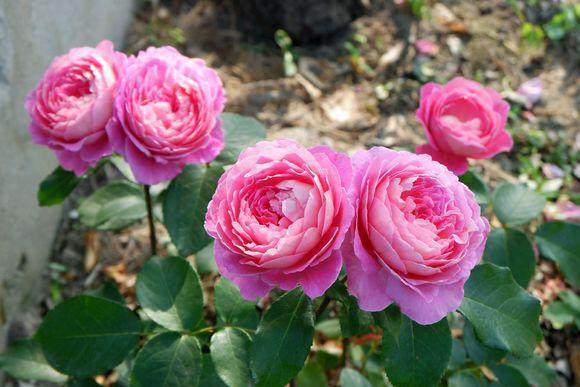
Gardeners who have grown roses for many years say that growing roses well is actually very simple, and the reason is just one: go along with their little quirks and take good care of them. But the reasons gardeners give for failing to grow roses well are many. Today Huahua has summed up 4 common reasons for failing to grow roses well. Which one do you think you are?
NO1: Not watering properly, or not watering at all
Roses are plants that greatly love water, and many gardeners also know this little habit of theirs, so they often water roses more. But with this word "more," the measure is not grasped well. When watering roses, it is not that the more the better, nor is it the same for all. The four seasons differ, and the climate in each region is also different. The principle of watering still has to be grasped by yourself. Do not water twice a day in the summer in the south and do the same in the north; this is only a reference.
NO2: Too much fertilizer, too concentrated fertilizer, too heavy fertilizer
Roses are plants that like heavy fertilizer and heavy water. This "heavy," this fertilizer, must have the measure grasped well. During the growing period, roses need 1 times more fertilizer than usual; the fertilizer amount for young seedlings should be reduced by 1 half compared with normal; the roots of roses during pest and disease periods do not need fertilizer at all. They are already exhausted from resisting pests and diseases, so how could they possibly absorb fertilizer? Finally, there is the use of raw fertilizer. Young seedlings are the easiest to die from it. Large plants have a certain resistance, but raw fertilizer also easily causes yellow leaves and no flowering.
Solutions:
If you use an ecologically safe organic nutrient solution, during the seedling period, dilute it 800 times and use it once every half month. If it is a large plant, use it once a week, diluted 500 times. If it is a sick plant, do not fertilize. Use it after pest control, sterilization, and pruning. Fertilize normally in spring and autumn, and reduce the fertilizer amount in summer and winter.
NO3: Treating roses as greenhouse flowers
Roses not only like heavy fertilizer and heavy water, but also like a well-ventilated environment with sufficient light. No matter if it is windy or rainy, or exposed to scorching sun, being placed outdoors is not a big problem, unless there is heavy snow, in which case you can cover them with some straw. If the sun is scorching, young seedlings need to be protected well. For mature plants, as long as there is enough watering, more misting is enough. There is no need to move them indoors and grow them so delicately.
NO4: Pruning - regardless of season, regardless of weather
For different rose varieties, in different seasons, before and after flowering, the pruning methods are all different. Do not always prune heavily. Except in winter and early spring, or for pests and diseases, at other times only slight pruning is needed.
After flowering in spring and autumn, basically you only need to cut off the faded flowers and about 2 nodes of branches below the flowers. Choosing to prune when the weather is clear can also effectively avoid infection after pruning. Choosing professional garden scissors can make roses healthier.
Image source: Huayan Chulu