The desert rose is both charmingly goofy and dazzlingly beautiful, well worth growing one of your own.
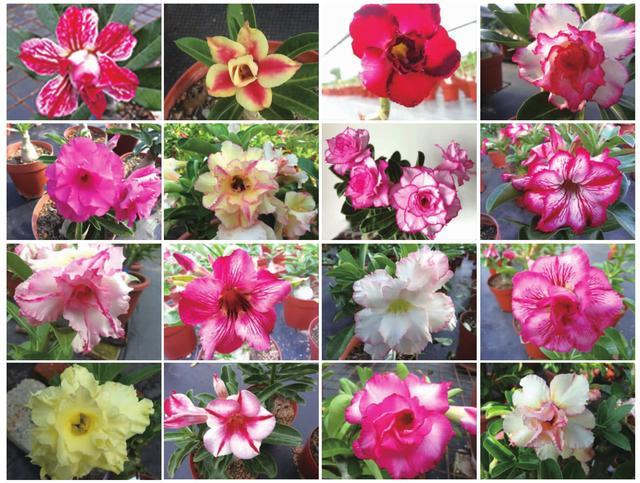
Grow a desert rose, both charmingly goofy and dazzlingly beautiful!
There is a plant that bears a name at once weathered and vigorous yet beautiful and elegant, and has a naturally cute, endearingly goofy form. Its big belly can hold what the world finds hard to contain - the fiercest summer heat; it accumulates strength and then releases it, producing astonishingly brilliant flowers atop its swollen root caudex. That's right, it is the desert rose, known among flower lovers as "Silly Girl." First, let's look at its quick fact card.
Although it is called the desert rose, it is not related to roses at all; it is in fact a true succulent. Its appearance is quite distinctive: simple leaves alternate, obovate, with an acute tip, 8-10 cm long and 2-4 cm wide, leathery, glossy, dark green on the upper surface and grayish-green beneath, with entire margins. The inflorescence is a terminal raceme bearing more than 10 flowers, trumpet-shaped, 6-8 cm long; the corolla has 5 lobes and comes in rose red, pink, white and bicolor forms, and the seeds bear white downy hairs.
The desert rose belongs to the genus Adenium in the dogbane family (Apocynaceae), and is native to Kenya and Tanzania in Africa. This genus has 5 wild species; through artificial breeding and propagation, the number of registered cultivars now exceeds 15,000, making it one of the plants with the most cultivars in the world. The desert rose was introduced to China in the 1980s, but was grown only in very few areas. It has only been used as a potted plant for a little over the past ten years. So many people, even veteran flower lovers, are shocked the first time they see it: could such a flower really exist in the world? This curiosity and desire for something exotic soon gives rise to a powerful wish to own one and place it on their desk. So, how do you grow a desert rose well?
Desert roses can be propagated by seed, cuttings, layering, grafting and so on, but since asexual propagation methods cannot produce a thick, fleshy caudex, which greatly reduces their ornamental value, seed propagation is generally used to grow the cute little radish-like caudex, and then during the growing season cleft grafting is used to graft branches of different cultivars and flower colors onto the same plant, improving the ornamental quality of its flowers.
Desert rose seeds on the market generally fall into two types: double-petaled mixed colors and single-petaled mixed colors. A few sellers offer seeds of specific named cultivars, but the price is somewhat higher. In fact, the desert rose is highly variable, and seedlings do not necessarily inherit the mother plant's traits; double-petaled cultivars in particular have a certain rate of reverting to ancestral traits, so seeds from double-petaled plants do not necessarily produce double-petaled cultivars. Even so, watching a little desert rose grow from a fuzzy seed that sheds its cap into a little radish-like caudex, and then produce astonishingly brilliant flowers, the joy of it all keeps many flower lovers devoted, one after another setting out on the seed-sowing path.
The method for sowing desert rose seeds is actually quite simple:
1. Choosing the substrate and container. For the substrate you can choose loose, breathable fine sand or coconut coir; specialized succulent soil is also excellent. If the sowing soil is rather dry, you can add a small amount of water and mix it evenly until the soil darkens in color; the state of "clumps when squeezed in the hand, crumbles when released" is just right. Before sowing, the substrate should be sterilized, either by high-temperature heating or with potassium permanganate, etc. As for the sowing container, plug trays can be used for raising seedlings in large quantities, while ordinary flower pots are fine for home growing.
2. Placing the seeds and covering with soil. Arrange the long seeds horizontally on the leveled substrate, and gently cover them with a layer of the original substrate; the principle for the covering depth is just to cover the seeds, and it should not be too thick, otherwise the germination rate will be affected.
3. Watering and placing the seedling pot. The first watering should soak through; if watering washes away the covering soil and exposes the seeds, gently cover them with sand again. Alternatively, you can place the soil-filled pot into water to soak from below, making sure it is thoroughly soaked, then gently press the soil surface - if you can feel the moisture, it is enough. After sowing, place it in a cool, ventilated spot with access to scattered light, and avoid direct strong sunlight.
4. Germination and moisture retention. Before the seeds germinate, take good moisture-retention measures and mist appropriately. Generally after 3-7 days, the little desert rose sprouts will begin emerging from the soil one after another, still wearing their little caps. After germination, water about once every 2-3 days, or simply water whenever the surface soil looks dry.
5. Light and other matters. In summer the desert rose grows vigorously; generally about ten days after germination it begins to grow true leaves. Once the little desert rose seedlings have grown their 3rd to 4th pair of true leaves, they can be transplanted into pots, and after transplanting and a short period of settling in, you can take them out to receive the baptism of sunlight.
Under normal conditions, a desert rose takes 1-2 years from sowing to flowering. Flower lovers eager to see blooms usually enjoy the fun of sowing while also buying mature plants to admire the flowers. At present, the better-quality desert roses on the domestic market mainly come from grafted desert roses from Taiwan, China; Taiwan, China's desert roses have already formed a mature system of superior variety selection and breeding, grafted production, and sales logistics, with an extremely wide range of cultivars and flower colors. Some cultivars such as 'Xiangfei' and 'Shuimitao' even carry fragrance, guaranteed to make flower lovers' eyes glaze over as they choose, crying out that they'll have to chop off their hands...
Next, you will surely ask the second question: how do you care for one bought online or from the major flower markets?
When a bare-root seedling bought online arrives, its leaves have generally been pruned down to almost nothing. No matter - pinch its big belly with your hand; if the belly feels soft, contact the seller right away to deal with it. If the belly is hard, then it's OK, go ahead and pot it up with confidence. Choose a shallow pot with good breathability, first to make it easy for the roots to breathe, and second to help control watering frequency. For the potting soil, choose a loose, breathable, well-draining sandy loam; you can mix loose sand with leaf mold. If it is a mature plant shipped in its original pot and soil, it is best to let it settle in for a few days first and wait until you see new leaves growing before repotting.
The desert rose likes a hot, dry environment with plenty of sunlight; it tolerates intense heat but not cold, tolerates drought but dislikes excessive moisture. Do not water too much each time, otherwise it easily causes root rot and leggy branches. Many beginners cannot judge the watering frequency well; as soon as they see the surface soil dry, they rush to water, and often their desert roses do not die of drought but of waterlogging. How do you control the amount of watering scientifically and reasonably? Beginners are advised to insert a chopstick into the potting soil and pull it out to check before watering; if the bottom of the chopstick is dry, then water - and remember, if the lower soil is not dry, do not water. At the same time, pinch the desert rose's big belly from time to time; once you find it has gone soft, it is very likely you have overwatered. When growing a desert rose, you must provide plenty of sunlight and ensure ventilation and air exchange, otherwise growth and flowering quantity will be affected. In winter the desert rose enters dormancy and its leaves gradually fall off; this is a normal reaction. At this time, reduce watering frequency, keep the soil dry, and pay attention to ventilation and warmth to prevent cold damage.
Although the desert rose is fairly tolerant of poor soil, applying fertilizer appropriately can make it grow faster, with more luxuriant branches and leaves and more vivid flower colors. During the vigorous summer growing period, a phosphorus-potassium fertilizer should be added once a month on average. At the same time, to ensure full growth, it is best to repot the desert rose once a year, and when repotting, apply some slow-release base fertilizer appropriately; decomposed soybean cake and bone meal are excellent choices. But be careful not to over-fertilize, otherwise it will cause fertilizer burn and yellow leaves.
During the growth of the desert rose, yellow leaves are a common problem; the cause may be overwatering, poor ventilation, too much shade, over-fertilizing, or pests and diseases. Once yellow leaves appear, immediately reduce watering, pause fertilizing, and place the plant in a spot with plenty of sunlight, then look for the cause and treat it accordingly.
In addition, a reminder: the entire desert rose plant is toxic, with its milky sap being the most toxic part, but there is no problem at all with growing it indoors - just do not eat it by mistake. Of course, the desert rose tastes terrible, so even if eaten by mistake, you would not eat much of it.
In fact, compared with delicate peonies or water-loving gardenias, the care of the desert rose can be called very simple. As long as you do not water it overzealously and give it plenty of sunlight, it can produce a spectacular display, making it very suitable for lazy flower lovers. This can be seen from its nickname "Silly Girl": "You grow me silly, I live silly." With proper care, the desert rose can even bloom year-round.
Just think - that charmingly goofy yet dazzlingly beautiful desert rose blooming all year round on your desk, isn't that a delightful and refreshing pleasure? Go grow one right away!