How to grow cornflowers? A care guide for the flower that can monitor sulfur dioxide
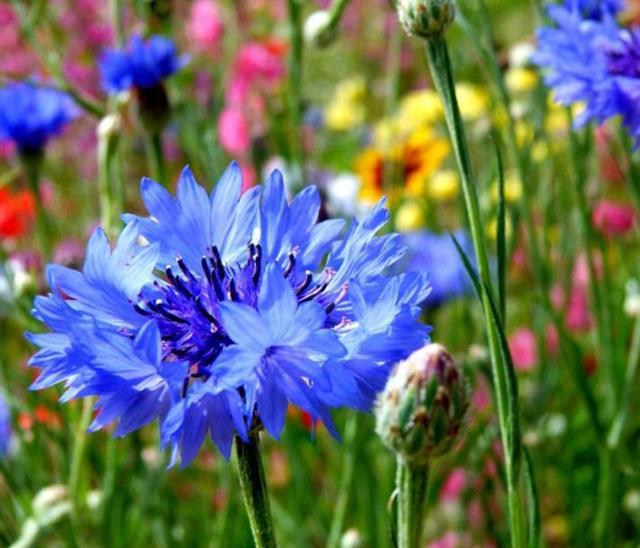
A care guide for cornflowers, the flower that "monitors sulfur dioxide"
The cornflower (pictured) is native to Europe and was originally a wildflower. Today's cornflowers have larger blooms in a variety of colors, including blue, white, light red and purple, among which purple and blue are the most prized.
1. Monitoring function
Cornflowers can monitor sulfur dioxide. When the concentration of sulfur dioxide in the air is high, cornflowers lose water and wither, and cannot bloom normally.
2. Care guide
(1) Choosing a pot. For planting cornflowers, do not use plastic or porcelain pots with poor air permeability, as they easily cause root rot; clay pots are best.
(2) Choosing soil. Cornflowers are suited to growing in fertile, loose, well-drained, sandy soil, and the potting soil should have good aeration and drainage.
(3) Planting. Before planting, first select the plants; for young cornflower plants, it is best to choose ones that have already grown 6-7 leaves, then transplant them into a flower pot. Prepare fertile, loose soil in the pot, gently firm the soil around the base of the young plant, water thoroughly, place the pot in a warm, ventilated spot, and carry out normal care and management.
(4) Light. The growing environment for cornflowers must meet the conditions of good ventilation and ample light; otherwise, they will die from a dark, damp environment.
(5) Temperature. Cornflowers like to grow in a fresh, cool environment and have a certain degree of cold tolerance. Even in the cold winter, as long as the indoor temperature is suitable, they can grow normally; the suitable temperature is generally 8-15°C.
(6) Watering. Generally, water once a day. Summer is prone to drought, so water once in the morning and once in the evening to maintain the moisture of the potting soil and also cool the soil a little, but the amount of water must not be too much, and waterlogging is not allowed. Because cornflowers cannot grow normally in a dark, damp environment, during the growing season each watering must be moderate; too much water will make the potting soil too damp and cause the plant's roots to rot.
(7) Fertilizing. Before planting, apply a base fertilizer to the cornflowers once, then apply a liquid fertilizer once a month, just enough to ensure normal growth of the plants, and stop fertilizing when the flower buds appear.
(8) Propagation. The propagation method for cornflowers is sowing, which can be done in both spring and autumn, with autumn sowing being preferable.
(9) Pruning. Cornflower stems are thin and weak, so pinching should be done at the seedling stage, in order to keep the plant low-growing and promote the sprouting of side branches.
(10) Placement and display. Cornflowers like light, so they can be planted in the ground or grown in pots in sunny places such as balconies and windowsills, and can also be used as cut flowers to decorate dining rooms, living rooms and studies.