Detailed Explanation of Grafting and Propagation Techniques for Superior Qingcui Plum Nursery Stock
Grafting and Propagation Techniques for Superior Qingcui Plum Nursery Stock
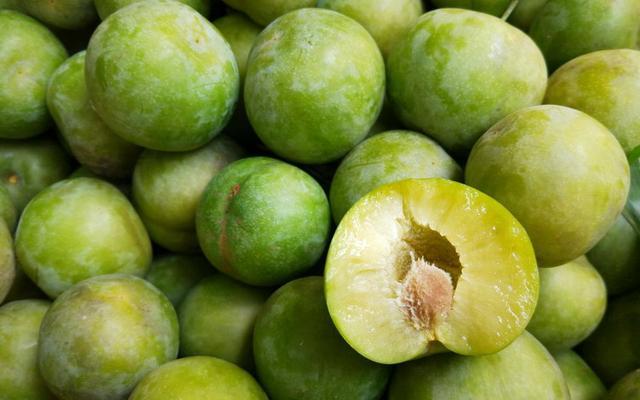
Qingcui plum belongs to the Rosaceae stone fruit category and is one of China's traditional fruit varieties. The average single fruit weight is 40 g, the fruit shape is slightly oblate, the fruit apex is flat with a slightly concave tip; the peel is pale yellow-green and thin, covered with a white bloom, smooth; the flesh is pale yellow, with darker coloration near the stone, sweet and juicy, with a dense, crisp and refreshing texture and a delicate fragrance. The fruit is rich in nutrition, containing sugars, acids, proteins and various vitamins and minerals, etc.,
and has high commercial and nutritional value, and is deeply loved by consumers. Qingcui plum is a representative high-quality summer fruit variety in Xuanhan County, and its market time falls right in the off-season for fruit, giving it typical local characteristics and advantages, with strong stress resistance, high yield, obvious benefits and very rich resources. In the past, propagation and planting mostly used root-sucker division or cuttings and other methods, with a low survival rate and relatively large variation in superior traits and fruit quality. In order to give play to the advantages of Xuanhan County's local specialty variety, cultivate and expand the Qingcui plum industry, better build a distinctive Qingcui plum industry brand, and steer the Qingcui plum industry toward standardized and large-scale development, grafting and propagation techniques for superior Qingcui plum nursery stock were explored to solve the current problems of mixed varieties and poor quality in Qingcui plum.
1 Site selection
Choose a sandy loam plot with convenient transportation, sheltered from the wind and facing the sun, with fertile and loose soil, a soil pH of 5.2-7.0 and good drainage and irrigation as the nursery site; it is best if the plot's groundwater level is below 1 m and there is no pollution source.
2 Land preparation
Remove weeds and debris from the nursery land, and deep-plow more than 25-30 cm. Before land preparation, apply 8-10 kg of urea and 2,000 kg of decomposed farmyard manure per 667 sq m; mix both with fine soil, spread evenly over the nursery land, then plow, harrow level and make beds. Ensure the ground is level and the soil is fine, loose and level; the bed height is 0.1 m, the width is 1.2 m, and the ditch width is 0.3 m, for ease of management.
3 Cultivating rootstock seedlings
3.1 Sowing
In December of the same year, select wild peach (Prunus persica) seeds of good quality; before sowing, place the seeds in 0.5% KMnO4 for disinfection for 1 h, then soak them in clean water for 24 h to promote germination. Remove them, drain the water, and sow in furrow rows on the bed, with a furrow depth of 4-5 cm; mix the seeds with soil, press flat, and water thoroughly. The sowing rate is generally 200 kg/667 sq m. After sowing, cover the seedbed promptly with agricultural film, using a low-arch cover. Keep the soil moist before the seedlings emerge, with the surface soil preferably not turning white.
3.2 Transplanting of young seedlings
In late March of the following year, when the peach seedlings are about 0.1-0.15 m tall, they can be transplanted. Before transplanting, prepare the seedbed: bed height 0.1-0.2 m, bed width 1.2 m, ditch width 0.3 m, with the length depending on the terrain, generally not exceeding 30 m. Generally use a north-south orientation; in mountainous areas, beds should not be made along the slope. Plant spacing is 3-5 cm and row spacing is 0.2-0.3 m. Before lifting the seedlings, irrigate the seedbed once thoroughly, and immediately irrigate once thoroughly after planting. Transplanting is best done on cloudy days or after rain; do not transplant when the soil is too wet. When planting, let the seedling roots spread out, firm the soil, and ensure the soil binds closely with the roots.
3.3 Seedling stage management
After transplanting, strictly follow the "frequent, supplemental, topdressing, prevention, pinching" seedling management technique to cultivate strong rootstock seedlings. Frequent fertilization: after planting, once the seedlings survive and root, apply clear manure water once a month, and use rainy days to apply fertilizer by broadcasting or spraying 4 times. Broadcasting is mainly with urea, applying 1.5-2.5 kg per 667 sq m; the spraying concentration is 0.3%-0.4% urea and 0.3%-0.5% monopotassium phosphate. Supplemental fertilization according to seedling condition: apply supplemental fertilizer to weak and thin seedlings with slightly poorer growth to promote their rapid growth. Topdressing: apply fertilizer once before grafting to ensure the rootstock can supply enough nutrients to the bud after grafting. Pest and disease prevention: use carbendazim plus insecticides and other pesticides to promptly control field pests and diseases such as peach aphids and powdery mildew. Pinching: promptly pinch the peach seedlings in mid-May to promote thick and strong seedlings, until in mid-June the rootstock diameter averages more than 3 mm, meeting the specification for grafting. In addition, promptly weed and loosen the soil, and irrigate promptly during drought, to ensure the young seedlings grow robustly.
4 Grafting
4.1 Selecting good scions
To ensure the quality of the Qingcui plum nursery stock being raised, strictly control the scion variety. The variety scions used for grafting are selected Qingcui plum varieties with superior traits such as high yield, high quality and strong stress resistance. From the middle and upper parts of the outer canopy of mature trees, collect robust current-year branches that are already lignified, with plump tissue, full buds and no pests or diseases. After collecting the scions, promptly remove the leaves, retain a section of petiole, sort and bundle them, and insert their lower ends into clean water for storage. As soon as the scions are collected, wrap them with a damp cloth, store, transport and keep them, to ensure the freshness of the scion twigs and favor graft survival. Scions for spring grafting are generally collected along with winter pruning, cut into 20-30 cm lengths, bundled 100 pieces per bundle, wrapped in film and placed in a low-temperature, cool cellar, cold storage, or buried in a trench with sand. First lay a layer of wet river sand 5-10 cm thick, spread a layer of scions flat, then add river sand with a thickness that hides the scions. In this way, one layer of river sand and one layer of scions; the final layer must be covered with river sand 7-10 cm thick, and the total number of scion layers generally does not exceed 3. Whichever storage method is used, always check whether the scions have lost water or show mold. The rootstock should be robust and upright, with well-developed fibrous roots, more than 40 cm tall, and a root crown diameter of more than 0.3 cm.
4.2 Doing a good job at the grafting stage
Summer grafting of Qingcui plum was the first of its kind in Xuanhan County, basically achieving the goal of "sowing in the same year, transplanting in the same year, grafting in the same year, and leaving the nursery in the same year." This shortened the nursery cycle, reduced nursery costs, and broke the traditional nursery model of sowing to raise rootstock in the first year and grafting in the next year. In terms of grafting method, the "single-bud side graft" method was used throughout. Before grafting, disinfect the grafting tools with 75% alcohol. At a point 2-3 cm above the ground on the rootstock seedling, use a blade to make an oblique cut from top to bottom at a 45 degree angle, deep enough to reach the xylem, cutting to the bone without injuring the wood. The rootstock cut is about 1.5 cm long, and 1/3-2/3 of the rootstock bark is removed to facilitate inserting the bud. Make an oblique cut at the corresponding part of the scion, with a smooth cut surface and a cut length the same as the rootstock cut. Insert the scion cut into the cut on the rootstock stem, align the cambium on one side of the rootstock and scion, and make the two surfaces fit tightly together to promote rapid healing of the wound. Use 0.06 mm plastic film to bind the rootstock and scion tightly, to prevent air from entering the graft surface or rainwater from seeping in, reduce the occurrence of diseases such as gummosis later, and ensure graft survival.
5 Post-grafting seedling management
5.1 Checking the survival rate
Choose a sunny, windless day for grafting; careful management after grafting is the key to achieving survival of grafted seedlings. About 10 d after grafting, promptly identify the survival rate; surviving grafted buds have a fresh color as usual, and buds that have withered or clearly died should be promptly removed and re-grafted.
5.2 Cutting the rootstock and removing sprouts to promote sprouting
After survival, cut off the rootstock portion above the grafted bud in 3 stages, and promptly wipe off sprouts and suckers on the rootstock trunk. Although the growth point of the rootstock seedling was removed at grafting, the newly emerging sprouts and suckers are numerous and grow rapidly, often competing with the scion for nutrients and affecting the survival of the grafted seedling. Therefore, remove these sprouts and suckers at any time, generally once every 7-10 d. When the grafted bud survives and sprouts, promptly cut the rootstock to concentrate nutrients and promote sprouting of the grafted bud. Operate gently to avoid damaging the newly sprouted buds of the scion or loosening the scion.
5.3 Strengthening field management
For surviving grafted Qingcui plum seedlings, weed once every half month, and at the same time combine loosening the soil with frequent light applications of fertilizer water; irrigate and drain promptly in case of drought or waterlogging. Fertilizer is mainly clear human and livestock manure water, with 0.5-1 kg urea added per 100 kg of clear manure water, not less than once a month. For seedlings that do not grow upright, set up a support to straighten them when the seedlings reach 30 cm. Promptly prevent and control diseases and pests, paying attention to the control of damping-off and peach twig borer and other pests and diseases, so that the grafted seedlings grow rapidly and robustly.
6 Field planting
Plant from after the leaves of the seedlings fall each year to before budding the following year, and planting in the same year after natural leaf fall is preferable. The planting orchard should have deep soil, good texture, be loose and fertile, and have good drainage and irrigation, preferably sandy loam. Land where stone fruit trees such as peach and apricot have been planted is not suitable for planting. The plant and row spacing is generally 3 m x 4 m, with 55 plants planted per 667 sq m.