Farmland weeds that farmers pull up as harmful grass are actually a rare find at 15 yuan per jin
Friendly reminder
Hemu Report aims to share and popularize information about various plants and their uses, for reference only. If medicinal use is needed, it is recommended to consult a professional physician to avoid problems!
Every year after spring arrives, the rural countryside is full of greenery, and all kinds of wild grasses and wild vegetation sprout and begin to grow. For some common yet highly useful wild grasses, farmer friends are very fond of them, such as houttuynia cordata, purslane, dandelion, and so on, all of which can be eaten and also used as herbal medicine to treat illnesses. However, there are also a great many wild grasses in the rural countryside, and many ordinary, inconspicuous wild grasses are often overlooked by farmer friends, or even pulled up as harmful grass. Below, the author will introduce one such wild grass, and it is exactly like this.
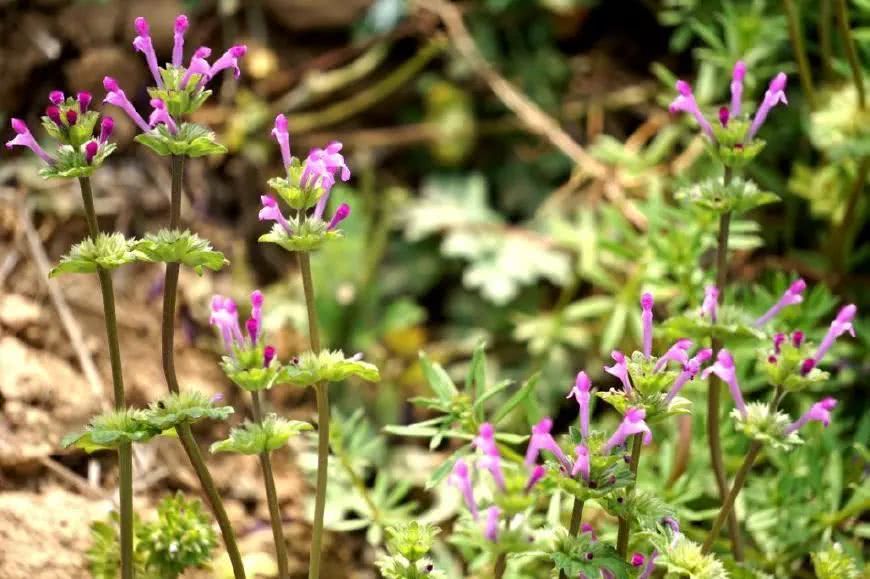
Starting from April, many wild grasses in the rural countryside begin to bloom one after another, and by May, even more wild grasses are blooming. There is one kind of wild grass that is the same, and it is "henbit deadnettle" (Lamium amplexicaule). It is a very inconspicuous little grass, with leaves about the size of a fingernail. If it were not for these purple flowers blooming, even fewer people would notice it. And even when henbit deadnettle blooms, not many people pay attention to it. Like many wild grasses, if you do not know their names and they have no practical use, you simply have no choice but to look the other way.
Henbit deadnettle also likes to grow along the edges of farmland. Although inconspicuous, its vitality is truly very tenacious, and it often grows mixed together with other wild grasses in farmland, competing for the nutrients of the crops in the farmland and causing crop yield reductions. Therefore, many farmer friends who work the land often pull up henbit deadnettle as a harmful grass in farmland. So, apart from harming crops, is henbit deadnettle really good for nothing? In fact, this is not the case. If an experienced old farmer sees henbit deadnettle, he will certainly treat it as a treasure.
Because apart from harming crops, henbit deadnettle is actually also a precious herbal medicine with medicinal value. According to the "Handbook of Chinese Herbal Medicine," henbit deadnettle is also called pearl lotus, bone-setting grass, lotus platform selfheal, and so on. The whole plant can be used as medicine. Its taste is pungent and bitter, and its nature is neutral. As medicine, it has the effects of clearing heat and draining dampness, invigorating blood and dispelling wind, and reducing swelling and detoxifying. It can be used to treat icteric hepatitis, lymphoid tuberculosis, high blood pressure, facial nerve paralysis, hemiplegia, bruises and injuries, fractures, impetigo, and many other symptoms.
It is precisely because henbit deadnettle has such great uses that in the village, experienced old farmers are very fond of it, and even treat it as a treasure. In the village, the author knows just such an old farmer who very much likes all kinds of wild grasses. According to this old farmer, if you know what you are looking at, this henbit deadnettle can sell for 15 yuan per jin, which counts as a rare find. So do not underestimate these wild grasses; perhaps they are a kind of "precious" herbal medicine
Dear friends, do you know about henbit deadnettle? You are welcome to leave a message and share your thoughts!
Text/Hemu Report, images/Internet
If you like Hemu's articles, you are welcome to follow