Chinese mahogany and tree of heaven are actually two different trees; here's how to tell them apart quickly
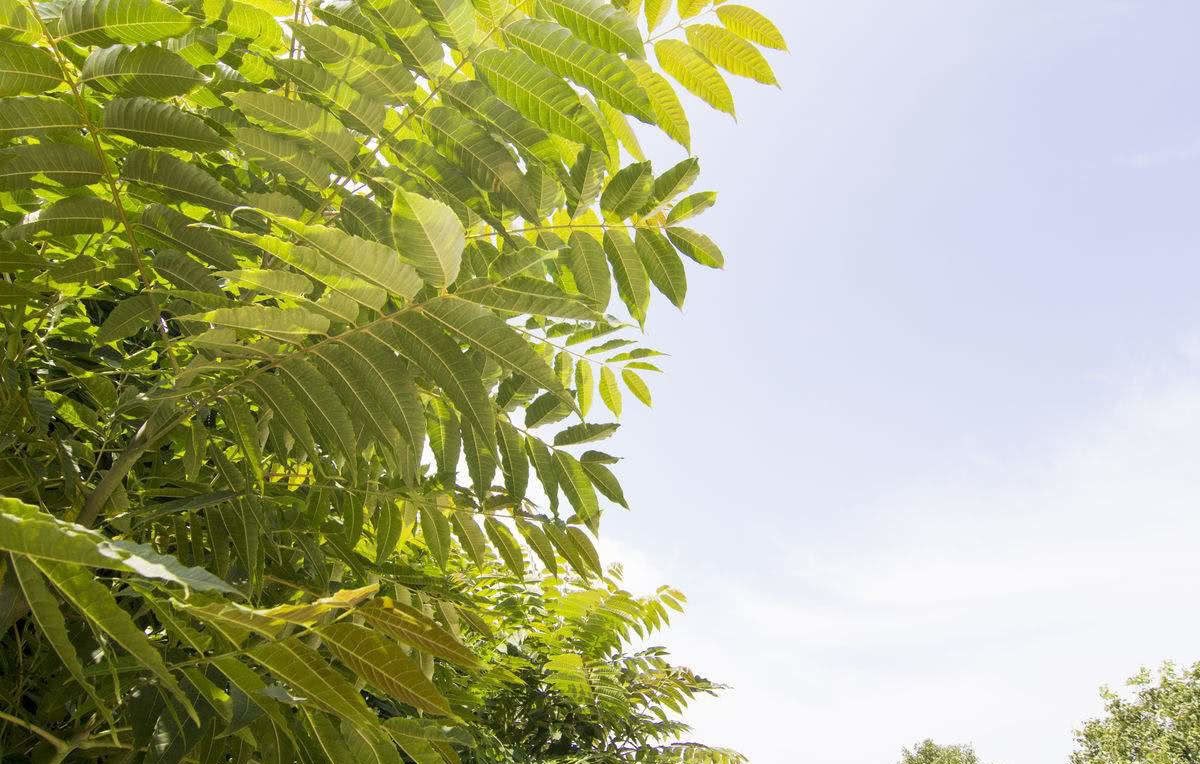
The tree of heaven (Ailanthus altissima) is a deciduous tree in the genus Ailanthus, family Simaroubaceae. Originally named chu (chū), it is also known as the chun tree and the wood-rasp tree. It is native to northeastern and central China and Taiwan, China, and gets its name from the foul odor released by the glandular dots at the base of its leaves. The editor remembers there was a tree in the old family courtyard, though it was not a tree of heaven, but a Chinese mahogany tree very similar to it.
Back then, as soon as spring came and the Chinese mahogany sprouted, we would pick a little to steam or mix with noodles and eat, but unfortunately that Chinese mahogany tree was later cut down. Although Chinese mahogany and tree of heaven look similar and are easy to confuse, they belong to two different families. So the editor will share the distinguishing methods I know; if you have different methods, feel free to share them too!
First, the most obvious difference is the smell. You can tell just from the names: one stinks and one is fragrant (of course, for people who dislike Chinese mahogany, its smell is not pleasant either). Next is the trunk: the trunk of the tree of heaven is like that of ordinary trees, with a relatively smooth surface and no cracking, while the trunk of Chinese mahogany peels off in strips and blocks. Another difference is the leaves: the tree of heaven has odd-pinnate compound leaves, while Chinese mahogany has even-pinnate (rarely odd-pinnate) compound leaves.