Cultivation techniques for Murcott mandarin in Wuzhou City, Guangxi
Cultivation techniques for Murcott mandarin in Wuzhou City, Guangxi
Murcott mandarin was developed in 1913 by W. T. Swingle and others at the Miami Agricultural Experiment Station in Florida, USAas a hybrid of mandarin and sweet orange, i.e. a tangor. In the 1970s, Professor Lin Pu of the Department of Horticulture at Taiwan University introduced this variety to northern Taiwanfor trial planting. Because Murcott mandarin has high sugar content, an excellent and rich flavor, thin skin and abundant juice, and ripens later than Ponkan mandarin, its market price in Taiwanis much higher than that of Ponkan mandarin, and its cultivation area has increased year by year. In recent years, trial planting has also been introduced in southern Fujian.
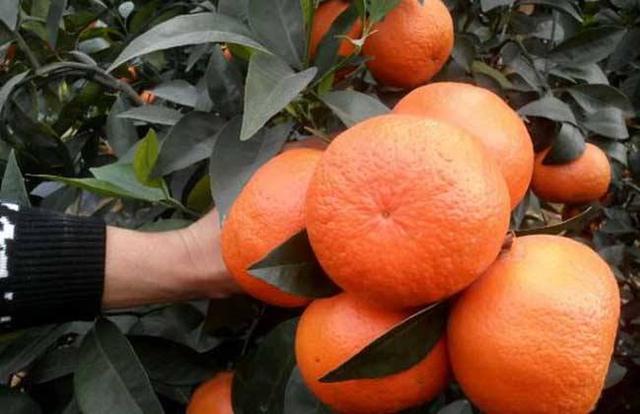
The Murcott mandarin fruit is oblate, uniform in shape, with smooth orange-yellow peel, a fruit shape index of about 1.2, and a single fruit weight of 150-200 g, soluble solids 15.0%, acidity 0.6%-1.0%, and excellent flavor.
As the value of Murcott mandarin continues to be discovered by people, its demand will increase year by year, and its cultivation areais also continuously expanding. However, due to imperfections in the existing cultivation techniques for Murcott mandarin, its growth is relatively slow, yieldsare relatively low, and the fruit size is generally rather small.
1.Murcott mandarinClimate and environment selection:Select a climate environment with an annual average temperature of 17°C-23°C, an extreme low temperature of -5.5°C, a January average temperature of ≥4°C, an annual active accumulated temperature of ≥10°C above 5000°C, annual sunshine hours above 1686 hours, a frost-free period above 312 days, and relative airhumidity of 60%-70% as the environment for Murcott mandarin cultivation;
2. Soil selection:Select soil with an organic matter content above 1.5%, a pH value between 5.5-6.5, an active soil layer above 60 cm,and a groundwater level below 1.0 m as the soil for Murcott mandarin cultivation;
3. Terrain selection: Select low mountains and hills with a slope below 20° as the terrain for Murcott mandarin cultivation;
4. Grafting and seedling raising:Using sour mandarin, red mandarin, and Ziyang fragrant orange as rootstock trees, and Murcott mandarin trees as scions, split anotch on the rootstock that matches the "wedge-shaped" end of the scion, then insert the scion into the notch, align the cambium, disinfectthe joint, and bind it with plastic film strips until new buds grow on the scion, then remove the plastic film to obtain Murcott mandarin seedlings;
5. Land preparation:Select the cultivation site according to the requirements of step A and step B, dig pits in the cultivation site at a spacing of 2 m x 3 m and111 plants per 667 sq m, and first fill each pit with a mixture obtained by mixing farmyard manure, lime, and topsoil,then fill it with a mixture obtained by mixing organic fertilizer, calcium magnesium phosphate fertilizer, and soil; the amount of the mixture obtained by mixing farmyard manure, lime, and topsoilfilled in is 4/5 of the pit volume, and the amount of the mixture obtained by mixing organic fertilizer, calcium magnesium phosphate fertilizer, and soilfilled in is 1/5 of the pit volume;
6. Transplanting and planting:Every year in February, dig holes in the pits prepared in step D, and after moderately pruning the root system,branches, and leaves of the Murcott mandarin seedlings obtained in step C, place them into the holes, spread out the roots, hold them upright, and while filling with soil, gently lift the seedlings upward and firm the soil so that the roots and soilare in close contact, with the root crown exposed 5 cm above the ground; after filling with soil, make a tree basin with a diameter of 1.0 m around the sapling, cover it with weeds or rice straw, andwater once a day for 7 consecutive days;
7. Canopy training:At 30 cm above the ground on the trunk, keep 3 strong buds in different directions and at different positions as main branches; when the main branches are 15 cm
long, train 2 secondary main branches and remove all others; send out 3 flushes of shoots per year to gradually form a compact and sturdy canopy;
8. Fertilizer and water management:After the Beginning of Spring, spread 20 kg-30 kg of composted organic fertilizer and 0.5 kg of urea under each tree canopy,gently loosen the soil, and turn the fertilizer under the topsoil; in early May, spray 0.3% potassium dihydrogen phosphate on the leaves of each tree and apply 0.1 kgof potassium chloride to the ground; in mid-July, apply 0.1 kg of compound fertilizer per tree; from late July to early December, drench once every half month with bran water plus0.1% urea, 20 kg per tree; after the Murcott mandarin fruit is harvested, dig small trenches along the drip line of 1/4 of the tree canopy of each Murcott mandarin tree, andfill the small trenches with 20 kg of fresh grass, 20 kg of composted organic fertilizer, and 0.5 kg of superphosphate per tree; the bran water is a product obtained bysealing and fermenting peanut bran with water;
Among these, in spring and summer, intercrop mung bean crops in the middle of the Murcott mandarin cultivation site; in winter, intercropChinese milk vetch in the middle of the Murcott mandarin cultivation site, and timely mow and turn it into the soil or cover it on the tree basin.