What to do about yellow leaves on lucky bamboo? Add something to the water you spray, and the leaves will be emerald green and the plant will grow taller node by node
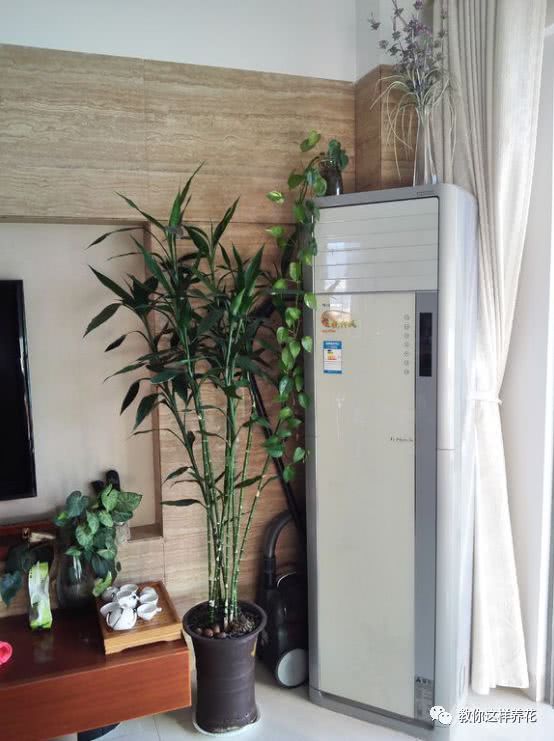
Lucky bamboo has emerald green leaves, is easy to grow, and has a good symbolic meaning, so many plant lovers buy a pot to keep at home. But the lucky bamboo you bring home often develops yellow leaves. What is going on? Let's take a look!
“
Yellow leaves on lucky bamboo"
-Soil-cultured lucky bamboo-
Yellow leaves on soil-cultured lucky bamboo may be caused by improper watering. Lucky bamboo likes a moist environment. If it is watered too little, the old leaves tend to dry up and turn yellow, while the new leaves remain normal. If overwatering causes waterlogging and root rot, the new leaves turn dull yellow with no gloss, the new shoots shrink and stop growing, while the old leaves show no obvious change.
Lucky bamboo should be watered by the rule of "dry then wet", that is, water only after the surface potting soil has dried, and water thoroughly when you do. If the leaves turn yellow and the roots rot, and it is not serious, take the plant out of the pot and put it in a cool place to let the potting soil dry out. If it is serious, cut off the rotten roots, soak the lucky bamboo in carbendazim or potassium permanganate solution to disinfect it, let it dry, and then repot it.
Yellow leaves on soil-cultured lucky bamboo may be caused by improper light. Lucky bamboo should not be kept in a place with very strong light. If there is strong direct sunlight, the leaf tips or edges of lucky bamboo tend to dry up. The solution is also very simple: move it to a place with bright light but no strong direct sunlight.
Of course, do not leave it in a very shady place for a long time either. With a long-term lack of light and shade, the leaves will also turn pale yellow and then fall off.
Yellow leaves on soil-cultured lucky bamboo may be caused by improper fertilizing. Too much or too little fertilizer is both bad. If too much fertilizer is applied and fertilizer burn occurs, the leaves become thick and dull, scorched yellow, and fall off. At this point, stop fertilizing and flush the roots with a large amount of water to reduce the effect of the fertilizer burn.
If fertilizer is insufficient, the leaves will turn pale yellow. Normally, applying a general-purpose fertilizer once a month is enough.
You can also check the potting soil. If the soil is not changed for a long time, the soil compacting and becoming impermeable can also cause the leaves to turn yellow. If the potting soil is dry and hard, change the potting soil.
-Hydroponic lucky bamboo-
Yellow leaves on hydroponic lucky bamboo may be caused by roots that have not yet grown well. Newly bought lucky bamboo takes some time to grow roots, and during this period the leaves will keep turning yellow, which is normal.
For newly bought lucky bamboo, cut the bottom at a 45° angle to increase the contact area with the water. Cut off all the leaves at the bottom that are in the water. During this period there is no need to fertilize, and change the water immediately once it becomes cloudy.
At a suitable temperature, rooting will also be fast. If the temperature is relatively low, rooting will be relatively slow.
Yellow leaves on hydroponic lucky bamboo may be caused by poor water quality. After roots have grown, you can check the water in the bottle. If it is cloudy, change the water immediately. If you normally use tap water, it is best to let it sit for a day before use.
If the roots rot and cause the water to become cloudy repeatedly, or the roots of the lucky bamboo become sticky, cut off the rotten parts, wash them clean, soak them in carbendazim or potassium permanganate, and then put them back in the bottle for care.
Yellow leaves on hydroponic lucky bamboo may be caused by a lack of nutrients. Clear water has very few nutrients, and over time it is not enough to support the growth of lucky bamboo, causing the leaves to turn yellow.
The simplest thing is to add a little nutrient solution or general-purpose fertilizer. You can mix a little fertilizer in when you water, use it once every half month, and the leaves will often stay glossy green.
A rusty iron nail will release quite a few iron ions, which is very helpful for the growth and emerald green color of lucky bamboo leaves. The effect is slow, but many plant lovers throw one in and the lasting effect is quite good. Of course, you can also directly add a little 0.2% ferrous sulfate water solution every half month, or spray it on the leaves, and the effect is very fast.
Have your lucky bamboo leaves turned yellow?
After reading this, show it to plant lovers who need it!