Water hyacinth can also be grown as a bonsai-style ornamental plant, and it is well worth recommending.
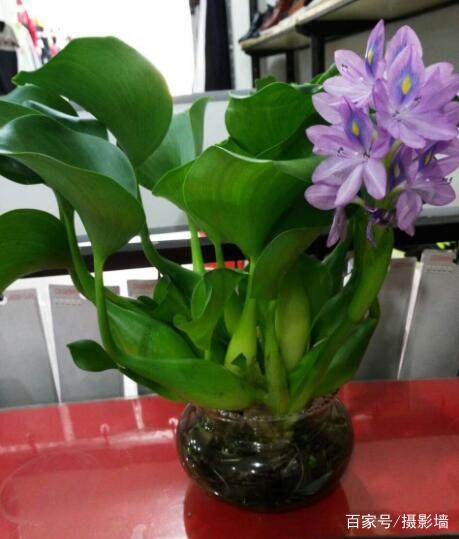
Bonsai recommendation: grow water hyacinth as a bonsai-style ornamental plant. Water hyacinth is also called water floating lotus, and also known as Eichhornia crassipes (common water hyacinth), because its flowers look just like standard phoenix eyes, with pale purple petals, but there is also a bit of yellow right in the center, making it look more and more like an eye the more you look at it. Water hyacinth growing on the water surface grows very quickly, is highly adaptable, and reproduces well, so at the turn of summer and autumn, when they bloom, they form patch after patch, looking quite spectacular.
Historically, water hyacinth was once an ornamental flower, and it originated in the Amazon River basin in South America. According to records, it was only introduced into China in 1901, and the name "Eichhornia crassipes" also came about at this time. At the time, because it had a purifying effect on water quality - it could absorb large amounts of harmful substances such as heavy metals from water - and could also be used as animal feed, it was once praised by Americans as the "pale purple flower crown that beautifies the world." But today, water hyacinth has become an invasive alien harmful species, and by 1997, it had been listed by botanists as one of the "world's ten most vicious weeds."
First, its growth is too astonishing. Each water hyacinth plant can produce several hundred seeds per inflorescence, and it also has a mode of asexual reproduction, namely growing lateral buds from the base of the leaves, thereby quickly reproducing new plants. Once its growth is unrestricted, it will quickly cover the entire water surface, blocking sunlight from entering underwater and also cutting off the atmosphere, causing other aquatic plants and animals to die from lack of oxygen and sunlight. Second, after absorbing heavy metal pollutants from water, it does not degrade all the toxins. Once large numbers of plants die and sink to the river bottom, they will again cause secondary pollution of water quality.
However, some people now grow water hyacinth as a bonsai plant, because its flowers are indeed very beautiful. It is just worth reminding that when growing water hyacinth, do not use water that is too clean. The more you use the dirty water of those foul ponds to grow it, the better and more beautiful the water hyacinth grows. And note that when you no longer want to grow it, it is best not to dump it casually into a pond.