When the weather gets hot, these succulents are the most sun-tolerant, and the more you grow them, the thicker and fuller they get
When the weather gets hot, succulent growers get nervous. Huahua says every household's succulents are different in quality, so you have to analyze each specific case. Today let's give succulents a health check and see which ones are the toughest and can make it through summer safely!
Succulents with farina are the most sun-tolerant
Complete Guide to Flower Growing
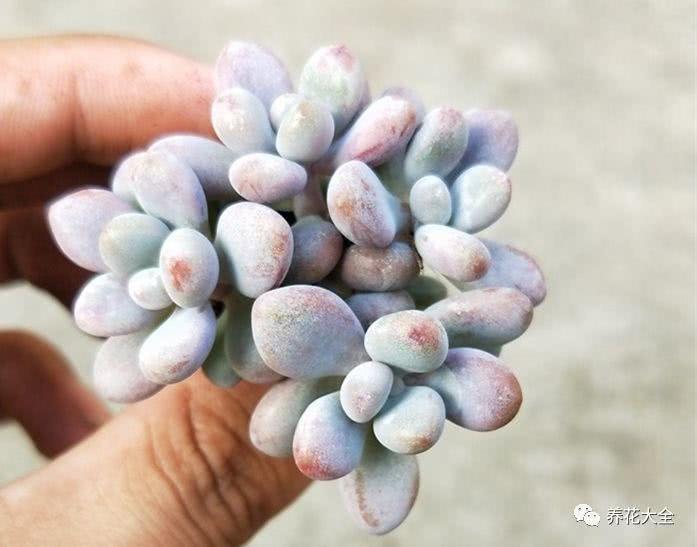
We can often see a layer of white powder on succulent leaves. It is a health indicator for succulents: the thicker the farina, the more sun-tolerant they are
How succulents produce farina
Succulents originally grow on poor land in the wild, and during growth they secrete a powdery film that covers the leaves to protect themselves
What is farina for
1. Resists ultraviolet rays and prevents sunburn
The farina secreted by succulents is actually like sunscreen, forming a protective film that blocks direct ultraviolet rays and protects the succulents from sunburn
2. Waterproofs and prevents leaf rot from standing water
Succulent leaves are afraid of waterlogging. Wild succulents can easily collect water in the center after rain. With this white farina film, water and leaves are separated, so they will not rot
3. Reduces water evaporation
Succulents are basically drought-tolerant. A layer of farina attached to the leaves can reduce water evaporation from the leaves and keep them plump and fleshy~
How to grow farina
At this point everyone may be thinking that if our succulents have this thick white farina, then we do not need to fear summer
1. Look at the variety
Succulents with farina are generally born that way, for example: Echeveria 'Bluebird', Pachyphytum 'Amethyst', Pachyphytum 'White Beauty', Sedum pachyphyllum, Echeveria laui, Cotyledon orbiculata 'Fukugin', Pachyveria 'Blue Bird', Echeveria runyonii 'Topsy Turvy', Echeveria cante, Graptopetalum macdougallii, Pachyveria 'Fiona', Echeveria 'Afterglow', Graptoveria 'Debbie', and so on
2. Water reasonably and avoid rain
New leaves do not have farina at first; it gradually forms as the leaves grow. Once the farina on old leaves is rubbed off, it is very hard to regenerate, so when watering, avoid the leaves, and never let them get rained on directly!
Pachyphytum is the most resistant to depletion
Complete Guide to Flower Growing
Pachyphytum succulents have tough, plump leaves and store a lot of nutrients, so even if they cannot take in food or water in summer, they can still hold on!
Which ones are Pachyphytum
Common Pachyphytum succulents include: Pachyphytum 'Peach Beauty', Pachyphytum 'Starry Beauty', Pachyphytum 'White Beauty' and various other "beauties", Pachyphytum compactum, Pachyphytum 'Baby Finger', Pachyphytum 'Red Finger', Pachyphytum 'Rittada', Pachyveria 'Blue Dazzler', and Pachyphytum 'Inada-hime'
How to grow Pachyphytum in summer
Pachyphytum does not die easily in summer. When the temperature exceeds 32°C, move it indoors to a place with good light, and water once every 7-10 days. Its vitality is superb
Those with fine hairs are the most heat-tolerant
Complete Guide to Flower Growing
Succulents with fine hairs look as if they would be very hot, but unlike animal fur, the hairs are also part of their leaves and help them dissipate heat
Which succulents have fine hairs
Common hairy succulents include: Echeveria pulvinata, Pachyphytum 'Dream', Echeveria 'Hongyanhui', Echeveria 'Sentoni', Echeveria 'Ruo Shige', Crassula mesembryanthemoides, Echeveria 'Purple Peony', Opuntia 'Panda Palm', Kalanchoe tomentosa 'Rabbit Ears', Echeveria 'White Crown', and so on
How to grow hairy succulents in summer
Hairy succulents do not show obvious dormancy in summer. As long as the temperature does not exceed 32°C, they can absolutely continue to be grown in the sun, but water must be controlled, watering once every 7-10 days. If it gets too hot, they need shade
(Pseudo) Echeveria is the most drought-tolerant
Complete Guide to Flower Growing
(Pseudo) Echeveria succulents mainly come from some dry regions of Mexico and the United States, and are very drought-tolerant. Most Echeveria succulents get through summer easily!
Which ones are (pseudo) Echeveria
Easy-to-summer Echeveria succulents include: Echeveria 'Xuehe', Echeveria 'Chuxian', Echeveria 'Qiuli', Echeveria 'Giwa', Echeveria laui, Echeveria 'White Phoenix', Echeveria 'Fire Tia', Echeveria 'Pink Beauty', and so on
How to grow (pseudo) Echeveria in summer
(Pseudo) Echeveria succulents are very drought-tolerant. In summer, generally water once every 10-15 days. When the temperature is above 32°C, it is recommended to shade them promptly
Learn a little more about succulent tips
and you will not fear even the hottest summer
Growers who still want to get succulents
should choose these easy-to-summer succulents first
?