A weed in wheat fields looks just like rapeseed, and farmers cut it down on sight, yet at 9 yuan per jin some people have made a fortune from it
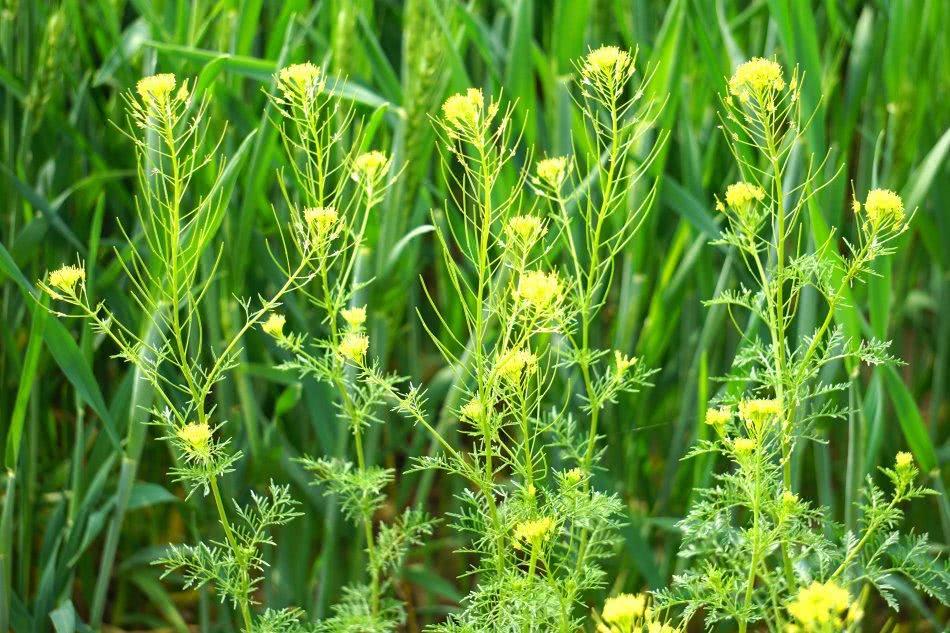
Late spring and early summer is the season when wild grasses grow most vigorously in the countryside, especially in spring, when all kinds of wild grasses spring up in rural fields and wilds. Most farmers say they are rather fond of the wild grasses of the countryside, and even treat them as treasures. The reason is that some of these wild grasses can be eaten as potherbs, and some can be used as herbal medicine to treat illnesses, such as houttuynia, dandelion, purslane and so on. However, there are still plenty of wild grasses that farmers dislike or even hate. Below, the author introduces one such wild grass.
After May arrives, many wild grasses in the rural fields and wilds begin to bloom one after another. Quite a few wild grasses have beautiful flowers, yet they are still ruthlessly cut down by farmers. Flixweed is one of them. I believe many friends who have lived in the countryside have mostly seen flixweed. Flixweed has a rather interesting appearance: its leaves resemble celery leaves, its flowers closely resemble rapeseed flowers, and its fruits also closely resemble rapeseed. Anyone unfamiliar with it would probably mistake flixweed for rapeseed. But it is precisely this wild grass with such beautiful flowers that is a major noxious weed that farmers cut down on sight. Why is that?
Farmers who have worked the land should be fairly familiar with this: flixweed likes to grow most in wheat fields, farmland and similar places. Flixweed spreads easily, adapts easily (it is distributed in Asia, Europe, Africa and North America) and has strong vitality, and most importantly, it roots very deep, which also gives it a strong ability to absorb nutrients. It often snatches the nutrients of the crops in wheat fields and farmland, causing the crops to grow poorly. Therefore, it is not only farmers in our country who dislike it; even farmers abroad dislike and hate flixweed. As a result, flixweed once became a major noxious weed that people cut down on sight.
Although flixweed is so detestable, it is not entirely without value. In the village, the author saw farmers who specifically harvest flixweed and make a fortune from it. So what uses does flixweed have?
According to the records in "Chinese Materia Medica", flixweed is actually a very good Chinese herbal medicine, and there are records of its use in ancient times. The seeds of flixweed can be used as medicine. Its taste is pungent and bitter, and its nature is very cold. As medicine it has the effects of purging the lungs and directing qi downward, eliminating phlegm and relieving asthma, promoting diuresis and reducing swelling, releasing heat and expelling pathogenic factors, and strengthening the heart and promoting urination. It can be used to treat many symptoms such as phlegm-fluid cough and asthma, swelling of the face and eyes, fluid accumulation in the chest and abdomen, edema, difficult urination, and cor pulmonale.
The tender leaves of flixweed are also a top-grade potherb. Its tender leaves are rich in vitamins and carotene, and eating them is also quite beneficial to the body. After collecting the tender leaves, blanch them in boiling water until cooked, add oil and salt, toss to dress, and they are ready to eat. In addition, the seeds of flixweed are also rich in oily substances and can be used to extract oil, and the oil extracted can likewise be eaten.
It is precisely because flixweed has these uses that quite a few farmers in the village specifically go to wheat fields and farmland to help remove this major noxious weed, and then sell it. According to what the author has learned, in the village where the author lives, the tender leaves of flixweed are about 9 yuan per jin, while its seeds are about 7 yuan per jin, which has also let quite a few farmers make a small fortune.
Dear friends, do you know about flixweed? Have you eaten the tender leaves of flixweed? You are welcome to leave a message and share your thoughts!