Your Aglaia odorata never blooms? Change the soil and it will flower nonstop
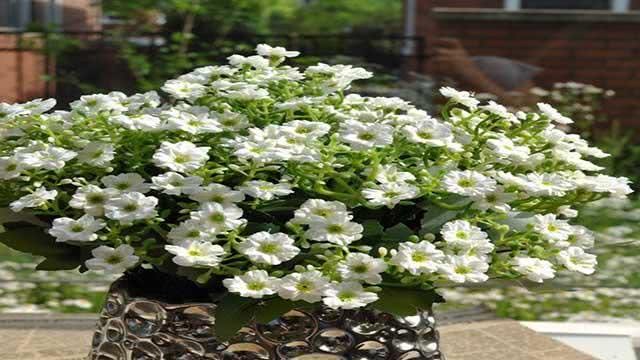
There are several reasons why Aglaia odorata does not bloom: if the soil is unsuitable, then you need to change the pH of the soil. If the temperature is wrong, then you need to regulate the temperature. If it is because too much nitrogen fertilizer was applied, then you need to switch to potassium fertilizer and phosphorus fertilizer. If it is lacking light, then you need to supplement a certain amount of light.
I. Change the soil
1. Reason: Aglaia odorata likes acidic soil. If it is planted in unsuitable soil, it is very likely to grow poorly, and thus be difficult to bloom.
2. Solution: You can use some fertilizers to turn alkaline soil acidic, or simply replace the soil. Usually you can pay attention to this: if the color of the plant is not green but yellow, this may be because the soil is alkaline. At this time you can water it once every ten days with black alum water or diluted vinegar. When fertilizing, also pay attention: you must not use alkaline fertilizer, otherwise its soil will become alkaline and the plant will be difficult to bloom.
II. Adjust the temperature
1. Reason: This plant relatively likes a hotter environment. In winter you must pay special attention, because this will affect its blooming. In winter, if the temperature is lower than 5°C, it will die, and if it is higher than 12°C, it will consume a lot of nutrients, and later growth will be affected, and blooming will naturally be affected as well.
2. Solution: In winter, the temperature needs to be adjusted to within 5 to 12°C, and usually it should also be given relatively hot growing conditions.
III. Fertilize reasonably
1. Reason: Nitrogen fertilizer plays an important role in the growth of the plant's leaves, but if too much nitrogen fertilizer is applied, it will have more leaves and will not bloom. This is mainly because nitrogen fertilizer causes all its nutrients to go to the leaves, making it very difficult for flowers to form.
2. Solution: When the flowering period is approaching, reduce the use of nitrogen fertilizer and increase the application of phosphorus fertilizer and potassium fertilizer.
IV. Supplement light
1. Reason: Under sunlight, it can accumulate a lot of nutrients, and only with a lot of nutrients can it form flowers. But if it is in a dark place, it will not have enough nutrients, and blooming will be affected as well.
2. Solution: Place it in a place with light, but it cannot be placed in a place with too much light. You must be careful to avoid sun scorching, otherwise the plant will die from exposure before it can bloom.