Camellias aren't delicate or the hardest to grow: a few little secrets and even beginners can grow them into a bursting pot with big, brightly colored blooms
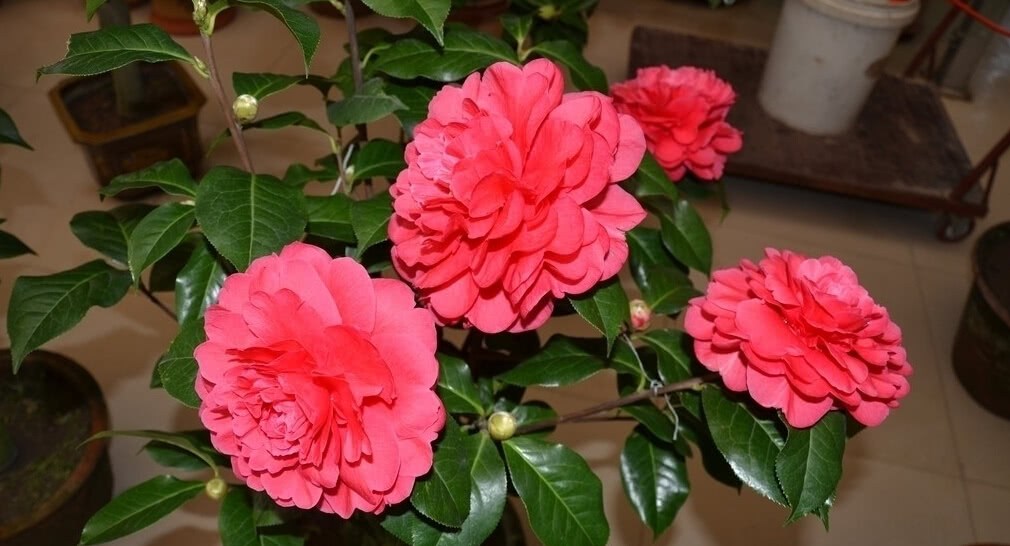
Camellias have beautiful plant shapes, impressive blooms, and captivating fragrance. When flowers cover the branches, yellow, white, and red set each other off, and against the green leaves they look especially fresh. Keep one in the house to ease fatigue and feel relaxed and comfortable.
How do you grow camellias better?
To grow camellias well, you first need to understand their habits: camellias like acidic soil, and a warm, humid, airy environment suits them best. So when growing camellias, the first thing is to mix the soil well.
Choosing and mixing soil
You can use leaf mold, plant ash, river sand, and garden soil mixed at a ratio of 3:2:1:1. This kind of soil is fertile, airy, and acidic, suitable for growing camellias.
When mixing the soil, you can also add some coal cinders. Pick up some thoroughly burned coal balls, break them into pieces, sift them, and keep the pieces about the size of a thumbnail, discarding the rest. Wash the coal cinders in water several times to remove the sulfur content inside. Then mix leaf mold, garden soil, and coal cinders at a ratio of 3:3:1, and you can plant camellias! You can also put slightly larger coal cinder pieces at the bottom of the pot. Soil mixed this way drains and breathes well, helping the camellia roots spread and breathe, with root rot rarely occurring. Once the roots are thick and strong, the camellia will grow vigorously.
Light
Camellias like light, but avoid strong light. In spring and autumn, you can give plenty of light; in summer, be sure to avoid direct strong light, otherwise after long exposure to strong light the flowers easily get sunburned, or even die.
Temperature
Camellias are not tolerant of cold or heat, and the most suitable temperature is 18-25°C. Keep the temperature well controlled at ordinary times; too high or too low will affect their growth. Especially in winter, be sure to do a good job of keeping them warm.
Watering
Camellias like a warm, humid environment and hate waterlogging. Do not water too much at once; water when dry and let them dry out between waterings. In summer, you can water a little more as appropriate, but be sure to place them somewhere ventilated and airy. If the air is dry, you can mist them with a little water as appropriate. When watering, be sure to avoid the hottest times.
Fertilizing
Camellias quite like fertilizer, but be sure to remember the principle of light fertilizer applied frequently. During the growing season, you can use more nitrogen fertilizer to promote vigorous plant growth. Before the flowering period, you can use phosphorus and potassium fertilizer to promote flower bud differentiation and fast bud formation; stop fertilizing during the flowering period. Be careful with fertilizing in summer: because summer is hot and the flowers grow slowly, just add a little diluted nutrient solution when watering; there is no need to give them too much fertilizer. In winter, during the camellia's dormant period, because they need to form buds, you can add a little diluted phosphorus and potassium fertilizer when watering.
Pruning
Pay attention to the camellia's plant shape at ordinary times, and appropriately cut away some overly dense branches to keep the plant open and airy. After the flowers fade, promptly cut off the remaining branches and stems to reduce nutrient consumption.
Once you know these things, you can also grow a pot of beautiful, brightly colored camellias.
Who says camellias are delicate and the hardest to grow? Know these little secrets, and even beginners can grow them into a bursting pot, with big, brightly colored blooms you can't get enough of. Come and grow a pot!