Although the clivia has "orchid" in its name, it is not an orchid
I believe everyone's first reaction to the title is to be full of question marks, and even quite doubtful about it. Of course, if you only listen to the one-sided words of the editor, it is hard to believe. Below, the editor will explain to you why the clivia is not an orchid.
Is it true that the clivia is not an "orchid"?
The clivia has always been known for being dignified and elegant, like a refined gentleman. Although the name clivia contains the character "lan" (orchid), it is actually not an orchid. Orchids are plants of the family Orchidaceae, while the clivia is a plant of the family Amaryllidaceae, and the two belong to different plant families. This is a bit like how a wife cake contains no wife~
Clivia profile
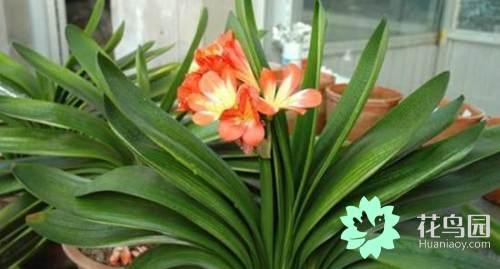
Clivia (scientific name: Clivia miniata), also known as sword-leaf amaryllis and large-leaf amaryllis, is an ornamental flower of the genus Clivia in the family Amaryllidaceae, and is a perennial herbaceous plant. It is native to southern South Africa. The flowering period lasts as long as 30-50 days, mainly in winter and spring, and it also blooms around New Year's Day to the Spring Festival. It avoids strong light, is a semi-shade plant, prefers cool conditions, and avoids high temperatures.
The leaves of the clivia are broad and strap-shaped, hard and thick in texture, and have gloss and veins. If managed properly, the leaves are neatly arranged in a fan shape, very beautiful. The flower scape emerges from the leaf axils, and it generally blooms only when it has 20-25 leaves. The flowers are arranged in an umbel, with small stalked flowers, funnel-shaped, in colors such as orange-yellow, pale yellow, tangerine, light red, and deep red. The berry is spherical, green when unripe, and purplish-red when ripe.
The suitable growth temperature is 15-25°C, and growth stops below 5°C. It prefers fertile, well-drained soil and moist soil, and avoids dry environments.
The lifespan of the clivia reaches several decades or longer. The clivia commonly cultivated in China is the red and orange flower lines of the large-flowered clivia. It has high ornamental value, and in China it is often grown in pots in greenhouses for viewing.
Daily care for clivia
1. Soil requirements
The choice of soil is the first key factor for the clivia. The clivia prefers fertile, loose neutral or slightly acidic humus soil.
2. Light requirements
The clivia likes semi-shade, and when growing clivia indoors, the effect of light on it needs to be adjusted manually. During the day, place the pot in a sunny spot, so the clivia grows attractive and has ornamental value. Or, to save some effort, turn the sunny side of the leaves to a different direction every week, so that the clivia can grow in a well-arranged and layered way.
3. Watering method
The clivia has fleshy roots, likes air, and fears waterlogging. It should not be watered too much. Usually it is best to combine watering with fertilizing, keeping the potting soil moist. Each watering must soak through, and after flower buds appear, water a little more. About every 20 days, combine watering with one application of fermented soybean cake water, diluted fishy water, and water from soaking water chestnuts, combining watering and fertilizing.
In winter, when the temperature is low and water transpiration and evaporation are reduced, watering should be controlled to prevent the potting soil from becoming too wet. Too-wet potting soil can cause root rot and death of the plant, but the potting soil should not be allowed to become too dry either.
4. Fertilizing method
The clivia is generally fertilized in winter. Phosphorus fertilizer and potassium fertilizer are more beneficial for growing clivia, and when topdressing, apply less nitrogen fertilizer. The amount of fertilizer must be controlled well, otherwise it is very easy to cause scorch-like symptoms at the leaf tips of the clivia. Especially in winter, if spots appear on the leaves and the root system turns yellow, it is caused by too much fertilizer. Three months before flowering, apply a liquid fertilizer mainly of phosphorus and potassium fertilizer to promote the emergence of the scape and flowering.
5. Protecting the leaves
Short, broad, thick, green, glossy, and upright leaves are the characteristics of a healthy clivia. In addition to providing reasonable fertilizer and water, the leaf surface must be kept clean to improve photosynthetic efficiency.
(1) Wash the leaves regularly, spraying and rinsing with clean water at the same temperature as the room, or wiping away dust on the leaves;
(2) Spray fungicide in time to prevent leaf spot disease, leaf blight, and stem rot, ensuring the leaves stay green.