Bamboo and flowers planted together make a perfect match
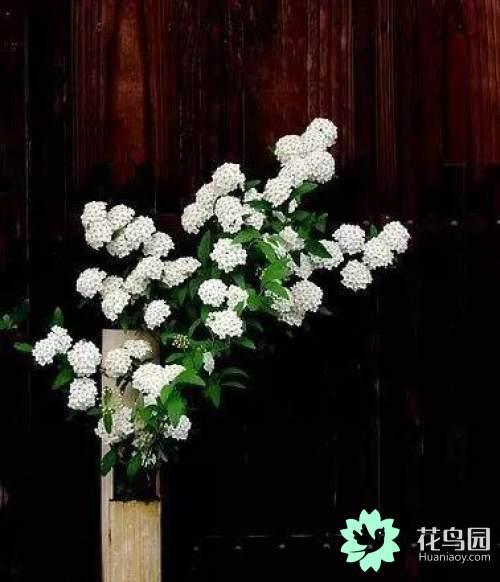
Bamboo's strength has always lacked an equal,
Even a skilled painter would struggle to capture it.
Look closely in last night's west wind,
If not today, when will the beautiful jade-like bamboo bow eastward?
-- Ming dynasty, Xu Wei
In China, flowers are closely tied to the lives of ancestors. Whether it be prehistoric pottery, jade, bronze and so on, or the various patterns carved, embroidered and stamped, exquisite floral motifs can all be seen upon them. It can be said that when Chinese civilization had just begun to sprout, flowers already existed. As cultural history continually evolved, floral art, as a natural imitation of creation, was vividly expressed.
In "Li Sao" there are lines such as "stringing autumn orchids to wear as a pendant" and "making water caltrop and lotus into garments, gathering lotuses to make a skirt," showing that at that time there was a fashion of picking fragrant flowers to wear on the body. Using flowers to convey feelings, using flowers to express aspirations, and giving flowers certain symbolic meanings - it can be seen that flowers had already entered the cultural realm during the Spring and Autumn and Warring States periods.
| Origins of Tube Flower Arrangement |
Bamboo tube flower arrangement arose during the Five Dynasties period. Tao Gu of the Song dynasty, in "Qing Yi Lu," records: "In the height of every spring, on beams, pillars, windows and walls, arches and steps, partition tubes were made and densely inserted with mixed flowers, inscribed 'Brocade Grotto-Heaven.'" From this record it can be seen that more than 1000 years ago, bamboo tube flower vessels were already used for wall-hanging or suspended decoration.
Bamboo is the favorite of literati, and bamboo tube flower vessels are especially important vessels for literati flower arrangement. Depending on use, there are single-partition, double-partition and multi-partition types. Some hang on walls, or stand in studios, Zen rooms and so on. When used, they can be single, in combinations of two or three, or in connected or multiple forms.
Tube vessels have an upright, straight-line form, with openwork, and the least human intervention. They pursue elegance, clarity and cleanliness.
For flower vessels to be preserved for a long time, they must be roasted and lacquered, otherwise they easily crack, grow mold, fade and so on.
Bamboo tubes are relatively light, whereas tube vessels made of ceramic are relatively heavy. Tube flower arrangement emphasizes the leading branch, striving for graceful lines; for small tubes, soft-branched woody or herbaceous materials are best.
Bamboo tubes or ceramic tubes have single or double partitions, differing from other flower vessels. When arranging, the foothold of the upper partition should preferably be north of the central cord line, and the lower partition is usually south of the central cord line; for a sense of balance, the footholds of the upper and lower partitions should not be at the same point.
When arranging, the upper partition is more dynamic when extending horizontally or hanging inverted, but attention should be paid to balance.
When arranging the basic form, a pinholder should not be used; using a "Y"-shaped device makes the branch base more beautiful. If creating a sculptural form, it can be considered as appropriate.
The greatest beauty is simplicity; plainness is what literati pursue.