These 8 flowers die faster the more you water them. Check if you have any at home.
It's summer now. Logically, many flowers should have their watering frequency appropriately increased, since high temperatures make water evaporate quickly and plants are prone to water shortage. But many people find that although they have increased their watering frequency, their flowers somehow die. What's going on? In fact, many flowers are in a dormant or semi-dormant state in summer, and at this time you need to control watering, otherwise they will easily die, especially the following 8 flowers. In summer, be sure to control watering well.
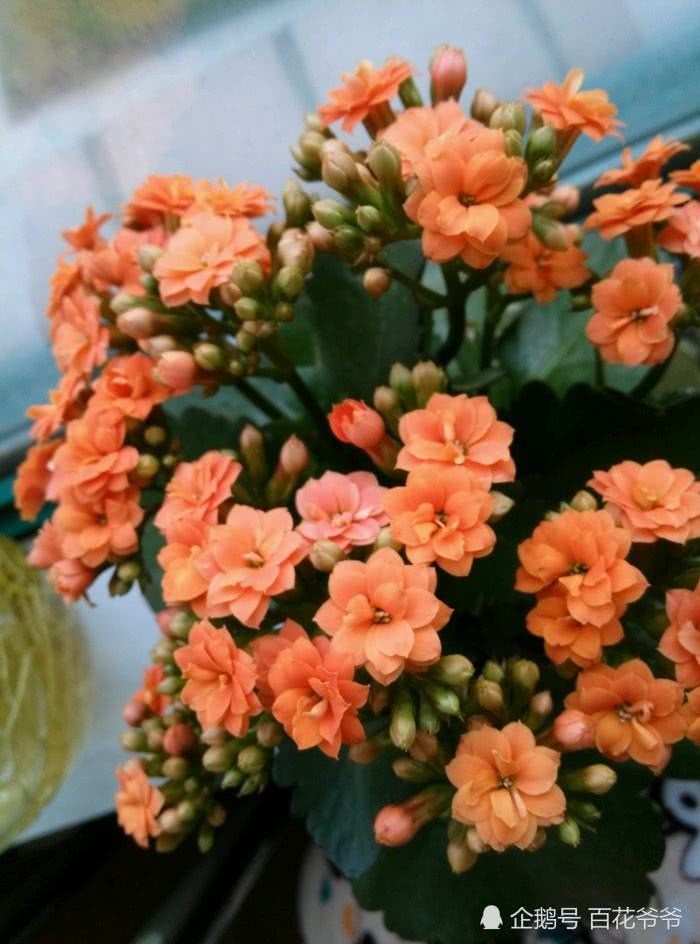
Kalanchoe blossfeldiana
It can be said to be one of the most common varieties, easy to keep alive, and with a long flowering period, deeply loved by flower lovers. But when the temperature rises above 30°C in summer, Kalanchoe blossfeldiana enters a semi-dormant state, and the care method needs appropriate adjustment.
Summer care method for Kalanchoe blossfeldiana:
1. Keep it in a place with scattered light and good ventilation, avoid direct sun exposure, such as the living room or a north-facing balcony
2. Reduce watering, especially for indoor plants. Water only when the surface of the potting soil turns white. For outdoor plants, avoid rain, otherwise the leaves easily rot.
Schlumbergera truncata
Schlumbergera truncata itself is a drought-tolerant variety. When the temperature exceeds 25°C, it enters a dormant state.
Summer care method for Schlumbergera truncata:
1. Keep it in a semi-shaded and ventilated place, such as a north-facing balcony
2. Reduce watering to 1-2 times a month. When the temperature is too high, spray water on the ground to increase air humidity
3. Pruning. In summer, it is recommended to prune Schlumbergera truncata once, leaving 6-7 leaves on each branch, and stop fertilizing.
Pelargonium
Pelargonium, which fears heat but not cold, also enters a semi-dormant period when the temperature exceeds 30°C in summer, and the care method should be changed.
Summer care method for Pelargonium:
1. After summer arrives, Pelargonium must be shaded and kept under scattered light with good ventilation. A north-facing balcony is quite good
2. Pruning. Remove the leaves at the base of Pelargonium, as well as some weak branches and dead branches. You can supplement with some potassium fertilizer
3. Water only when the potting soil turns white. When watering, try not to pour water on the leaves, otherwise it easily causes leaf rot.
Rieger begonia
Begonia types such as wax begonia and Rieger begonia enter a dormant period when the temperature is above 30°C.
Summer care method for Rieger begonia:
1. Cut off spent flowers and move the plant to a cool, ventilated place for care
2. When the temperature is too high, spray water around the potted plant to increase air humidity, but do not water the leaves, otherwise it easily causes leaf rot.
3. Reduce watering and just keep the potting soil slightly moist.
Fuchsia
When the temperature exceeds 30°C, Fuchsia stops growing. When it exceeds 35°C, it is very likely to be killed by the heat, so getting Fuchsia through summer is a difficult problem.
Summer care method for Fuchsia:
1. Keep it in a cool place with scattered light and ventilation, such as a north-facing balcony or an east- or west-facing balcony. It must not receive direct strong light
2. Reduce watering and keep the potting soil slightly dry, but you need to spray the leaves morning and evening every day to increase air humidity
3. Stop fertilizing in summer
Cyclamen
It is estimated that many flower lovers' Cyclamen have already been killed before summer even arrives, but it is actually a perennial. With proper summer care, it will sprout and bloom again in autumn.
Summer care method for Cyclamen:
1. After Cyclamen finishes flowering, it enters a dormant period. Stop watering and let the potting soil dry out. When all the leaves have fallen off, place the plant in a cool, ventilated place
2. Before autumn arrives, just keep the potting soil slightly moist. When the temperature drops to around 20°C, Cyclamen will begin to sprout and grow new leaves again. After watering thoroughly, place it under scattered light for care, and Cyclamen will quickly bloom again.
Marguerite daisy
Marguerite daisy is one of my own favorite varieties, a herbaceous flower that very easily blooms into a full pot. It belongs to the type that blooms brightly with just a bit of sunlight, and it has especially vigorous vitality. A cut branch stuck into a pot can survive.
Summer care method for Marguerite daisy:
1. Marguerite daisy, which enters a dormant period in summer, should be watered about once every 3 days, and spent flowers should be pruned promptly
2. After summer arrives, it is recommended not to let its buds continue to bloom. Pinch them all off and store the nutrients, and in autumn it will bloom into a full pot as soon as it flowers.
Ivy
As the most common foliage plant in homes, Ivy, compared with pothos, can also absorb formaldehyde and purify the air, but it is somewhat more cold-tolerant than pothos. However, after summer high temperatures arrive, Ivy stops growing.
Summer care method for Ivy:
1. When the temperature is above 30°C, place Ivy in a cool, ventilated place, or in a semi-shaded spot outdoors for care
2. Water after the potting soil dries, but you can spray the leaves every day to increase air humidity
Flower lovers, have you all grown these flowers? In summer care, do not blindly water the flowers. Understand the habits of the flowers and water appropriately, so the flowers can grow better.