Key Points of Double-High Cultivation Techniques for Passion Fruit to Achieve High-Yield and High-Efficiency Planting
Double-High Cultivation Techniques for Passion Fruit
1 Morphological Characteristics and Growing Environment of Passion Fruit
1.1 Morphological Characteristics
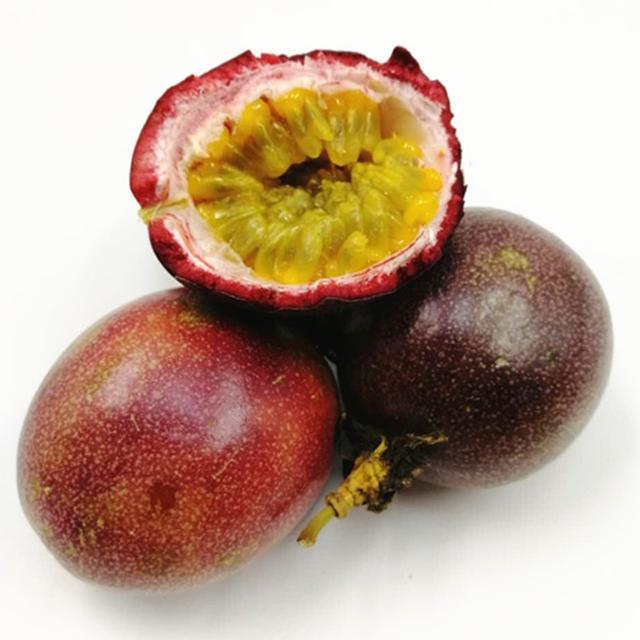
Passion fruit, scientifically named Passiflora edulis (egg fruit), gets its name because its shape closely resembles an egg. It is a herbaceous vine of the family Passifloraceae, genus Passiflora. The length of the plant is generally around 6.0 m, the stem is relatively slender and striped, pale green at the base and purple in the middle. The fruit is ovoid in shape, usually 3-4 cm in diameter, with a smooth, hairless surface, and turns purple when fully ripe [1]. Passion fruit is native to the Antilles Islands. The lifespan of the plant is about 20 a, and its economic lifespan is 1/2 of its total lifespan. Its fruit can be eaten raw or used as medicine, and the seeds can be pressed for oil. Because the pulp is juicy, it has been crowned with the reputation of the king of fruit juice.
1.2 Growing Environment
Passion fruit is a tropical plant and has relatively high requirements for its growing environment, especially temperature, moisture and light.
1.2.1 Temperature
Practice has shown that 20-30 °C is the most suitable temperature for the growth of passion fruit. Once the ambient temperature falls below 0 °C, the plant may wither and die from freezing. Areas with an average annual temperature above 18 °C are suitable for planting, and high yields are easily achieved. For this reason, Guangxi and other places have become major production areas for passion fruit.
1.2.2 Moisture
Passion fruit is suitable for planting in areas with an average annual rainfall of 1 500-2 000 mm. Although passion fruit is relatively drought-tolerant, if a severe drought season occurs, irrigation is essential; otherwise, the soil will be too dry, affecting the growth and development of the vines and fruit.
1.2.3 Light
Because passion fruit is a tropical fruit, it prefers sunlight, and the more abundant the light, the more it promotes vine growth and nutrient accumulation. In areas with an average annual sunshine duration of 2 300-2 800 h, passion fruit can achieve the goals of early fruiting and high yield.
2 Double-High Cultivation Technical Measures for Passion Fruit
Guangxi is located in the central and south subtropical monsoon climate zone. Under the combined effect of atmospheric circulation, solar radiation, geographical environment and other factors, the region has formed distinctive climatic characteristics, namely warm climate, abundant rainfall and moderate sunshine, which provides conditions for the cultivation and planting of passion fruit [2]. This article focuses on analyzing high-quality and high-yield cultivation techniques for passion fruit in the Guangxi region.
2.1 Seedling Raising Measures
2.1.1 Introduction of Varieties
According to differences in fruit color, passion fruit can be divided into two major categories: one is purple fruit, and the other is yellow fruit. The representative variety of the former is Tainong No. 1. According to practical experience, this variety has relatively high yield and relatively good fruit quality. Passion fruit is native to tropical regions, and the plant itself has weak cold tolerance. Therefore, when cultivating it in subtropical regions, purple-fruit seedlings should be introduced, and before planting, the seedlings should be acclimated to cold tolerance. Plants seriously damaged by freezing should be eliminated, and plants with relatively vigorous vitality after overwintering should be selected as mother plants for cutting collection and cutting propagation. Screening should be repeated in the second and third years, so that the seedlings can adapt to the local climatic conditions, thereby laying the foundation for achieving the goals of high quality and high yield.
2.1.2 Determining the Seedling Raising Time
Under the climatic conditions of Guangxi, passion fruit seedlings cultivated in November will bear fruit around May of the following year, and the entire fruiting period lasts a relatively long time, so fruit yield can be greatly increased; seedlings cultivated around April usually bear fruit around August of the following year, and the entire fruiting period lasts a relatively short time, which will reduce yield. Therefore, it is recommended to set the time for cutting propagation around November, with April as a supplement, so that the goal of high yield can be achieved [3].
2.1.3 Rapid Seedling Raising
The commonly used cutting propagation methods include seedbeds and arched sheds. In comparison, arched sheds have lower cost and are easier to manage. Therefore, they can be used as the first choice for rapid seedling raising. The specific method is as follows: choose a paddy field with sandy loam soil, drain the water from the field after harvesting in October, and when the soil is semi-dry and semi-moist, use a rotary tiller to break up the soil and clean out all remaining rice stubble from the soil. Then make raised beds, with length controlled within 20 m and width not exceeding 1.0 m, and cover them with black plastic film ready for insertion.
2.2 Key Points of Double-High Cultivation Techniques
2.2.1 Land Selection and Fertilization
The characteristics of passion fruit determine that it has relatively high requirements for sunlight, and water accumulation can affect the growth of passion fruit to a certain extent. In view of this, when cultivating passion fruit, plots that are easy to drain and have sufficient sunlight should be selected. When cultivating passion fruit on terraced land, a rotary tiller can first be used to harrow the soil, and drainage ditches can be dug at a row width of 3 m. Base fertilizer should be applied at fixed points within the rows at intervals of about 2 m, and it should be ensured that the amount of fertilizer applied at each point is the same. After fertilization, the surface soil should be mixed evenly with the base fertilizer, and the backfilled soil should be about 15-20 cm higher than the original ground surface. When cultivating passion fruit on sloping land, pits can be dug along contour lines at a row spacing of 3 m × 2 m, with the pits staggered from one another and distributed in a fish-scale pattern. Decomposed stable manure or organic fertilizer should be applied in each pit, mixed evenly with the excavated pit soil, and then filled back into the pit as base fertilizer [4].
2.2.2 Planting and Trellis Construction
The optimal planting density of passion fruit is 100-120 plants/667 sq m. For seedlings with a height below 20 cm, they can be planted directly. For seedlings taller than 20 cm, they can be shortened according to their thickness before planting. When shortening seedlings, the principle of light pruning for strong plants and heavy pruning for weak plants should be followed. During the planting of passion fruit, all old leaves from the cutting stage should be removed, and the planting depth should be controlled at 10 cm, based on burying the entire old branch section completely in the soil. After planting, in order to ensure the healthy growth of passion fruit seedlings, a trellis should be set up. During trellis construction, if moso bamboo or wood is available, local materials can be used. If not, cement columns can be used as posts, with a post height controlled at about 2.5 m, and the depth of the posts into the soil should be controlled at 40-60 cm.
2.2.3 Pruning Branches and Leaves
Because passion fruit seedlings have extremely strong sprouting ability, and the new buds have a very high branching rate, the branches and leaves of passion fruit grow very vigorously, but this easily causes shading, thereby affecting fruit quality and yield. Therefore, during cultivation, pruning branches and leaves must be done well. The specific method is as follows: after the passion fruit seedlings survive planting, one vine can be reserved to grow onto the trellis, and all flowers and side branches on this vine should be removed. When the vine has grown about 50 cm onto the trellis, the top should be pinched off, and three relatively strong side branches should be retained as primary side vines. After 6 flower buds appear on them, the tips of the side vines should be pinched off. At the same time, three secondary side vines should be reserved on each primary side vine, and all other vines should be cut off.
2.2.4 Water and Fertilizer Management
Topdressing is one of the more effective measures for achieving the goals of high quality and high yield in passion fruit. Topdressing can be carried out according to the growth of the seedlings and the number of fruits set. Before the vines grow onto the trellis, nitrogen fertilizer can be the main type, applied 2-3 times per month per plant, and the fertilizer amount can increase with seedling growth. After the vines grow onto the trellis and the tops are pinched off, phosphorus and potassium fertilizer can be added. Because passion fruit flowers open in batches, fertilizer should be applied once for each batch of flowers. In addition, passion fruit has fleshy roots, and if there is too much water in the soil, it easily causes root rot. Therefore, drainage should be carried out promptly during continuous rainy days.
2.2.5 Pest and Disease Control
According to relevant planting experience, the diseases and insect pests that pose relatively great harm to the healthy growth of passion fruit mainly include mosaic disease, stem base rot, root rot and aphids. Because passion fruit itself has relatively strong disease resistance, when it is infected by stem base rot and root rot, the diseases can be effectively controlled by measures such as increasing the application of organic fertilizer, improving ventilation conditions and strengthening water and fertilizer management, and it is basically unnecessary to use pesticides to control the condition. Aphids cause relatively great harm to passion fruit, and once they occur, they will affect fruit yield and quality. For this type of insect pest, 10% imidacloprid 4 000-6 000 times dilution plus 0.5% amino-oligosaccharin aqueous solution 600 times dilution can be used for spray control, thereby effectively controlling aphids [5].
3 Conclusion
The cultivation and planting of passion fruit is a relatively complex and systematic task. In order to achieve the double-high goal, the corresponding technical measures must be understood and mastered. Combined with the climatic characteristics of Guangxi, this article discusses the double-high cultivation technical measures for passion fruit, in the hope of helping to further increase passion fruit yield.