Detailed Explanation of the Key Cultivation and Management Techniques for Swainsona formosa
Cultivation and Management of Swainsona formosa
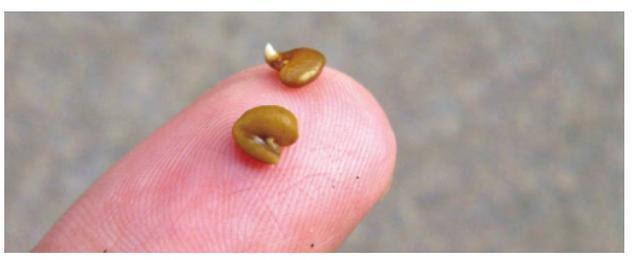
①Seeds (May 8)
②Seedlings (May 12)
③Young plants (August 1)
④Mature plants (September 14)
Swainsona formosa, also known as Sturt's desert pea, is a perennial herbaceous plant in the genus Swainsona within the Fabaceae family, named by the British botanist Isaac Swainson. It is native to the arid regions of central and northwestern Australia, where the average annual rainfall is 125-250 mm and the soil is sandy and rich in calcium carbonate. The first specimen was collected and prepared by the famous British explorer William Dampier on August 22, 1699, in the "Dampier's Archipelago" of northwestern Australia, and the specimen is now kept at the Fielding-Druce Herbarium of the University of Oxford in the United Kingdom. On November 23, 1961, Swainsona formosa was officially designated the floral emblem of South Australia (related flower stamps were issued in 1968, 1971, and 2005), and locally it is a popular subject in everything from art and photography to poetry, prose, and legend. Australian Aboriginal peoples roasted the seeds and made them into foods such as cakes, while the flowers were used as ornaments. Although Swainsona formosa is not an endangered species, collecting it in the wild without permission is illegal.
Swainsona formosa is a summer-growing plant (evergreen across the four seasons). Although it is a perennial in its place of origin, it is often grown as an annual in horticulture because the plant is highly susceptible to fungal infection and death during cultivation. It prefers a dry, warm, sunny environment; mature plants can tolerate brief drought, intense light, light frost, and loose, breathable, well-drained sandy soil. The optimal growing temperature is 18-26°C, and it is suitable for cultivation in USDA zones 9-11 (areas that are wet and rainy year-round, as well as coastal areas, are not suitable for growing it).
For pot cultivation, choose a large, deep pot first (its taproot system makes shallow pots unsuitable). For the growing medium, mix humus (leaf mold, peat, black soil, etc.), sand and gravel (vermiculite, perlite, akadama, limestone, and other neutral or alkaline materials), and base fertilizer (either plant-based or animal-based fertilizer is fine) in a ratio of 3:1:1. During the growing season, keep the potting soil moist, but never waterlogged; apply a quick-acting liquid fertilizer once every 7-10 days; in summer, provide 50%-60% shade (the rest of the year full sun is fine); promptly pinch off the growing tips or use chemical agents to control the plant's shape, because excessive vigor will cause too severe an energy drain and sharply reduce the number of flowers (especially in pots, as Swainsona formosa is the type of plant that goes completely overboard at the slightest bit of fertilizer).
Bottom watering is more advantageous than top watering. At no time should water droplets remain on the leaves and flowers for long; wipe them dry promptly with paper towels, especially in the humid summer, when the plant is highly prone to fungal infection from retained moisture, leading to leaf drop, root rot, and damping-off. Maintain a ventilated, dry, sunny environment; using protective fungicides together with curative fungicides, inside and out, can greatly reduce the infection rate.
In its place of origin, the flowering period runs from July to March of the following year. Australia's seasons are opposite to those of China: December to February of the following year is summer, March to May is autumn, June to August is winter, and September to November is spring. The timing of the local rainy season affects the flowering period. Swainsona formosa is pollinated by birds, has poor self-pollination ability, and requires external intervention. Creating a warm environment can prevent the awkward situation in which the fruit has not yet ripened but the plant has already died. After seed set, put on seed bags promptly to prevent the mature seeds from bursting and scattering. After harvest, the seeds can be stored in a dry place for several years. Sow indoors after the last frost (Last Frost: the last frost of late winter or early spring each year), and sow outdoors after the last frost when temperatures warm up (early or mid-May in most regions). The seeds of most leguminous plants have a hard, water-impermeable seed coat and a fairly long physical dormancy. To adapt to its harsh local environment, Swainsona formosa seeds will wait until the next year's rainfall, or even several years, before germinating. There are three methods to break dormancy:
1. Use a small knife to make a small nick away from the hilum. The pointed end of the seed is where the radicle is, so the seed coat at the blunt end should be removed. Treated seeds need only half a day to soak and swell;
2. Gently rub the seed coat with sandpaper or a file, then soak in water overnight; take out any that have not swollen and continue rubbing them;
3. Simulate the extreme high temperatures of the natural environment to soften the seed coat: place the seeds in just-boiled water for no more than 30 seconds, then soak in water overnight.
For pot cultivation, sow one seed per pot and cover with 3 cm of soil after sowing. There is no need to cover with glass or plastic film. Place the container in a warm, bright spot, and germination will occur in 3-5 days. The seedling has an extremely deep taproot, and a taproot system cannot tolerate any disturbance. The later the transplanting, the higher the mortality rate, and even if transplanting succeeds, the recovery period is quite long. Therefore, direct sowing is far superior to transplanting. For ground planting, choose a ventilated, sunny area with higher elevation, with 90-120 cm between plants. To extend lifespan and increase plant vigor, it can be grafted at the cotyledon stage onto Colutea arborescens or Clianthus puniceus of the same family. The graft survival rate is extremely high, and the plant is no longer troubled by fungi, with its lifespan extended to 3 years or even longer. Cuttings are also a good option: select new shoots with more than 3 nodes, apply rooting powder to the cut end, insert them into a well-drained medium, and manage them in a warm spot with indirect light.
⑤Bud formation (October 6)
⑥Early flowering (October 9)
⑦Full bloom (October 11)
⑧Peak flowering period (October 20)
◆Protective fungicides
This type of fungicide can form a dense protective film on the crop surface that is breathable, water-permeable, and light-transmitting. This protective film can inhibit the germination and invasion of pathogenic spores, thereby achieving the effect of sterilization and disease prevention. However, it must be sprayed before the crop comes into contact with disease or before disease occurs to be effective. Although its curative effect is poor, it has a broad sterilization spectrum and strong simultaneous control capability, and it does not easily cause pathogens to develop resistance (for example: chlorothalonil, Bordeaux mixture, metalaxyl-mancozeb, azoxystrobin, streptomycin, etc.).
◆Curative fungicides
Also called systemic fungicides, but their history of application is relatively short; they are a class of agents developed in the 1960s. When applied after pathogens invade the crop or after the crop becomes diseased, this type of fungicide can penetrate into the crop or be absorbed by the crop and translocated within it, directly killing or inhibiting the pathogens. Although they are highly targeted and have good curative effects, they easily cause pathogenic bacteria to develop resistance (such as carbendazim, thiophanate, kasugamycin, etc.).