Cultivation Techniques for Chilean Jasmine: Propagation Methods and Pest and Disease Control
Cultivation Techniques for Propagation and Pest and Disease Control of Chilean Jasmine
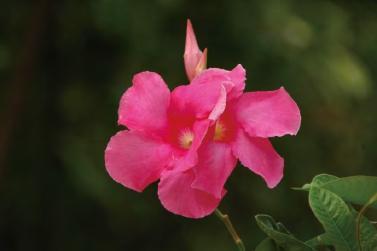
Chilean jasmine (Mandevilla laxa), also known as red wrinkled vine, double gland vine, double joy vine, etc., is a tropical evergreen climbing ornamental plant of the genus Mandevilla in the family Apocynaceae, native to Central and South America (Brazil). The flowering period is mainly summer and autumn, with large flowers shaped like small pinwheels that give off a delicate fragrance in sunlight. The twining stems of Chilean jasmine are soft and flexible, climbing straight up with the help of thorn-like stipules at the leaf axils. With its large, brightly colored flowers and graceful plant form, Chilean jasmine is known as the "queen of tropical vines."
I. Cultivation Management
Chilean jasmine prefers a warm, humid environment with ample sunlight; flowering is poor when light is insufficient. The optimal growth temperature is 20-28°C, and the winter room temperature must not fall below 10°C. It has strong adaptability to soil, but humus-rich, well-drained acidic sandy loam is best. It has large fleshy storage roots underground and strong drought tolerance. At the same time, during the growing season, foliar water spraying should be given frequently, but the substrate must not be too wet, otherwise the middle and lower leaves are prone to turning yellow and dropping. After the flowering period, pruning and shaping should be carried out promptly; one- to two-year-old plants should be lightly pruned and shaped, while perennial old plants should be heavily pruned to encourage the growth of strong new branches. During overwintering, watering should be reduced, fertilization stopped, and withered branches and leaves should be removed promptly.
II. Propagation
Cuttings are mainly used for propagation. In spring and summer, semi-lignified thick branches are cut, with two nodes per section for cuttings. After the cuttings root, under normal fertilizer and water management conditions, they can be ready for use as seedlings in about 3 months. Air layering propagation is mostly carried out in spring. The propagation rates of the above two methods are not high and can no longer meet the market demand for seedlings, so tissue culture methods are now being tried to achieve the goal of rapid propagation.
III. Pest and Disease Control
The main pests and diseases are leaf spot disease, cotton aphids, etc., which mostly occur in summer and autumn, mainly damaging leaves and sometimes young stems. Therefore, during maintenance, the growth status of the plants and the occurrence of pests and diseases should be checked at any time, and diseased leaves and fallen leaves on the ground should be removed promptly to reduce sources of infection. When the disease is severe, a 500-fold dilution of 50% carbendazim can be sprayed for control, while a 1000-1500-fold dilution of omethoate has a significant control effect on aphids.