What is Crassula obliqua? Let us introduce you to this succulent plant
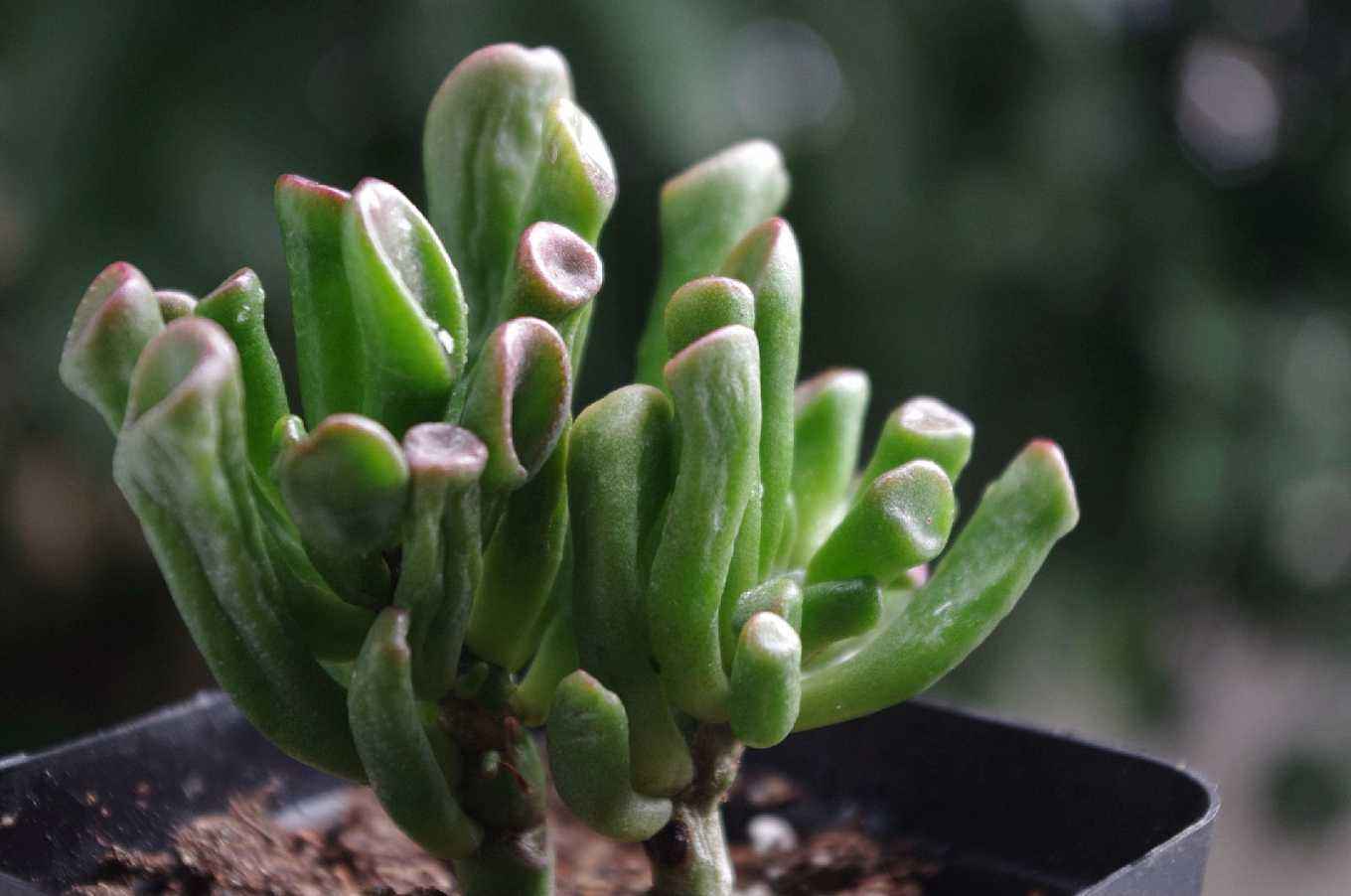
Crassula obliqua is a succulent grown mainly for its foliage. Its leaves are emerald green and evergreen all year round. It is mostly used as a decorative piece for offices, homes and balconies, and a small number are used to make succulent bonsai. It is a very popular succulent gem. The plant is a multi-branched shrub with obvious, round stems and yellow-brown or gray-brown bark. The leaves are alternate, growing densely in clusters at the top of the stem or branches. The fleshy leaves are tube-shaped, 4 cm to 5 cm long and 0.6 cm to 0.8 cm thick, with an obliquely truncate tip; the cut surface is usually elliptical. The leaves are bright green with a slight yellowish tinge at the tips and a waxy sheen. In winter, the edges of the cut surface turn red. The leaf shape is unusual and the colors are pleasing, making it an ideal small indoor foliage plant.
Crassula obliqua
It likes a warm, dry environment with plenty of sunlight, tolerates drought and partial shade, and is not cold-hardy. Apart from avoiding scorching sun exposure during the high heat of midsummer, it should be given ample light in all other seasons. It originated in South Africa as a horticultural variety and can now be cultivated in many parts of the world.
Management and care:
Crassula obliqua needs ample sunlight for its leaf color to be vivid and its form to be more compact and attractive. With too little sunlight, the leaf color becomes pale and green, the leaves are loosely arranged and elongated, and the branches are very tender. Crassula obliqua is a medium to large plant. Depending on its growth, it can be repotted once every few years, and the pot diameter can be 2 to 3 cun larger than the plant diameter, which promotes plant growth. Water only after the medium has dried out completely, and a slow-release fertilizer can be applied.
It likes loose, airy, light acidic soil, such as leaf mold and peat soil, or you can mix your own growing medium with a slightly acidic pH. Do not use heavy soil directly. Although its leaves have an alkali-excreting function, if the plant stays in alkaline soil for a long time, its growth will stall, the leaves will lose their green color and luster, and it will easily drop leaves and die. When watering normally, be sure the water is weakly acidic. Apply a complete organic fertilizer once a month; pests and diseases rarely occur.
Crassula obliqua also likes a warm, humid environment with plenty of sunlight. It does not tolerate shade. Although it can grow in partial shade, the leaves will become slender and loose, and the plant shape will not be full or upright, resulting in a poor ornamental effect.
Crassula obliqua
Crassula obliqua is a horticultural variety with an unusual leaf shape and pleasing colors. It is a succulent grown mainly for its foliage, with emerald-green leaves that stay evergreen all year round. It is mostly used as a decorative piece for offices, homes and balconies, and a small number are used to make succulent bonsai. It is a very popular succulent gem and an ideal small indoor foliage plant.
Crassula obliqua
Growers' experience:
After temperatures rise in spring, normal watering can gradually be resumed. Among the four seasons, only summer requires attention to proper shading; in all other seasons it can receive full sun.
During the summer dormancy period, give little or no water. When the temperature is above 35 degrees, move it to bright indirect light and gradually stop watering. Too much water can easily cause death. When temperatures drop in mid-September, slowly resume watering; during the growing period, the leaves can be misted.
In winter, water when temperatures are above 5 degrees, and stop watering below 5 degrees, otherwise it is very prone to frost damage. At the appropriate time, you can give a little water away from the roots; never mist or give a large amount of water. Crassula obliqua is not cold-hardy, and excessive water can easily cause rot.