Fast rooting tips for rose cuttings: learn it and they will take root as soon as you plant them
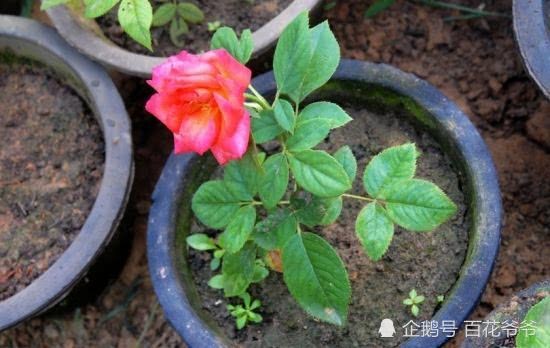
After the spring flush of roses ends, many flower growers use the post-bloom branches for cuttings, but the survival rate is not high. They look like they have sprouted, but within a few days the stems turn black again. Today, Baixiaomei'er recommends a fast rooting technique for rose cuttings, with a survival rate as high as 90%.
Fast rooting method for rose cuttings:
1. Select healthy, disease-free branches after the rose blooms
2. After disinfecting a craft knife, perform ring-barking near the bud nodes on the branch. Note that the tool should be a bit sharp, and do not tear the bark. After peeling, it will look as shown in the picture below:
3. After ring-barking, apply a little rooting powder on it, then cover the ring-barked area with soil, wrap it with plastic wrap, and insert it into sandy soil.
4. During this period, keep the sandy soil moist, place it in a spot with diffused light, and mist the leaves 1-2 times a day. Roots will begin to grow in about 20 days or so.
5. Note that during the cutting period, it is best to place it at a temperature of around 20 degrees. When the temperature is too high, it must be placed in a cool, shaded spot.
Besides this method, you can also directly choose a branch on the rose plant, ring-bark it, wrap it with soil into a large ball of soil, keep the soil slightly moist, and after a period of time, roots will also begin to grow at the ring-barked cut. Once roots have formed, simply cut it off and plant it.
This method of using ring-barking to induce rooting makes rooting somewhat easier than ordinary cuttings. This method is also suitable for other woody plants, such as camellias, gardenias, and others, all of which can be tried.