How to grow a Serissa japonica bonsai? Practical care tips tutorial
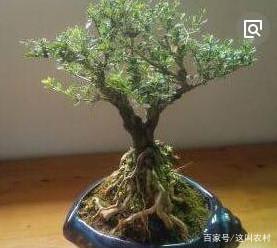
Serissa japonica has pliable stems that are easy to train; its leaves are round and delicate, its branches dense and fine, it is evergreen in all four seasons, and its roots grip and claw as they are exposed. It is ancient and elegant, and can be trained into styles such as cascade (semi-cascade), cliff-hanging, and formal upright, making it an excellent, exquisite landscape material for bonsai pots, and it is a Lingnan. Bonsai "Five Fortune Trees" (five trees: Serissa japonica, elm, plum blossom, Murraya paniculata) fragrant and banyan.
Propagation: Serissa japonica can be propagated by cuttings, division and other methods in June, with a very high survival rate (this should be done in early spring in April, or stopped during the plum rain season in June). As a bonsai, in order to promote rapid shaping, the plant should be propagated within 3-4 months, pruned, root-pruned, and treated with a secret technique. Apply carbon powder and disinfect. It can take root within 40 days, so that you can properly prune and trim it. If there is good stump material, it is best to dig it directly from the ground.
Soil: Serissa japonica likes loose, breathable soil. It is recommended to use sandy soil rich in organic matter as a good soil source, for reference.
Temperature: The optimal growing temperature for Serissa japonica is 20-30 degrees Celsius. It likes semi-shaded places with diffused light (unrestricted sun and shade randomly will cause the leaves to turn yellow); avoid strong light exposure. The overwintering temperature should be above 0 degrees Celsius. If the winter temperature is above 5 degrees, evergreen branches and leaves can be ensured.
The soil should be kept frequently moist, and the light should not be strong.
Water: It likes moisture; watering should follow the principle of watching for dry and wet conditions. In summer, in addition to normal watering, in the morning and evening the surface and the surrounding surfaces should also be sprayed with water, which also plays a role in cooling. After autumn, gradually reduce the frequency of watering to once every 2-3 days. In winter, simply ensure the potting soil is slightly moist; you can insert a toothpick or wooden stick into the pot to observe whether the soil is dry or wet (avoid overwatering, as waterlogging will cause the plant's roots to decline in respiration. and rot).
Fertilizing: Serissa japonica is tolerant of poor, barren soil and does not need much fertilizer; especially for bonsai, excessive fertilizing is not suitable as it affects the beauty of the tree. Within 4-5 months, Serissa japonica should be guaranteed phosphorus and potassium fertilizer during its growth period. (Avoid heavy fertilizer; if fertility is too strong, it can burn the roots, and fertilizer can cause black leaves, starting from the leaves turning black); newly planted specimens should not be fertilized in the first few months; after normal growth, apply a little thin fertilizer. As usual, young shoots can grow to 10 cm. Cooked cake fertilizer can promote seedling growth.
Pruning and pinching: Serissa japonica needs pinching and pruning. During the growth season in April, the tiller branches from the main stem and root suckers and the dense branches should be cut off in time to reduce nutrient loss and maintain the beauty of the tree. After the flowering period in June, the branches outside the crown should be pruned to ensure the tree shape remains elegant; each time you prune a branch, cut back 2-3 buds. If you want it to root, you must ensure it is a surviving stump. If you collect it from the mountains, you should first lift it, then gradually trim it from top to bottom. In June, the branches and stems of Serissa japonica are soft and easy to bend; seedlings can be tied and shaped with brown silk.
Pest and disease control: Serissa japonica has few pests and diseases; the common ones are scale insects, which can be killed and controlled by medicinal spraying. Also, during the periods before and after May and within June of the year, use pesticides at the time when the scale crawlers have just hatched, to kill insects, kill eggs, and sterilize. The best approach is to use 50% malathion at 1500 times dilution, or 40% omethoate at 1000 times dilution as a liquid spray to kill them, once a week for 2-3 consecutive applications; this can basically suppress outbreaks of scale insects well, and a small number of insects can be removed by dipping a brush in vinegar and brushing them off.