Can Redbud Be Grown in Pots? A Few Thoughts to Share
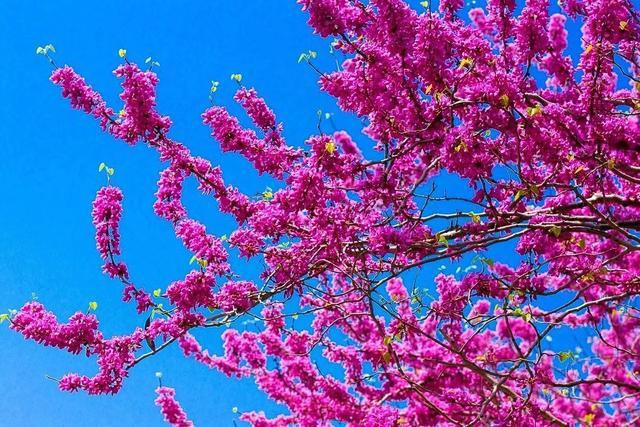
Redbud, also known as purple pearl and "full-branch red," blooms in spring. Its distinguishing feature is that it flowers on old wood, with small rose-colored flowers forming large flower clusters, and it gives off a sweet fragrance when in full bloom.
China has a long history of cultivating redbud. In ancient times, redbud was often used as a metaphor for family affection, symbolizing harmony among brothers and a thriving household. The Jin dynasty scholar Lu Ji wrote in a poem: "Three redbuds rejoice on the same plant, four birds grieve in different woods."
For a long time, redbud was mostly grown as a ground-planted flower, planted in a corner of the courtyard. Nowadays it is often used to beautify and green flower beds and roadsides.
Because of changes in living environments, some people are trying to grow redbud in pots.
Baihua Zatan believes this should be entirely feasible. The redbud is vigorous, easy to cultivate, not demanding about soil, and requires only rough management. As long as the plant is grown in deep, fertile sandy loam with sufficient sunlight, it can grow normally, sprout, and bloom.
For potting redbud, it is best to choose a somewhat larger and deeper ceramic pot or clay pot. For the growing medium, it is best to use sandy loam rich in organic matter with good drainage, or ordinary garden soil.
Potting time for redbud: it is best scheduled after leaf fall in autumn or before bud break in spring. To improve the survival rate of potted redbud, it is best to proceed in two steps. In the first year, separate the vigorous young suckers produced by the mother plant from the mother plant and leave them standing alone in the ground; in the second year, transplant the independent redbud with a soil ball, thus protecting the fibrous roots and ensuring survival. At the same time, prune the plant's branches. When planting, the roots should be spread out and must not be curled up in the potting soil. After planting, water frequently to keep the potting soil moist, and place it under a shade shed for a period; once it is growing vigorously, move it to a sunny, well-ventilated place for normal care.
Redbud is fairly cold-tolerant; plants over three years old do not need insulation. Redbud is drought-tolerant and afraid of waterlogging. For potted redbud, drainage work must be done well during the rainy season to prevent root rot from excessive water. It should not be watered much in autumn. Fertilizing can be done each year after leaf fall in winter and before bud break in spring; human waste or sesame paste residue is even better. Winter is the dormant period for redbud, and during this period the potted redbud can be shaped and pruned. When pruning, one-year-old branches should be heavily cut back and shortened so that nutrients are concentrated and the new growth is vigorous. Remove vigorous water sprouts, dry branches, drooping branches, diseased and pest-infested branches, slender branches, and inward-growing branches. Many small buds tend to sprout around the base of the redbud, so the lateral branches on the lower part of the main trunk should be cut off promptly, so that the upper part of the main trunk can receive sufficient nutrients and form a good canopy.