Orchid enthusiasts insert two plastic tubes into the orchid pot, and never have to worry about orchid root rot again
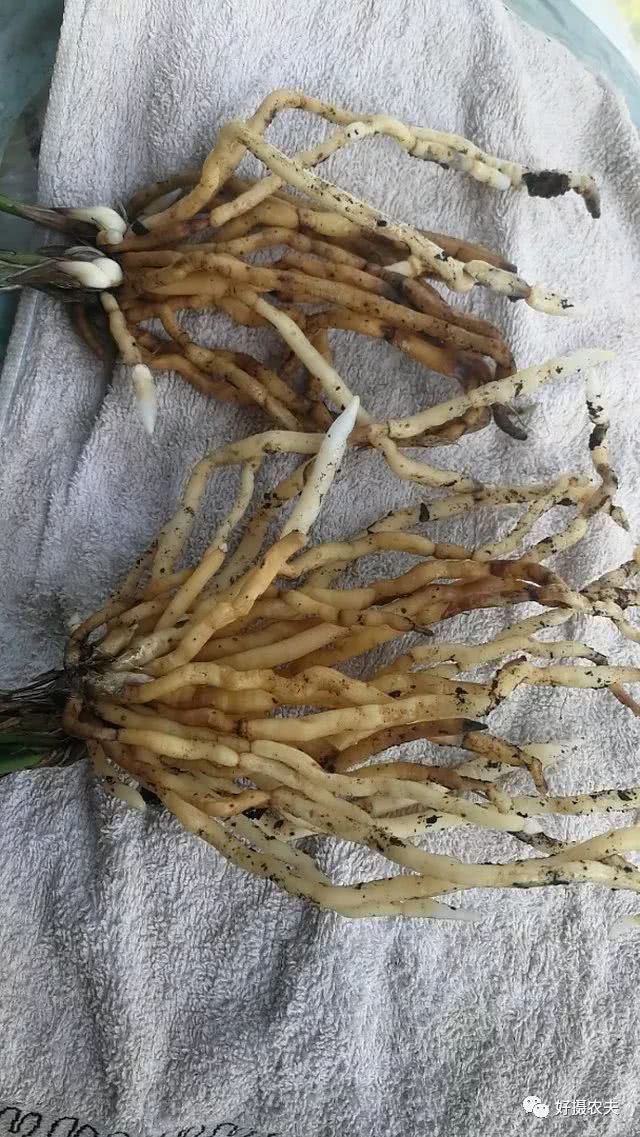
This is a photo of a Cymbidium goeringii that an online orchid enthusiast divided in April this year. According to this enthusiast, he bought this seedling in December 2016 and divided it in April 2018. He had always been growing it in a small porcelain pot. Originally, we do not advocate growing orchids in porcelain pots, because porcelain pots have poor water permeability and air permeability.
The root system of this Cymbidium goeringii grew very well, with strong roots and plump shoots. The porcelain pot only has a small drainage hole at the bottom, and there are no ventilation holes on the sides. The growing environment is an open-air balcony, and in rainy days it can be directly watered by rainwater. The potting medium is mainly small pieces of pine bark mixed with hard granules.
So how did he do it? Sharp-eyed friends may have seen in the picture above that there are two plastic tubes in the pot. That's right, his secret lies in these two tubes. This experience of growing orchids with plastic tubes is also the first time Haoshe Farmer has seen it, and it was a real eye-opener. Below, let's see how he uses these two tubes.
His small porcelain pot has a diameter of about 13 cm, which is actually a small orchid pot. The two plastic tubes are one long and one short. The long one is placed vertically along the pot wall; the short one is slanted at the bottom of the pot, and the pseudobulb of the orchid sits on this tube (one end at the bottom of the pot, one end at the pot wall). In this way, a small environment is created at the bottom of the pot, which can better ventilate and drain moisture. As for the vertical one, besides helping with moisture drainage and ventilation, when fertilizing, fertilizer can also be applied downward along the tube, without fear of burning the orchid roots.
Fellow growers, what do you think of this orchid enthusiast's creativity? Anyway, Haoshe Farmer is impressed by him. If you have a better idea, you are welcome to join the discussion.