How to graft Golden Branch Sophora japonica? Detailed explanation of the correct grafting method
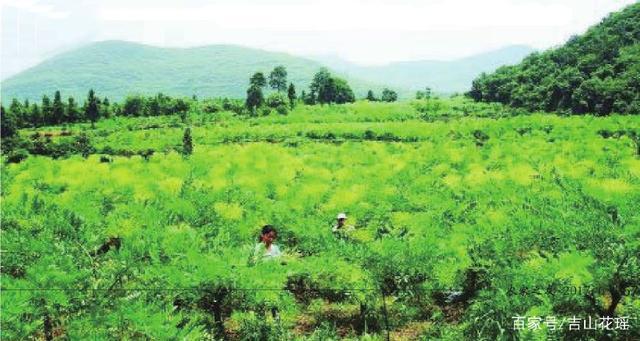
Golden Branch Sophora japonica grafting method
Uses
Ornamental value: Golden Branch Sophora is widely used in landscaping and is one of the colorful-leaf tree species for landscaping roads, scenic areas and the like. It not only has ornamental value for four-season scenery, but also, due to its ecological characteristics, can improve community stability and produce a good landscaping effect when mixed with other tree species. Especially in winter, this golden yellow is deeper and more brilliant, with a unique style, rich in the elegance of garden woody flowering plants, and has high ornamental value.
Medicinal and health value: The fruit of Golden Sophora, huaimi, can cool blood and stop bleeding, clear the liver and purge fire, and can also be used for bloody stool, hemorrhoidal bleeding, bloody dysentery, metrorrhagia and metrostaxis, hematemesis, epistaxis, headache and dizziness; it also has various medical and health effects such as lowering blood pressure, lowering blood lipids, reducing inflammation and resisting ulcers; huaimi is also an excellent raw material for extracting food coloring; at the same time, it is the main raw material for the industrial medicine rutin.
For many years, huaimi has sold well and demand has exceeded supply, so the planting prospects are quite good. For example, Quanzhou County in Guangxi focuses on Golden Sophora trees to develop its economy. Statistics show that as of 2015, more than 35,000 mu of Golden Sophora forest had been planted, and in spring 2016 the whole county planted more than 14,000 mu again. In 2015, the average output value of Golden Sophora per mu reached 8,000 yuan, and the average benefit per mu was more than 7,000 yuan. The Golden Sophora industry has become a new highlight for increasing farmers' income and the county's fiscal revenue growth.
Planting
Golden Branch Sophora generally uses Sophora japonica as the rootstock for grafting propagation: in the first spring, sow Sophora japonica as the rootstock, leaving 5,000-6,000 seedlings per mu of Sophora japonica. When the Sophora japonica seedlings grow to a height of 0.5 m, graft Golden Branch Sophora. The specific standard depends on the thickness of the Golden Branch Sophora scion branches. Grafting can be done in spring, summer and autumn, with the highest survival rate at late spring and early [summer?]. Using "T"-shaped budding, the survival rate reaches more than 98%.
Using ordinary Sophora japonica as the rootstock, use chip budding or cleft grafting before spring germination. If the grafting technique is proficient, the survival rate can reach about 90%.
Grafting method Rootstock selection and grafting method
For the rootstock, either one-year-old seedlings with a root-collar diameter of 0.5-1 cm or perennial large seedlings with a diameter at breast height of 3-5 cm can be used. However, different grafting methods should be used for different rootstocks.
Golden Branch Sophora grows faster than Sophora japonica, and it is easy to form a "big head and small feet" phenomenon at the grafting site. Using perennial large seedlings as rootstock and adopting the high branch grafting method forms quickly and shortens the time to leave the nursery. However, multiple scions pieced together on the same cross-section have a small branch opening angle, easily causing a constricted-neck phenomenon, and the union site is not firm and is susceptible to wind damage. In addition, the shaping and renewal and rejuvenation of this kind of seedling are restricted, and the color of the trunk and upper branches is also not uniform. Using one-year-old small seedlings as rootstock and budding 10 cm above the root collar, although it forms slowly, takes a long time to leave the nursery, and also has disadvantages such as "big head and small feet," before the trunk epidermis is completely suberized, the color of the whole plant is uniform and the ornamental quality is good. Moreover, wind resistance is strong, and the flexibility for shaping and renewal and rejuvenation is great. If during transplanting the root collar of the rootstock and the grafting site are buried together underground, this is both attractive and does not affect seedling growth, and can also help stabilize the seedling. Therefore, in the long run, the low-position budding method with one-year-old rootstock has more advantages.
Grafting time The time for grafting Golden Branch Sophora mainly considers the following factors:
(1) The requirements for seedling specifications and the arrangement of production batches;
(2) The phenological period of bud growth of local rootstocks and scions;
(3) Avoiding disastrous climate;
(4) Differences in grafting methods.
Taking the middle and lower reaches of the Yellow River region as an example, every year in March and April, when the scion buds are plump and about to sprout but have not yet sprouted, one-year-old rootstock can be used for low-position budding. The scions are collected and used immediately, using buds with xylem for chip budding. Unused scions should be promptly stored in wet sand in a cool, ventilated place for later use. From late May to June and July, sap flow is vigorous and bark peels easily, so "T"-shaped budding, namely the "hot sticky bark" method, is suitable. After budding survives in August, because the growth period is relatively short, the buds can "stay dormant" to overwinter until the next year. Before the buds sprout the next year, cut off the upper part of the rootstock and carry out normal management and protection. Branch grafting can be carried out from mid-to-late March to early May, and the key is to collect and store the scions well in advance. However, if stored too long, scion vigor weakens, so branch grafting should be done earlier rather than later. No matter which method is adopted, the scion branches are required to be robust and free of pests and diseases, and grafting operations should avoid rainy days to prevent rainwater from seeping in and affecting survival.
Sophora flower
Huaimi
Intercropping
Under Golden Sophora trees, Chinese medicinal herbs and crops such as honeysuckle and peanuts can also be planted, which can both rationally utilize and effectively protect resources and bring significant economic benefits to farmers, broaden channels for increasing farmers' income, and quickly help farmers escape poverty and become well-off.